





What support should dealers expect from a diesel genset factory?
A dealer usually discovers the real value of a diesel genset factory after the first demanding quotation, delivery change, commissioning question, or warranty claim. A unit may look competitive on paper, but a missing wiring diagram, unclear alternator specification, delayed spare part, or unanswered controller alarm can quickly become the dealer’s problem in front of an end user.
The practical answer is that dealers should expect support across the full sales cycle: accurate pre-sales information, dependable production and delivery coordination, technical documentation, installation guidance, access to genuine parts, defined warranty handling, and communication that remains available after the shipment leaves the factory. The level of support should match the dealer’s ability to represent the equipment confidently in industrial, commercial, infrastructure, and backup-power applications.
Support should begin before the dealer issues a quotation
The first test of a manufacturing partner is often not the genset itself but the quality of information available before an order is confirmed. End users may ask for a standby rating, prime rating, fuel consumption curve, noise level, alternator class, enclosure dimensions, controller capability, or compatibility with an automatic transfer switch. A dealer cannot answer these questions responsibly with a generic brochure alone.
A capable diesel genset factory should provide a clear technical basis for quotation. That normally includes model configuration, engine and alternator details, rated power conditions, voltage and frequency options, fuel tank arrangement, control-panel scope, dimensions, weight, and optional equipment. The information should distinguish between standard configuration and optional configuration. This avoids a frequent dispute: the end user assumes an item is included because it appeared in an image or a preliminary conversation, while the factory treats it as an extra-cost option.
For projects with more demanding operating conditions, dealers should be able to request clarification on the factors that affect sizing and suitability:
- Whether the stated rating is intended for standby, prime, or continuous-duty operation.
- Altitude and ambient-temperature limits that may require power derating.
- Starting requirements for motors, pumps, compressors, elevators, or other high-inrush loads.
- Voltage regulation and frequency stability expectations for sensitive loads.
- Whether parallel operation, synchronization, remote monitoring, or ATS integration is required.
- Sound attenuation, weather protection, fuel autonomy, and site-access limitations.
This is more than an engineering exercise. A dealer who receives vague answers may quote the wrong configuration, absorb the cost of changes later, or lose credibility when the delivered equipment does not match the application. Factories do not need to make every design decision for the dealer, but they should provide enough data for the dealer to identify where further application review is necessary.
Configuration support matters more than a long options list
Catalogues can make most factories appear similar because they list many kVA ranges and accessories. The useful difference is whether the factory helps a dealer translate an end user’s operating conditions into a workable configuration. A hospital backup system, a construction site, a cold-storage facility, and a telecommunications shelter may all request “a generator,” but their start-up sequence, load profile, run-time expectation, enclosure needs, and maintenance access can be very different.
Dealers should expect the factory to explain the boundaries of its recommendations. For example, a factory should not simply confirm a genset size without asking whether the load contains large motors or whether future expansion is expected. It should identify when an oversized unit could spend too much time at low load, and when a small unit may struggle with transient loads. It should also clarify whether the proposed controller can support the requested remote signals, automatic start logic, or parallel operation.
Good application support is particularly important when the dealer sells power equipment as part of a broader resilience package. A facility may use a generator for extended outages but add batteries to handle short interruptions, reduce transfer gaps, or support selected loads. In residential and light commercial backup arrangements, a dealer may also consider a 51.2V Wall-mounted LiFePO4 Energy Storage Battery where its 5.12kWh nominal energy, CAN/RS485 communication, wall-mounted format, and parallel expansion capability fit the inverter and load design. This does not replace proper genset selection; it helps the dealer discuss how different backup components can serve different operating periods.
Production visibility protects the dealer’s delivery promise
Many purchasing problems arise after the order is placed. The dealer has already committed a delivery window to the customer, while the factory is waiting for final technical approval, an engine allocation, enclosure materials, control-panel components, or packaging instructions. A reliable factory should make the order process visible enough that the dealer can manage expectations early rather than explain a delay after the promised date has passed.
Support in this stage should include a confirmed specification or order acknowledgement, clarification of approval points, a realistic production schedule, and timely notice if a component substitution or schedule adjustment is required. For export orders, the factory should also clarify packing method, shipment readiness, documentation needs, and responsibilities around inspection or destination requirements.
The most important feature is not an unrealistically short lead time. It is a delivery commitment based on the actual configuration. A standard open-frame unit may follow a different production path from a silent canopy set with a large tank, special voltage, remote-control cabinet, or parallel panel. Dealers need visibility into these differences before they promise installation dates to contractors or end users.
Documentation must be usable at the point of installation
A genset often arrives at a site where the installer did not take part in the original purchase discussion. The installer needs practical documents, not a marketing leaflet. If wiring terminals are unclear, controller parameters are undocumented, lifting points are not identified, or maintenance intervals are missing, commissioning can be delayed even when the machine itself is sound.
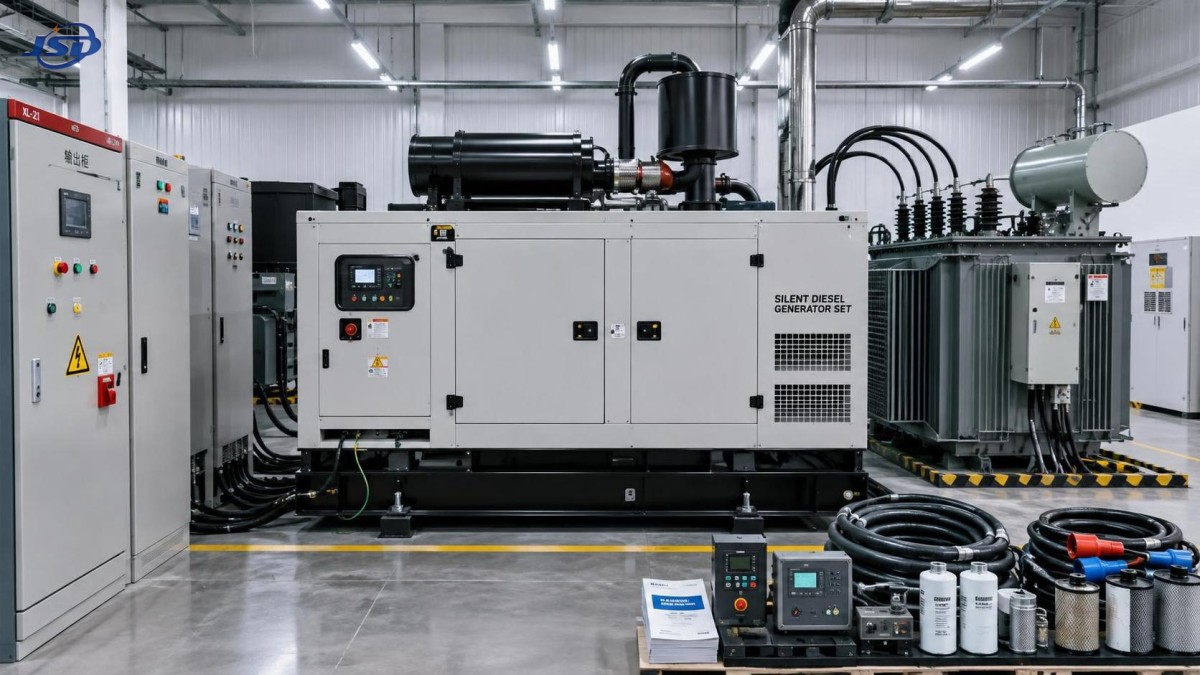
At a minimum, dealers should request documentation appropriate to the delivered configuration. Depending on the scope, this may include an operating manual, maintenance schedule, electrical schematic, controller manual, connection diagram, foundation or installation guidance, packing list, and test records supplied by the manufacturer. Documents should identify the actual model and installed components whenever possible, especially when controller type, alternator brand, breaker arrangement, or fuel system differs between orders.
Documentation quality also affects after-sales efficiency. When a customer reports an alarm code or an automatic-start failure, the dealer should be able to identify the relevant terminal, parameter, sensor, or protection logic without relying entirely on memory or informal messages. A factory that provides traceable documents gives the dealer a starting point for diagnosis and helps prevent unnecessary part replacement.
Commissioning support should be defined before equipment reaches site
Not every order requires factory personnel at the installation site. Many dealers have their own service technicians or work with qualified electrical contractors. Even then, the factory should make clear what commissioning support is available and what information is needed to provide it effectively.
Before initial start-up, the dealer should confirm who is responsible for site preparation, cable sizing, earthing, fuel supply, exhaust routing, ventilation, ATS wiring, load testing, and controller setup. The factory’s role is typically to support the equipment-specific aspects: connection guidance, controller configuration, alarm interpretation, operating limits, and fault isolation related to supplied components. Site electrical design and local installation practices may require review by appropriately qualified personnel.
A useful support process often follows a simple sequence:
- The dealer sends the factory the model number, serial number, controller display information, photos of connections where relevant, and a concise description of the operating condition.
- The factory helps separate installation-related issues from equipment-related issues, rather than immediately assuming a component failure.
- Where parameters need adjustment, the factory should state what can be changed, what should remain protected, and how to record the original settings.
- If a replacement part is needed, the factory should identify the part accurately and explain whether any calibration, configuration, or inspection is required after replacement.
This approach is especially useful for intermittent faults. A unit that starts manually but not automatically, trips only under load, or shows a sensor alarm after several hours of operation may involve wiring, fuel, battery charging, control logic, load conditions, or a failed component. Good technical support narrows the possibilities instead of offering generic advice that leaves the dealer to guess.
Warranty support should be specific, not merely promised
“Warranty available” is not enough for a dealer making a purchasing decision. The key questions are what is covered, how claims are assessed, what evidence is needed, whether labour is included or excluded, how parts are supplied, and how the factory handles components made by other manufacturers. A dealer should understand the procedure before a failure occurs.
A transparent warranty process normally asks for traceable information such as serial number, run hours, maintenance history, fault description, photos or videos, controller logs where available, and details of site conditions. That documentation requirement is reasonable because it helps distinguish manufacturing defects from incorrect installation, poor maintenance, contaminated fuel, overload, unauthorized modification, or operation outside stated limits.
Dealers should also ask how quickly the factory responds to an initial claim and whether technical diagnosis is available before parts are dispatched. Sending parts without confirming the failure mode can increase cost and extend downtime. On the other hand, a factory should not make the process so burdensome that a dealer cannot restore service in a reasonable time. The right balance depends on equipment criticality, part availability, and the dealer’s local technical capability.
Spare-parts planning is part of market support
A distributor’s reputation can be damaged by a small component that is unavailable when needed. Filters, belts, hoses, sensors, relays, chargers, breakers, controllers, and actuators may have different urgency levels, but all require accurate identification and a dependable supply route.
Rather than ordering parts only after a breakdown, dealers should discuss a practical stocking plan with the factory. The plan does not need to be large. It can focus on fast-moving maintenance items, parts that are difficult to source locally, and components likely to stop the unit from operating. The factory should provide part numbers, compatibility guidance, recommended maintenance kits, and information about revisions that affect interchangeability.
For dealers carrying several genset ratings, it is useful to identify common components across the range. Standardization can reduce inventory complexity and help technicians become familiar with the same controller families, chargers, filters, and service procedures. Where component changes occur during production, the factory should notify the dealer clearly so that future spare-parts orders remain accurate.
Commercial support should help dealers sell responsibly
Dealers do not need a factory to set every local sales strategy, but they do need commercial consistency. Quotation validity, payment terms, minimum order expectations, territory discussions where applicable, packaging charges, optional-item pricing, and change-order rules should be clear. Ambiguity in these areas can create tension even when product quality is acceptable.
Marketing materials can be helpful when they are technically accurate and easy to adapt to local use. However, dealers should be cautious about unsupported claims regarding fuel savings, noise levels, emissions compliance, runtime, or suitability for critical loads. A factory’s sales support is most useful when it equips the dealer with verifiable product details rather than exaggerated promises.
Training is another practical form of support. Basic sessions on model differentiation, controller functions, routine maintenance, common alarms, and warranty evidence can help a dealer’s sales and service teams speak consistently. The factory should also be prepared to state what training does not cover. Complex synchronization systems, high-voltage distribution interfaces, and site-specific protection coordination may need specialist electrical design and commissioning resources.
Questions to settle before appointing or expanding a supplier relationship
Before placing a trial order or building a larger product line around one factory, a dealer should seek direct answers to operational questions. The quality of the answers often reveals more than polished brochures do.
- Can the factory provide configuration-specific drawings and manuals before shipment?
- Who handles technical questions after delivery, and what information do they need to begin diagnosis?
- How are warranty claims reviewed, approved, and resolved?
- Which maintenance and emergency parts should be stocked locally?
- How are model changes, component substitutions, and controller revisions communicated?
- Can production timing be confirmed against the actual configuration rather than a generic lead-time statement?
- What support is available for ATS integration, remote monitoring, parallel systems, or unusual load profiles?
A dependable diesel genset factory is not simply one that can assemble a generator set and issue a quotation. It is one that gives dealers enough technical clarity, process visibility, and after-sales structure to remain credible when the customer’s question becomes urgent. That support reduces avoidable misunderstandings, improves commissioning readiness, and allows the dealer to build a service capability instead of relying on last-minute factory intervention.

Get a Quote
Regardless of whether you require general advice or specific support, we are happy to help you.
Send Us Your Inquiry Today

Jinshida Electric remains committed to contributing to global energy development through professional manufacturing and superior service.