





What is included in the lifecycle cost of a 400 kVA open frame genset?
A 400 kVA open frame genset should be approved on its expected cost of delivering reliable power, not on its purchase quotation alone. The purchase price is visible and easy to compare; fuel use, site work, service access, unplanned repairs, and outage exposure are often more consequential over the unit's working life.
For an open-frame generator, this distinction matters even more. The unit is typically installed in a plant room, generator yard, construction site, mining area, or other controlled location where the buyer must provide much of the surrounding infrastructure. A lower initial equipment price can therefore lead to a higher total spend if the installation is incomplete, the operating profile is poorly understood, or maintenance responsibilities are left vague.
A practical lifecycle cost model includes every cost required to buy, commission, operate, maintain, support, and eventually retire the generator. It should also put a value on the consequences of the generator failing when the site needs it.
Start with the cost of putting the genset into service
The delivered price of a 400 kVA open frame genset is only the first line of the capital budget. Open-frame equipment does not include the same level of weather and noise protection as an enclosed set, so it usually depends more heavily on the site design. Financial approval should therefore cover the complete installed system rather than treating the generator as a stand-alone asset.
A useful approval question is: What must be completed before this set can safely carry the intended load? Asking this early prevents a comparison between a fully scoped offer and a bare-machine offer. It also exposes whether the site already has an adequate fuel system, exhaust route, cable path, and transfer arrangement.
Capacity must be interpreted carefully. A 400 kVA rating does not automatically mean the set can support every connected electrical load at once. Motor starts, pumps, compressors, lifts, welding equipment, harmonic-producing loads, and step changes can impose demands that differ from steady-state consumption. If the generator is selected too tightly around an average load, the resulting overload trips, poor performance, or accelerated wear become lifecycle costs rather than design details.
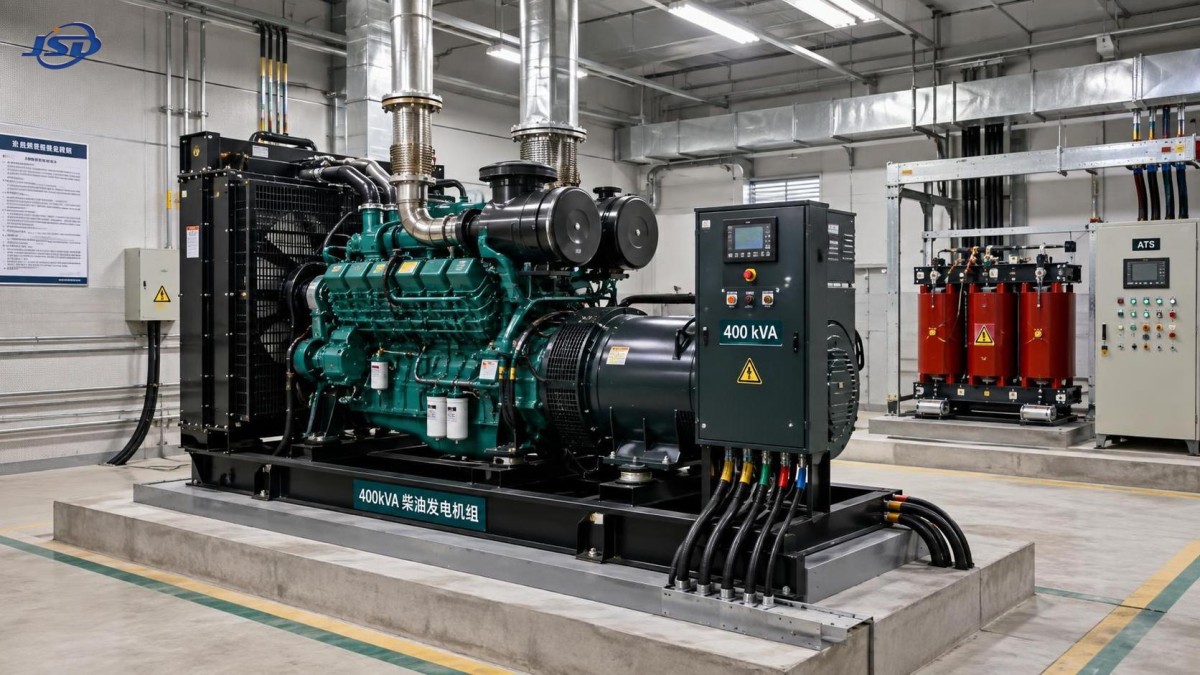
Fuel is normally the operating cost that deserves the closest scrutiny
Fuel expenditure depends on operating hours, actual load, engine efficiency across the load range, fuel delivery arrangements, and the quality of operational discipline. It cannot be estimated responsibly from the generator rating alone. A standby set that runs briefly for periodic tests has a very different fuel profile from a prime-power set supporting a remote operation for long shifts.
For approval purposes, request fuel-consumption information at the expected load points rather than relying on a single “full-load” figure. Then build scenarios based on the site’s likely operation: routine testing, planned outages, short emergency events, and prolonged loss of utility supply. The expected annual running hours should be separated by scenario because the load level and operational risk may differ in each one.
Running a diesel generator persistently at a very light load can be uneconomic and can create maintenance issues. At the other extreme, a set regularly pushed close to its limit has less room for load growth, transient demand, or high ambient conditions. The lowest fuel number on a datasheet is therefore not enough; the important question is whether the selected unit operates efficiently and reliably at the load the business actually expects.
Fuel-system cost also includes tank inspection, filtration, fuel quality management, transfer pumps where applicable, and the labour needed to maintain readiness. Stored fuel can deteriorate or become contaminated, particularly where the genset is rarely used. A backup generator that starts but cannot sustain operation because fuel quality was neglected creates a costly false sense of protection.
Maintenance costs are predictable only when the operating plan is clear
Every generator needs planned maintenance, but the schedule and cost are influenced by run hours, calendar time, environment, load behavior, and fuel condition. A lifecycle budget should include labour, routine inspections, lubricants, filters, coolant, belts, batteries, and scheduled servicing. It should also allow for periodic testing under a meaningful load, not merely a short no-load start.
Maintenance access affects both cost and downtime. Open-frame units are often easier to inspect when installed in a well-designed generator room or protected service area. They become expensive to service when exhaust piping, cable runs, walls, or auxiliary equipment obstruct routine work. Before approving the layout, confirm that technicians can reach filters, batteries, controls, radiator surfaces, and service points without dismantling surrounding equipment.
Environmental exposure needs a direct allowance. Dust, moisture, corrosive air, heat, poor ventilation, and vibration can shorten component life or raise servicing needs. An open-frame arrangement may be appropriate inside a clean, ventilated, secure plant room. It is a less attractive choice for an exposed outdoor location unless the project includes suitable enclosure and protection measures. Comparing it with a factory-enclosed alternative only on the initial price can hide this difference.
Repair reserves and downtime risk belong in the same conversation
Planned maintenance is manageable because it can be scheduled. Unplanned repairs are more difficult because they combine parts, labour, logistics, operational disruption, and potentially lost production or service interruption. Financial teams do not need to predict every possible failure, but they should assess whether the supplier can provide technical documentation, troubleshooting support, spare parts, and a clear warranty process.
The generator’s role determines the size of this risk. For a site where the genset only protects non-critical lighting, a short outage may be tolerable. For a hospital, data facility, process line, water system, or critical industrial operation, the financial impact of unavailable backup power can exceed years of routine service costs. In these applications, spending on reliable controls, transfer equipment, monitoring, commissioning, and preventive maintenance is a risk-control decision, not simply an engineering preference.
It is also important to distinguish generator reliability from system reliability. A well-built genset cannot protect the site if the automatic transfer switch is incorrectly sized, protection settings are poorly coordinated, cables are underspecified, or the upstream distribution equipment is unsuitable. The lifecycle model should cover the complete power path from fuel supply through generator, switching, distribution, and critical loads.
Where a project includes medium-voltage distribution and a low-voltage emergency power arrangement, transformer selection affects the wider cost picture. For example, a 35kV Three-Phase Cast Resin Dry-Type Distribution Transformer may be relevant for industrial facilities, commercial buildings, hospitals, data centers, mining operations, or renewable-energy systems that need a dry-type distribution solution between the site supply and downstream loads. Its value should be assessed as part of the electrical system design, including losses, fire-performance requirements, protection coordination, installation environment, and maintainability. It is not a substitute for a genset, but it can influence the reliability and operating cost of the distribution network the genset must support.
Replacement and residual costs should not be left outside the model
A lifecycle review needs a defined assessment period, even if the business does not know the exact replacement date. At the end of that period, include expected major overhaul decisions, control-system upgrades, replacement of aging auxiliary equipment, removal costs, and any residual value. The aim is not false precision. It is to avoid treating a generator as though it has no cost after the warranty period and no cost when it is eventually removed.
Controls and monitoring deserve attention because they affect both labour cost and risk. Remote status reporting, alarms, event records, and scheduled exercise functions can help maintenance teams identify battery, temperature, fuel, or starting issues before an outage reveals them. These features do not eliminate maintenance, but they may reduce the chance that a simple, detectable issue becomes an emergency repair.
A decision framework that works for finance and engineering
The most reliable procurement process does not ask engineering to select a model and finance to approve a price independently. It uses a common basis of comparison. For each shortlisted option, request the same scope and evaluate it over the same operating assumptions.
- Define whether the genset is for standby, emergency, peak support, or continuous duty, and estimate the annual hours for each use.
- Document the load profile, including starting currents, non-linear loads, future expansion, and the loads that must remain energized during an outage.
- List all site works and electrical interfaces separately from the genset price so omissions are visible.
- Model fuel use at realistic operating loads and include testing, fuel management, and delivery-related costs.
- Budget planned maintenance as a recurring operating item, then assess repair support, warranty terms, parts access, and service response arrangements.
- Assign a business consequence to downtime based on the function the generator protects, rather than assuming every outage has the same impact.
- Include a replacement or major-renewal allowance at the end of the assessment period.
This approach often changes the apparent winner. A lower-priced 400 kVA open frame genset may be the sound choice when it will be installed in a protected, accessible location, run at a suitable load, and supported by an established maintenance plan. It may be a poor choice when the project needs outdoor protection, strict noise control, rapid deployment, or highly resilient backup operation but has not budgeted for the supporting works.
Questions worth resolving before approval
Do not approve against a single blended total labeled “generator project.” Ask for a scope breakdown that separates the set, accessories, site works, installation, commissioning, service plan, and exclusions. This gives finance a practical way to compare offers and prevents later changes from appearing as unavoidable surprises.
Ask the operating team how often the unit will run and what load it will actually carry. Ask facilities whether there is room to service it safely. Ask electrical engineers whether the generator, transformer, switching equipment, and protection scheme have been reviewed as one system. Finally, ask procurement how warranty claims, emergency support, and critical spare parts will be handled after handover.
Jinshida Electric Power Technology Co., Ltd. supports power transmission and distribution projects with an emphasis on dependable, energy-conscious equipment and disciplined manufacturing and quality practices. For a generator investment, the same principle applies across the entire power system: approve the configuration that can be installed, operated, maintained, and supported reliably at the site, not simply the option with the lowest initial invoice.

Get a Quote
Regardless of whether you require general advice or specific support, we are happy to help you.
Send Us Your Inquiry Today

Jinshida Electric remains committed to contributing to global energy development through professional manufacturing and superior service.