





How to reduce fuel consumption in a diesel open frame genset
A diesel open frame genset often starts consuming more fuel than expected long before it shows an obvious fault. The usual situation is not a dramatic breakdown: the unit still starts, voltage appears normal, and essential loads remain powered, yet the fuel tank empties faster during routine shifts, night work, or temporary site operation. Operators may respond by running the genset for shorter periods or adding fuel more frequently, but those actions do not address the cause.
The most effective way to reduce fuel consumption is to keep the engine operating near its intended load range, prevent avoidable idling, maintain clean air and fuel flow, and verify that the electrical load is real rather than caused by poor distribution or unnecessary equipment. A diesel open frame genset cannot deliver its best fuel efficiency when it is lightly loaded for long periods, overloaded, poorly maintained, or connected to an unstable load. Fuel saving begins with observing how the unit is actually being used.
Start with the load, not the fuel tank
Fuel consumption should always be judged against the electrical output being produced. A genset running at a useful, steady load generally uses fuel more efficiently than one operating for many hours with only a few lights, chargers, or intermittent tools connected. Even at low load, the engine still needs fuel to overcome internal friction, drive cooling and lubrication systems, and maintain rated speed.
Before changing operating habits, record the approximate load during a normal working cycle. Check the generator control panel, a connected power meter, or the current drawn by major circuits. Note when high-demand equipment starts, when it stops, and how long the genset remains on with minimal demand. This simple observation often reveals that the unit is running continuously for a load that could be consolidated into shorter operating periods.
- Group battery charging, pumping, welding preparation, and other noncritical tasks where practical.
- Switch off unused lighting circuits, heaters, compressors, and site cabins instead of leaving them energized by default.
- Use a properly sized genset for the expected working load rather than operating an oversized unit at very low output.
- Review temporary extensions and distribution boards for loads that remain connected after work is finished.
There is no single load percentage that fits every engine and application, because engine design, ambient temperature, load type, and duty cycle all affect performance. However, long operation at extremely low load should be avoided. It can waste fuel and may also contribute to incomplete combustion, carbon deposits, wet stacking, and reduced exhaust system performance. At the other extreme, continuous near-maximum loading leaves little reserve for motor starting or sudden demand changes.
Reduce idle time without creating restart problems
Open frame units are frequently used where power demand comes and goes: maintenance areas, construction work zones, mobile workshops, agricultural pumping, and temporary backup supply. In these conditions, operators may leave the engine idling between tasks because restarting seems inconvenient. The result can be significant fuel use without meaningful power production.
Set an operating rule based on the expected pause length and the needs of connected equipment. A very short interruption may justify keeping the unit running, especially when restarting could disrupt a process or when a load must remain stable. Longer gaps normally call for shutdown, provided that the engine has been allowed to cool appropriately and that essential loads have been transferred or stopped safely.
Do not shut down immediately after a heavy load has been removed if the engine manufacturer specifies a cool-down period. Allowing a brief unloaded or lightly loaded stabilization period can help manage engine temperature before stopping. The key is to distinguish this controlled cool-down from prolonged, unnecessary idling. A written site routine can prevent operators on different shifts from making inconsistent decisions.
Use automatic controls where the duty cycle supports them
For applications with predictable intermittent demand, an automatic start/stop controller, timer, or load-sensing arrangement may reduce wasted running time. These controls must be selected and configured carefully. A system should not stop the genset while pumps, refrigeration equipment, safety systems, communications equipment, or other critical loads still require power.
Where automatic control is not appropriate, a simple operating log is still useful. Record start time, stop time, refueling quantity, load observations, and unusual conditions such as repeated tripping or difficult starting. After several normal operating cycles, operators can identify whether high fuel use is linked to long idle periods, high-load work, poor maintenance, or changing site demand.
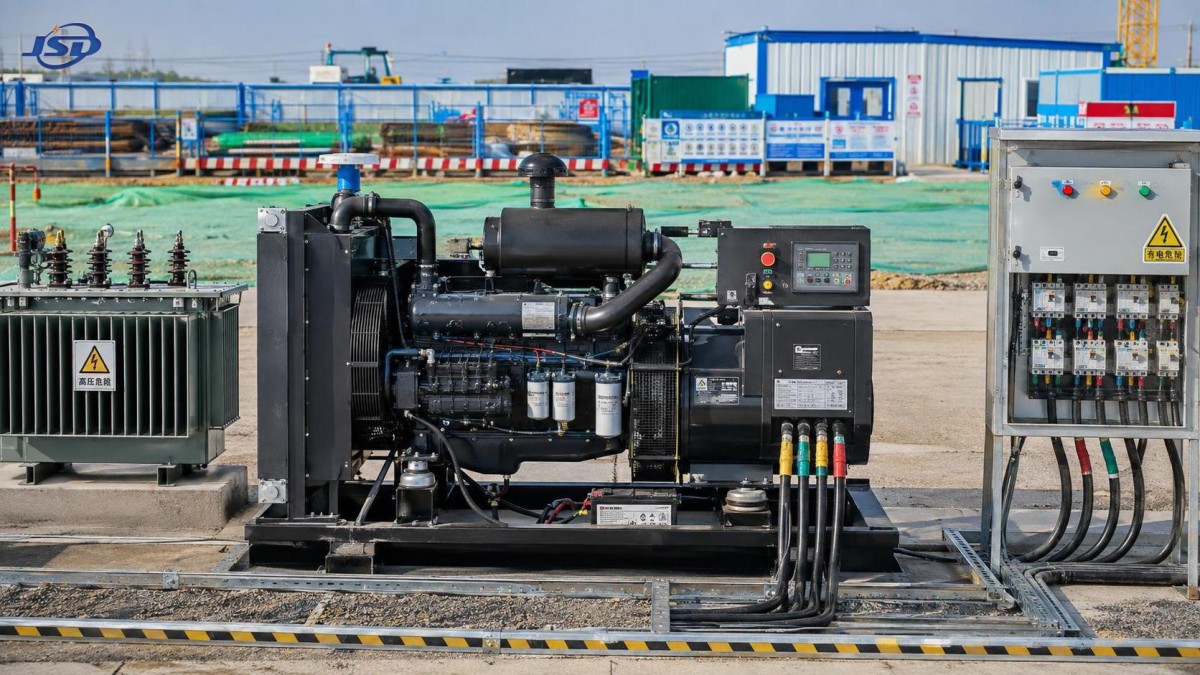
Check whether the genset is sized for the way it is used
An incorrectly sized unit is one of the most persistent causes of poor fuel economy. A genset selected only for the largest possible load may spend most of its life underloaded. Conversely, a unit chosen too close to the normal demand may operate under excessive strain, consume more fuel during peaks, and suffer voltage or frequency dips when motors start.
Assess both running load and starting load. Motors, pumps, compressors, refrigeration systems, and some power tools can draw a much higher current during starting than during normal operation. The genset needs sufficient capacity to handle that temporary demand, but it does not necessarily need to run all day as though the starting surge were continuous.
Load management may also involve the upstream and downstream power arrangement. At sites where generator runtime is being reduced through improved distribution, stored energy, or a more stable medium-voltage connection, equipment such as an American-Type Pad-Mounted Substation can form part of the wider distribution design. Its suitability depends on the voltage level, protection coordination, and site layout; it does not directly improve engine fuel consumption by itself. The fuel benefit comes only when the overall electrical system reduces unnecessary generator operation or avoids avoidable losses and overloads.
Keep air, fuel, cooling, and lubrication systems in working condition
A diesel engine needs the correct amount of clean air and clean fuel to burn efficiently. Restrictions in either path can increase fuel use, reduce power response, and create visible exhaust symptoms. Maintenance should therefore be treated as an operating-cost control, not only as a reliability task.
Inspect the air filter according to the manufacturer’s maintenance interval and more often in dusty environments. An open frame genset used near earthworks, cement handling, crop processing, or unpaved roads may ingest much more dust than a unit operated in a clean equipment room. Do not remove the filter and run the engine unprotected as a shortcut. A damaged or missing filter can allow abrasive particles into the intake system and create far more serious problems than a restricted element.
Fuel filters also deserve attention. Water, sediment, or degraded fuel can restrict flow and affect injection quality. Drain water separators where fitted, use clean approved containers for refueling, and keep fuel caps closed when not in use. Infrequently used units may develop condensation in tanks, particularly where day and night temperatures vary. A fuel sample that appears cloudy, contains visible water, or has unusual deposits should be investigated before it reaches the engine.
Engine oil, coolant level, fan belts, hose condition, and radiator cleanliness influence fuel use indirectly but materially. An overheating engine may lose efficiency or trigger protective derating. A slipping belt can reduce cooling performance. Low oil level or incorrect oil specification can increase mechanical resistance and accelerate wear. Follow the engine manual for service intervals, approved fluids, and filter types rather than extending intervals simply because the genset has not accumulated many running hours.
Watch the exhaust and operating sound
Operators often notice changes before instruments show a fault. Persistent black smoke under a normal load may indicate restricted air intake, excessive fueling, injector issues, or an overload condition. White or pale smoke during cold starts can have different causes and should be assessed in relation to engine temperature and duration. Unusual knocking, hunting speed, hard starting, irregular exhaust pulses, or a sudden change in fuel use should not be ignored.
These symptoms do not identify a single defect on their own. They are signals to check the basics first: actual load, air filter condition, fuel quality, fuel filter restriction, engine temperature, oil level, and visible leaks. If the condition remains after these checks, the engine should be evaluated by qualified service personnel. Continuing to run an engine with unstable speed or abnormal smoke can turn a fuel-efficiency issue into a repair issue.
Use fuel that matches the operating environment
Fuel quality is especially important for portable and open frame equipment because refueling often occurs in less controlled conditions. Fuel stored in unsealed drums, mixed with old stock, or transferred through dirty funnels can introduce contaminants that reduce combustion quality and damage components. Use the diesel grade recommended for the engine and consider seasonal conditions where cold weather affects fuel flow.
In low temperatures, fuel can thicken or form wax crystals that restrict filters. In hot conditions, water contamination and tank venting become greater concerns. Keep stored fuel protected from direct contamination, label containers clearly, and avoid using containers that previously held other oils or chemicals. Rotating stock helps prevent long storage periods, especially when a standby genset runs only occasionally.
Do not assume that fuel additives will solve every consumption problem. An additive may be appropriate in specific conditions when approved for the engine and fuel type, but it cannot correct poor sizing, blocked filters, injector faults, or excessive idling. Treat additives as a controlled maintenance decision rather than a substitute for inspection.
Prevent electrical losses and unstable loading
Fuel is consumed to produce electrical energy, so poor electrical connections and badly managed loads can create demand that does not do useful work. Loose terminals, undersized cables, damaged extension leads, and overheated connectors can cause voltage drop and waste energy as heat. They may also force motors to work harder, increasing their current draw and placing extra demand on the generator.
Inspect cables, plugs, breakers, and distribution points with the genset shut down and isolated as required. Look for discoloration, softened insulation, loose terminals, corrosion, or connectors that become unusually hot during use. Use cable sizes suitable for the current, length, installation method, and ambient conditions. Long extension runs are particularly prone to voltage drop when heavy tools or motors are connected.
Unbalanced loading can also affect performance on three-phase units. Where possible, distribute single-phase loads across phases rather than placing most of the demand on one phase. Check phase currents during normal operation. A balanced system helps the alternator and engine operate more smoothly and can reduce the risk of nuisance trips, overheating, and inefficient loading.
Operate at stable speed and avoid unnecessary rapid load changes
Generator frequency depends on engine speed. Repeatedly adding and removing large loads makes the governor work harder and can increase fuel use during recovery. This is often seen when several high-demand devices are switched on at the same time after a break or when a pump cycles rapidly because of poor control settings.
Bring major loads online in a planned sequence when the process allows it. Start the largest motor first only if the genset has enough capacity and the manufacturer’s guidance supports that sequence; otherwise, use staggered starts to reduce the peak demand. Soft starters, variable-speed drives, or suitable motor controls can reduce starting stress in some applications, but they must be compatible with the generator and load. Improperly matched electronic controls can introduce harmonic distortion or unstable operation.
A stable load does not mean a fixed load at all times. It means the genset is not repeatedly exposed to abrupt, avoidable changes that offer no operating benefit. Better sequencing can lower fuel waste while also improving voltage stability and reducing wear on the engine and alternator.
Use a practical routine to find the source of high consumption
When fuel use rises, compare the current operating pattern with the period when the genset was performing normally. Start with the simplest checks before assuming an internal engine fault. Confirm whether more equipment has been connected, whether the running schedule has changed, or whether the genset is now spending longer at low load.
- Record fuel added, operating hours, and typical load for several comparable cycles.
- Check for leaks around fuel hoses, filters, injectors, tank fittings, and drain points.
- Inspect the air filter, fuel filter, coolant level, oil level, and visible belt condition.
- Review connected loads and identify equipment left running without a production need.
- Measure phase loading and voltage where suitable instruments and safe procedures are available.
- Observe exhaust color, engine temperature, speed stability, and starting behavior.
- Arrange further diagnosis when consumption remains high despite correct loading and basic maintenance.
Accurate records matter because fuel consumption can change for legitimate reasons. Cold weather, high ambient temperature, altitude, heavy motor starting, and longer load periods can all affect the amount of fuel used. The useful comparison is not simply liters per day; it is fuel used in relation to operating hours, load pattern, and the work completed.
For day-to-day operation, the strongest fuel-saving measures are usually straightforward: run the diesel open frame genset only when power is needed, keep it loaded sensibly, maintain clean intake and fuel systems, correct electrical distribution problems, and investigate changes before they become chronic. These practices reduce waste without compromising the reliable power output that the equipment is expected to provide.

Get a Quote
Regardless of whether you require general advice or specific support, we are happy to help you.
Send Us Your Inquiry Today

Jinshida Electric remains committed to contributing to global energy development through professional manufacturing and superior service.