





What determines the payback period of energy storage systems
It often starts with a simple question in an approval meeting: the project team wants to install energy storage, but nobody can agree on when the investment will actually pay for itself. One person looks only at the purchase budget. Another assumes the system will automatically reduce electricity costs. Someone else worries that savings on paper may disappear once maintenance, charging losses, and operational limits are counted. This uncertainty is exactly where many storage projects slow down.
For anyone reviewing budgets, the hard part is not understanding that energy storage systems can be useful. The hard part is judging whether the payback period is realistic under the site’s actual operating conditions. A storage project that looks attractive in a presentation may behave very differently once tariff rules, load fluctuations, equipment efficiency, and replacement planning are brought into the discussion. If the evaluation is too rough, the decision can become either overly cautious or unnecessarily optimistic.
A more reliable way to assess payback is to stop asking, “How much does the battery cost?” and start asking, “Under what conditions does this system create usable financial value month after month?” Once that shift happens, the analysis becomes clearer.
The payback period changes because the value stream is not the same in every project
One of the most common mistakes is treating storage as if it had a single financial function. In practice, the return depends on what the system is being asked to do. Some sites use storage mainly for peak shaving. Others use it to reduce the impact of tariff fluctuations, improve renewable energy self-consumption, support backup power planning, or smooth power quality in operations that are sensitive to voltage instability.
That difference matters because payback is driven by the gap between cost and captured value. If the main purpose is shaving short peak demand windows, the financial benefit depends on how often those peaks occur and whether the battery can respond at the right time and for long enough. If the purpose is time-of-use arbitrage, then the spread between low-price charging periods and high-price discharge periods becomes far more important than the battery nameplate capacity alone.
In other words, two projects with similar equipment sizes can have very different return periods if one site has volatile tariffs and consistent discharge opportunities while the other has flat electricity pricing and irregular load patterns.
Electricity pricing has more influence than many first assume
When people first compare options, they often focus on capital expenditure because that number is visible and immediate. But for payback, the local electricity pricing structure can be even more decisive. If tariffs vary sharply by time period, a storage asset has more room to create savings. If demand charges are high, reducing short but expensive peaks may become financially meaningful. If export compensation for renewable generation is limited, storing power for later internal use may be more attractive than sending it back to the grid.
That means the question is not simply whether electricity prices are “high” or “low.” The real question is whether the tariff design creates a repeated opportunity for storage to intervene in a way that lowers the bill. Flat tariffs generally narrow the benefit window. Complex tariffs with large differences between periods, penalties, or demand-related components often widen it.
Before approving a project, it helps to review at least several billing cycles and compare them with actual load behavior. This is often where assumptions become more realistic. A site may have high annual consumption but very little price variation. Another may have moderate total consumption but frequent expensive peaks. Those are not the same investment case.
Efficiency losses quietly reshape the business case
Storage is sometimes discussed as if every unit of electricity charged into the system can be fully used later. In real operation, conversion losses exist. Charging, discharging, thermal management, and system controls all affect how much of the stored electricity becomes usable output. Over time, these losses influence the effective savings calculation.
This does not mean the project is weak. It means the return model has to reflect reality. If a team calculates savings based only on gross charged energy and ignores round-trip efficiency, the estimated payback period can look shorter than it really is. The same issue appears when standby consumption or auxiliary power use is left out.
For review purposes, it is often helpful to ask whether the proposal is based on nominal performance or expected operating performance. The difference sounds small, but in finance discussions it can significantly alter the confidence level of the projection.
Cycle life and degradation are not technical side notes
Another point that often gets pushed aside until late in the process is battery aging. Yet cycle life directly affects cost recovery. A storage system that is heavily cycled to maximize daily savings may also move faster through its useful life. If the project depends on frequent deep cycling, the degradation profile becomes part of the financial analysis, not just an engineering concern.
This is where many internal discussions become more productive once the operating pattern is defined clearly. Will the system charge and discharge once a day, several times a day, or only during occasional peak events? Will it stay near full charge for long periods? Will ambient conditions require additional thermal management? These questions influence long-term usable capacity and therefore the duration over which savings can be captured.
A short payback estimate based on aggressive daily use may appear appealing at first glance, but if that estimate ignores how cycling affects future performance, the model is incomplete. Financial approval is usually stronger when degradation assumptions are visible and conservative rather than hidden behind simplified averages.
Maintenance and integration costs tend to appear later than they should
Many projects are screened using equipment price plus installation, then expanded later when operating details emerge. By that stage, the expected return may already have been informally accepted. A better approach is to include the less obvious cost elements early: inspection requirements, monitoring, cooling support, protection coordination, software interfaces, operator training, and any upstream or downstream electrical upgrades needed for safe operation.
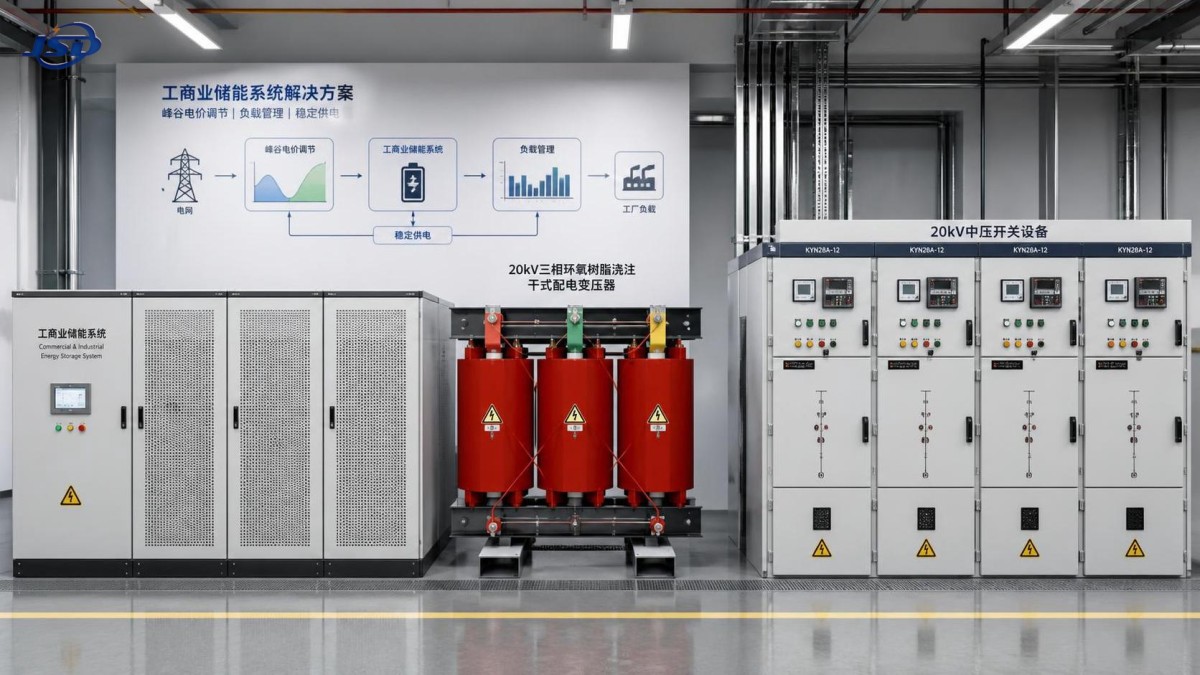
In sites with existing distribution equipment constraints, storage may also require attention to transformer loading, protection settings, and room layout. Sometimes the storage decision reveals that surrounding infrastructure must also be reviewed. In that context, support equipment affects not only safety and operability, but also the timeline for realizing savings.
For example, where distribution architecture is being updated alongside the storage installation, components such as the 20kV Three-Phase Cast Resin Dry-Type Distribution Transformer may naturally become part of the wider electrical arrangement. That does not automatically improve payback by itself, but it can be relevant when evaluating whether the system can be integrated in a stable and compliant way without creating avoidable operating constraints.
The site’s load profile is usually more important than the headline system size
It is easy to assume that a larger battery creates a faster return because it can store more energy. In practice, oversized systems can lengthen payback if the site does not have enough usable charge and discharge opportunities. A battery only generates value when its capacity aligns with real load timing and tariff conditions.
Many decision delays happen because proposals are based on annual consumption totals rather than interval data. But annual consumption does not reveal whether the facility has narrow short-lived peaks, long evening demand periods, surplus midday solar generation, or highly irregular production cycles. Those details determine whether a storage asset will be underused, overstressed, or reasonably matched.
If you are comparing proposals, it helps to ask a simple question: is the recommended system size based on actual site behavior, or is it based mainly on a standard package? This one question often separates a credible payback estimate from a generic one.
Policy incentives can shorten payback, but they should not be treated as the whole investment logic
In some regions, incentives, tax treatment, grid programs, or energy management support policies can materially improve project economics. They may reduce upfront capital burden or create additional operating value. However, it is risky to approve a project on the assumption that policy support alone will justify it.
In procurement reviews, a sounder method is to look at the base case first: if incentives disappeared or changed, would the project still remain reasonable, even if the payback becomes longer? This prevents an investment from depending too heavily on factors outside operational control. Incentives can improve timing, but they should sit on top of a workable technical and billing logic rather than replace it.
Power equipment quality affects return indirectly but meaningfully
Payback discussions often separate the battery from the rest of the electrical system too sharply. Yet storage performance depends on the reliability of the broader power path. Frequent interruptions, protection mismatches, voltage issues, or weak distribution coordination can reduce the number of effective operating hours and add unplanned costs. Those effects may not appear in the first financial model, but they influence real-world return.
That is why storage should be reviewed as part of the site’s transmission and distribution environment, not as an isolated box. In some projects, attention to switchgear coordination, transformer selection, monitoring visibility, and installation environment does more to preserve expected savings than chasing a slightly lower battery purchase price.
Where the project includes substantial electrical upgrades, reviewers may also see references again to the 20kV Three-Phase Cast Resin Dry-Type Distribution Transformer as part of the distribution side arrangement. The important point is not the product name itself, but the reminder that storage economics and power system compatibility are closely linked.
A practical way to review the payback period before approval
When the proposal feels uncertain, the most useful move is usually not to ask for more promotional material. It is to narrow the evaluation into a few grounded questions.
First, identify the exact source of savings. Is it demand charge reduction, time-shifted energy use, renewable self-consumption, backup-related loss avoidance, or a combination? If the value source is vague, the payback estimate will also be vague.
Then test whether the site actually provides enough operating opportunities. Billing structure, interval load data, and expected battery dispatch pattern should all point in the same direction. If they do not, the return may depend on assumptions that are too fragile for approval.
After that, look at the operating realism: round-trip efficiency, auxiliary consumption, maintenance, degradation, and control strategy. These are not secondary details. They are what convert a theoretical return into a dependable one.
Finally, review whether the surrounding power infrastructure can support the project cleanly. If additional distribution work is needed, that should be included in timing and cost expectations from the beginning rather than treated as an afterthought.
When these points are checked carefully, the payback period of energy storage systems becomes less of a guessing exercise. It becomes a structured judgment based on tariff mechanics, operating behavior, equipment compatibility, and cost visibility. That usually leads to a better decision than choosing the lowest initial quote or relying on a best-case savings scenario.
For anyone evaluating whether to move forward, the most reliable conclusion is usually this: the payback period is determined not by one number, but by how well the system’s technical behavior matches the site’s financial opportunities. Once that match is clear, the decision becomes much easier to defend.

Get a Quote
Regardless of whether you require general advice or specific support, we are happy to help you.
Send Us Your Inquiry Today

Jinshida Electric remains committed to contributing to global energy development through professional manufacturing and superior service.