





What determines payback for grid energy storage systems today?
It often starts with a meeting that seems simple: a storage project is presented as a smart way to cut peak demand, capture low-cost electricity, and support a more flexible grid. On paper, the concept looks sensible. Then the uncomfortable question appears: how long is the payback really, and what makes it move from acceptable to risky? That is usually the point where enthusiasm slows down. A grid storage proposal may look attractive in technical terms, but approval depends on whether its financial return can stand up to uncertainty.
Many people reviewing power infrastructure proposals run into the same problem. They are not only judging equipment cost. They are trying to understand whether future revenue is dependable, whether operating assumptions are realistic, and whether the project could lose value because one overlooked design choice changes performance over time. For grid energy storage systems, payback is shaped by a chain of variables, and missing even one of them can turn a “good” project into one that struggles to justify itself later.
Why upfront price rarely answers the real question
A common mistake in early evaluation is to compare storage options mainly by purchase cost per unit capacity. That feels practical because the figure is easy to obtain and easy to compare. But payback is not determined by the battery cabinet alone, or by the inverter alone, or by any single line item in procurement documents. It depends on whether the full system can repeatedly produce economic value under real operating conditions.
In practice, a lower initial quote may come with trade-offs in usable capacity, conversion efficiency, thermal management, maintenance access, control quality, or expected degradation. None of those issues looks dramatic in isolation. Together, they can change how often the system is dispatched, how much energy it can actually shift, and how predictable the financial return remains after several years of operation.
For someone deciding whether to approve a purchase, the better question is not “Which system is cheaper?” but “Which system keeps more of its planned value after installation, grid interaction, and routine use are taken into account?” That shift in framing usually leads to a more realistic payback discussion.
Revenue stacking matters more than a single use case
One of the biggest determinants of payback for grid energy storage systems today is whether the project relies on only one economic function or can benefit from several. A storage asset used solely for one narrow task may still be valid, but its return is usually more vulnerable. If tariff structures change, if operating patterns shift, or if the expected dispatch frequency is lower than planned, the payback can stretch quickly.
By contrast, a project designed with multiple value streams in mind tends to be easier to defend. These may include peak shaving, demand charge management, time-of-use arbitrage, reserve support, renewable smoothing, local reliability improvement, or power quality support depending on the grid environment. The exact mix varies by site and market rules, but the principle stays the same: the more practical ways a system can create value, the less its business case depends on one assumption being perfect.
That does not mean every project should chase every possible service. In fact, trying to force too many operating roles into one design can create complexity and weaken performance. The useful discipline is to identify which two or three value streams are both technically feasible and financially meaningful for the site. That is often where a more trustworthy payback estimate begins.
Electricity price behavior can shorten or stretch the timeline
Another major influence is the pattern of electricity pricing. Storage economics improve when there is a meaningful spread between lower-cost charging periods and higher-cost discharge periods. But the size, stability, and predictability of that spread matter. If the modeled savings depend on unusually favorable price gaps that do not occur consistently, the payback projection becomes fragile.
People often focus on headline tariff differences without looking closely at operational timing. A storage system may technically be able to charge off-peak and discharge during peak windows, yet actual site demand, grid dispatch constraints, or local operating policies may reduce the number of useful cycles. This is why two projects with similar installed capacity can end up with very different financial outcomes.
When assessing proposals, it helps to examine whether the savings logic is based on routine load behavior or on exceptional events. Routine behavior is usually easier to trust. If the model depends heavily on rare peaks, unusual curtailment windows, or idealized dispatch timing, the expected payback deserves more scrutiny.
Project design choices affect return long after commissioning
Payback is also determined by design discipline, not just component selection. The layout of the storage system, the coordination between battery, inverter, transformer, protection, and control systems, and the match between equipment ratings and actual operating conditions all affect how efficiently the project performs.
This is where balance-of-system decisions become financially relevant. For example, voltage level selection, conversion stages, and distribution equipment configuration can influence losses, reliability, and maintenance practicality. In a grid-connected project, supporting equipment is not a side detail. It helps determine whether the storage asset can deliver energy when needed and whether recurring inefficiencies quietly erode expected returns.
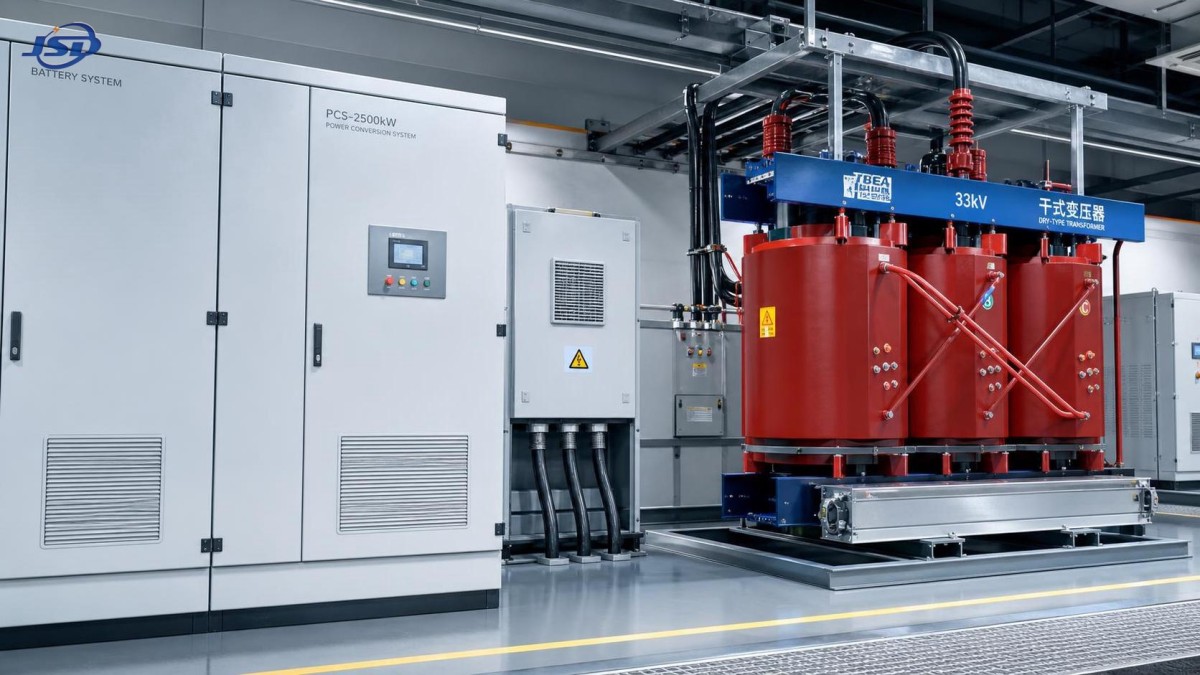
In some configurations, supporting equipment such as a 33kV Cast Resin Dry-Type Distribution Transformer may be part of the broader electrical path that links storage assets to the distribution network. The key point for review is not the product name itself, but whether the selected equipment fits the site’s environmental, safety, and operating requirements without adding avoidable complexity. A mismatch here can affect both installation cost and long-term operating confidence.
Cycle life and degradation should be read carefully, not optimistically
When people discuss payback, they often speak as if system performance remains steady throughout the entire evaluation period. Real systems do not work that way. Storage assets age. Usable capacity changes. Efficiency can shift. Dispatch strategy also affects wear. If the financial model assumes ideal performance across years of operation, the projected payback may look cleaner than the project will actually be.
That does not mean degradation makes storage unattractive. It means the assumptions need to reflect intended use. A system cycled frequently for aggressive arbitrage may not age in the same way as one used more selectively for peak management and grid support. The operating profile matters just as much as the stated technical specification.
A practical review approach is to look beyond a single performance figure and ask how the supplier or project team is framing usable energy over time, warranty boundaries, expected operating windows, and maintenance conditions. If those details are vague, the financial model is probably carrying more risk than it appears to.
Reliability has a direct financial role, even if it is harder to model
Some of the most important payback drivers are not easy to express in a simple spreadsheet. Availability, fault response, serviceability, control integration, and replacement lead times all influence whether a project actually captures the value it was designed to deliver. A storage system that misses dispatch opportunities because of avoidable downtime may still be “installed,” but its payback calculation no longer reflects reality.
This is especially important in projects where the system is expected to support grid stability or to operate during narrow high-value periods. If reliability is weak, the lost value does not always show up immediately in procurement comparisons, but it appears later in underperformance and planning friction.
For that reason, many careful reviewers spend less time debating small differences in initial equipment price and more time understanding engineering maturity, maintainability, and operational transparency. Those points are not secondary. They are part of the return calculation.
The connection point and infrastructure context change the economics
Storage projects are often discussed as if they can be evaluated in isolation. In reality, the surrounding electrical infrastructure shapes both cost and payback. Interconnection requirements, site constraints, protection coordination, transformer capacity, thermal environment, and downstream load characteristics all influence the final project profile.
A proposal may look attractive until grid connection upgrades, civil work, or distribution equipment adjustments are included. In other cases, a well-matched infrastructure setup can improve efficiency and simplify deployment. This is one reason procurement reviews should ask for a system-level view rather than a battery-centered view. The storage asset earns revenue as part of an electrical chain, not as a standalone box.
Where medium-voltage integration is part of the design, equipment choices related to insulation method, installation environment, and maintenance expectations deserve attention. Depending on the project, components such as the 33kV Cast Resin Dry-Type Distribution Transformer may fit the broader design logic when dry-type construction and distribution compatibility are preferred. What matters is whether the selection supports the planned operating model and risk tolerance.
Questions that usually lead to a better approval decision
When a storage proposal reaches financial review, it helps to push the conversation away from marketing language and toward operational proof points. Not every project team presents these clearly the first time, so the quality of the follow-up questions often determines whether the business case becomes stronger or weaker.
Useful questions tend to focus on a few areas. First, what exact revenue or savings streams are being counted, and which of them are essential versus optional? Second, how often is the system expected to cycle under normal conditions rather than ideal conditions? Third, what assumptions are being made about degradation, availability, and maintenance over the evaluation period? Fourth, which infrastructure upgrades are already included in the cost and which might still emerge later? Finally, if operating conditions change, can the system be dispatched differently without undermining its economics?
These questions do not require a technical deep dive into every component. They simply force the project case to become more realistic. That is usually where weak assumptions start to show.
When the payback looks unclear, the issue is often framing, not technology
Many uncertain decisions happen because the project is being presented with the wrong emphasis. If the case is built around headline capacity and purchase price, payback will often remain ambiguous. If the same project is reframed around expected dispatch behavior, infrastructure fit, lifecycle performance, and resilience of value streams, the decision becomes easier to test.
That does not guarantee approval, and it should not. Some projects will still be too exposed to tariff uncertainty or too dependent on assumptions that are hard to defend. But a disciplined review helps separate promising projects from optimistic ones. In the current market, that distinction matters more than broad claims about storage being beneficial in general.
For anyone evaluating grid energy storage systems today, the most reliable approach is to treat payback as an outcome of system design, operating logic, and infrastructure compatibility rather than a simple function of purchase price. Once those pieces are examined together, the return profile usually becomes much clearer—and so does the quality of the decision.

Get a Quote
Regardless of whether you require general advice or specific support, we are happy to help you.
Send Us Your Inquiry Today

Jinshida Electric remains committed to contributing to global energy development through professional manufacturing and superior service.