





What battery energy storage can and cannot solve in grid outages
Battery energy storage gets talked about as if it can make grid outages disappear. That is only partly true. In a real power system, battery energy storage is very good at covering short interruptions, stabilizing sensitive loads, and buying time when the grid becomes unstable. It is much less effective when the outage lasts many hours, when large motors must restart, or when the site has long periods with no incoming power. If you are comparing backup options, the useful question is not “Is a battery good or bad?” but “Which outage problem am I actually trying to solve?”
That distinction matters more than many first-time planners expect. A hospital imaging room, a telecom station, a substation auxiliary supply, and a factory with heavy motor loads may all say they need backup power, but their outage profiles are completely different. In transformer and distribution work, this is where many misunderstandings begin: people focus on storage capacity first, while the real answer often depends on load type, transfer speed, peak demand, and how long the grid is likely to stay down.
Where battery energy storage works very well
At its best, battery energy storage solves three reliability problems extremely well.
First, it handles fast power interruptions. Many industrial and commercial users do not suffer most from total blackouts; they suffer from very short events, voltage dips, or unstable switching. A battery system paired with the right inverter and control logic can respond almost instantly. That makes it useful for sensitive electronics, control systems, communication equipment, and processes that cannot tolerate even a brief break in supply.
Second, it supports orderly continuity rather than chaos. During a grid event, a battery can keep essential circuits alive long enough for operators to transfer loads, shut down equipment correctly, or wait for another backup source to come online. That “bridge time” is often more valuable than people realize. In some facilities, avoiding one uncontrolled shutdown is worth more than the battery’s daily energy savings.
Third, it helps where the outage pattern is short but frequent. Some grids are not completely unreliable; they are simply inconsistent. In those cases, battery energy storage can smooth operations, reduce nuisance trips, and improve power quality at the user end. For infrastructure operators, that may be a more practical target than trying to make the entire site independent from the grid for a full day.
A simple way to think about it: batteries are strongest when the problem is speed, stability, and short-duration continuity.
What it usually cannot solve on its own
The biggest mistake is assuming battery energy storage is a universal replacement for all backup power equipment. It is not.
If your site must run through a long outage with substantial load, a battery-only design often becomes expensive very quickly. The reason is simple. The longer the required backup time, the more storage capacity you need. Once you move from minutes to many hours, system size, space requirements, thermal management, and project cost all change significantly. That does not mean battery storage is the wrong choice, but it means the economics and system design need much closer review.
It also does not solve every type of starting demand. Facilities with pumps, compressors, cranes, HVAC systems, or other motor-heavy equipment may have large inrush currents and difficult transient behavior. A battery inverter can support some of this if designed correctly, but many people underestimate the difference between keeping an existing load running and starting a heavy load from zero during an outage. Those are not the same problem.
Another limit is energy replenishment. If the grid is down and there is no other generation source, the battery is just counting down. In planning meetings, this is often the moment when expectations become more realistic. A battery can store energy; it does not create energy. If the outage is prolonged, the question becomes where the next kilowatt-hour comes from.
That is why many serious resilience designs are hybrid rather than battery-only.
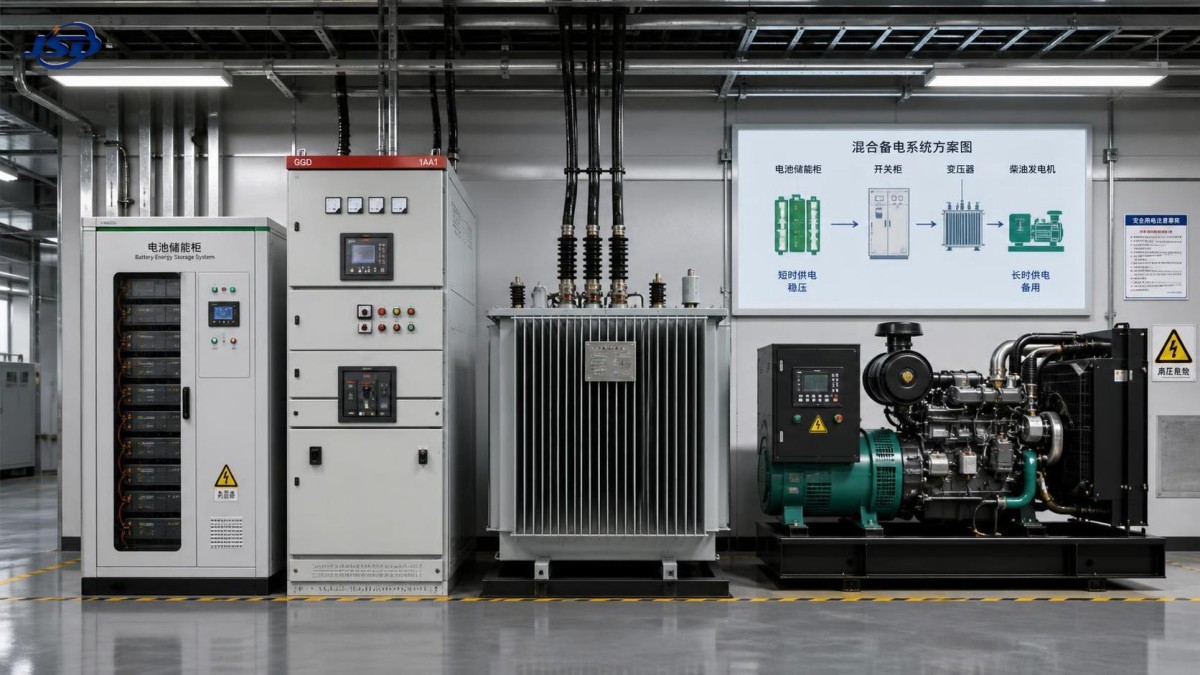
Short answer: battery energy storage is excellent for ride-through and limited backup, but weak as a stand-alone answer for long outages and high-starting-load sites
That is the practical summary most users need. Once you frame it that way, system selection becomes much clearer.
In field discussions, another common misunderstanding is to confuse energy storage with grid hardening. A battery at one facility can improve that facility’s resilience. It does not repair upstream feeder weakness, poor protection coordination, damaged transformers, or regional transmission constraints. If outages come from weak network infrastructure, then storage may reduce the pain at the endpoint, but it does not remove the root cause.
The outage details matter more than the battery label
When people search this topic, they often want a yes-or-no answer. In practice, you need a few grounded questions first:
- How long do outages usually last: seconds, minutes, or hours?
- Which loads must stay on, and which can be shed?
- Are there large motor starts or only stable electronic loads?
- Is zero transfer time required, or is a short delay acceptable?
- Will there be another source of power during a long outage?
These questions sound basic, but they separate workable designs from expensive disappointments. A battery system sized for a data rack is one thing. A system expected to carry a full industrial process line through a regional outage is another.
In transformer-related applications, the upstream and downstream arrangement also matters. The battery may sit behind a transformer, alongside switchgear, or inside a microgrid architecture with solar, generator backup, and load prioritization. The same battery rating can perform very differently depending on system topology, protection settings, and how the loads are segmented.
When a hybrid setup makes more sense
Many users arrive at a better solution when they stop treating batteries and generators as competing ideas. In real projects, they often do different jobs.
A battery handles the first seconds or minutes cleanly. It can support uninterrupted transfer, protect controls, and cover short events without starting anything mechanical. A generator handles duration. That combination is often more practical for plants, utility support functions, transport infrastructure, and remote facilities where outages may stretch beyond the useful window of a battery-only design.
That is also where a product such as Open Type Diesel Generator Set can fit naturally into planning discussions. Not as a replacement for battery energy storage in every case, but as a companion option when the real requirement is long-duration backup after the battery’s fast-response role is finished.
The point is not to force a diesel unit into every design. It is to match technologies to failure modes. If the site mainly suffers split-second disturbances, a battery may do most of the work. If the site faces weather-related outages that last half a day, storage alone may not be the most sensible answer.
Common claims that need a reality check
“A battery will keep the whole building running.” Maybe, but only if the building load is modest, the runtime expectation is short, or the budget allows large capacity. In many projects, only critical loads should be backed up.
“If I install enough batteries, I do not need any other backup.” Technically possible in some cases, but not automatically practical. Space, cost, recharge strategy, and lifecycle economics need to be checked carefully.
“Battery backup is simpler than generator backup.” Sometimes on daily operation, yes. On full-system engineering, not always. Controls, fire protection, ventilation, protection coordination, and integration with transformers and switchgear all matter.
“The battery rating on paper tells me everything.” It does not. Useful performance depends on discharge duration, power conversion equipment, temperature conditions, and the nature of the loads being served.
What experienced planners check before making a decision
People newer to backup planning often ask first about battery size. More experienced teams usually start somewhere else: critical load definition. They want to know what absolutely must stay energized, what can tolerate a transfer delay, and what should be intentionally dropped during an outage.
From there, the next useful check is the site’s outage history. Not a guess, and not a single dramatic event that everyone remembers. The real pattern matters. Frequent 10-second disturbances lead to one type of design. Two rare but 8-hour outages per year lead to another.
Then comes coordination with the rest of the power system. This is where companies working across transmission, distribution, and equipment manufacturing bring practical value. Jinshida Electric Power Technology Co., Ltd., for example, focuses on power transmission and distribution equipment, with attention to product quality, application engineering, and reliable support across grid construction, industrial manufacturing, new energy, and infrastructure projects. In outage planning, that broader system view is important because backup performance depends on more than the battery cabinet itself.
One more detail is often overlooked: maintenance strategy. Batteries may reduce some of the routine operational burden associated with mechanical backup equipment, but they still require disciplined monitoring, environmental control, and periodic performance verification. A neglected battery system can create false confidence, which is one of the worst outcomes in resilience planning.
So what should you expect from battery energy storage during grid outages?
Expect it to be excellent at fast support, selective backup, and power continuity for critical loads. Expect it to help manage instability and reduce the operational damage caused by short interruptions. Expect it to be part of a modern resilience strategy, especially where cleaner operation, automation, and fast response matter.
Do not expect it to erase the need for careful load analysis. Do not expect it to fix weak grid infrastructure upstream. And do not expect a battery-only design to be automatically economical for long outages or heavy industrial duty.
If you are still comparing options, start with the outage profile, not the technology label. Once you know whether your problem is momentary interruption, multi-hour blackout, motor starting stress, or poor power quality, the role of battery energy storage becomes much easier to judge. In many cases, the best answer is not bigger storage. It is a better-matched system.
FAQ
Can battery energy storage replace a generator during grid outages?
Sometimes for short-duration critical loads, yes. For long outages or high-demand sites, it usually works better alongside a generator than as a full replacement.
Is battery backup enough for factories?
It depends on the factory load. Sensitive controls and selected lines may be good candidates. Heavy motor-driven processes often need much more detailed engineering.
Does battery energy storage improve power quality as well as backup?
Yes, in many designs it can help with short interruptions and voltage-related issues, not just blackout backup.
What is the first thing to confirm before choosing a system?
Define which loads are truly critical and how long they must stay on during a realistic outage scenario.
When should I look at a generator too?
If outage duration is uncertain, if the site must operate for many hours, or if there is no reliable way to recharge during a blackout, it is time to evaluate options such as Open Type Diesel Generator Set.
Image Placeholder List
Suggested placement: after the section explaining what battery systems cannot solve on their own
Suggested image content: a simple comparison diagram showing battery-only backup versus hybrid battery-plus-generator backup during short and long grid outages
Suggested alt text: Battery energy storage limits in short and long grid outage scenarios
Internal Link Anchor Text Suggestions
- Transformer protection in industrial power systems: technical guide or application page
- How backup power systems work with switchgear and distribution equipment: educational article
- Battery storage vs diesel generator for critical loads: comparison page
- Substation auxiliary power solutions: product or solution page
- Microgrid design for industrial facilities: case study or knowledge article
External Authority Source Suggestions
- Grid reliability and resilience guidance from government energy departments or power regulators
- Industry association reports on energy storage safety, performance, and grid applications
- Technical documentation from recognized inverter, battery, or power system standards organizations

Get a Quote
Regardless of whether you require general advice or specific support, we are happy to help you.
Send Us Your Inquiry Today

Jinshida Electric remains committed to contributing to global energy development through professional manufacturing and superior service.