





What Is a Hermetically Sealed Distribution Transformer and Where Is It Used?
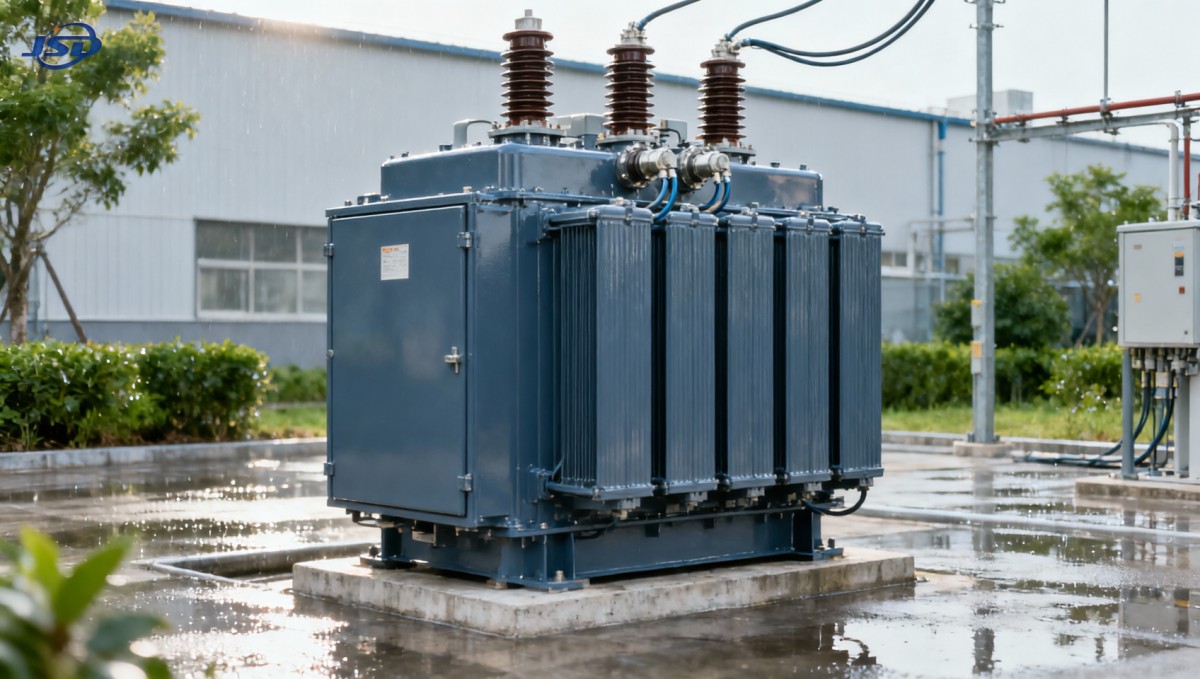
A hermetically sealed distribution transformer is an oil-filled transformer whose tank is sealed from the outside atmosphere. Its purpose is straightforward: keep oxygen, moisture, and airborne contaminants away from the insulating oil and the active parts inside the tank.
For a buyer or project engineer, the practical question is less about the definition than about the operating environment. A sealed design is often worth considering when a transformer will spend years outdoors, face large temperature swings, operate in humid or polluted air, or be installed where routine oil maintenance is difficult. It can reduce the pathways through which insulation quality deteriorates, but it does not remove the need for correct sizing, protection coordination, installation, and condition monitoring.
How the sealed design works
In a conventional oil-immersed transformer with a conservator, the oil expands and contracts as load and ambient temperature change. The conservator arrangement accommodates that volume change, commonly with a breather system intended to limit moisture entering the air space. The transformer is not fully isolated from atmospheric conditions, however, and the breather requires inspection and maintenance.
A hermetically sealed distribution transformer uses a closed tank system instead. There is no direct air exchange between the oil and the surrounding atmosphere. As the oil temperature changes, the tank must absorb the resulting pressure and volume variation. Depending on the design, this may be achieved through a flexible corrugated tank wall, radiator panels designed for controlled movement, or another sealed pressure-compensation arrangement.
Because the oil remains isolated, it is less exposed to oxygen and moisture that can accelerate oxidation and reduce dielectric strength over time. The design also limits the entry of airborne contaminants, which matters in locations where dust, salt spray, industrial emissions, or persistent humidity would otherwise create a more demanding maintenance environment.
That distinction should not be oversimplified. “Hermetically sealed” describes the tank and oil preservation concept; it does not automatically define winding temperature rise, short-circuit withstand capability, insulation class, protection level, efficiency, voltage ratio, or suitability for every installation. Those remain separate engineering decisions.
Why moisture and oxygen matter inside an oil-filled transformer
Transformer oil serves two related functions: it provides electrical insulation and transfers heat away from the windings and core. Paper and pressboard insulation inside the transformer are particularly sensitive to moisture. When moisture content rises, dielectric margins can be reduced, and insulation aging can be accelerated under thermal stress.
Oxygen also contributes to oil oxidation. Over extended service, oxidation can form acids and sludge, affecting oil quality and heat transfer. The rate of deterioration depends on temperature, loading pattern, oil condition, sealing quality, and the wider operating environment. A sealed tank does not stop thermal aging caused by sustained overload or high operating temperature, but it helps control one important source of external contamination.
This is why hermetic construction is often associated with lower routine attention to oil preservation. There is no silica-gel breather to service and no conservator air space exposed to changing atmospheric humidity. For remote sites or assets maintained by a small operations team, eliminating those recurring tasks can be operationally useful.
Still, sealed construction should not be treated as a promise of maintenance-free operation. Bushings, cable terminations, surge arresters, grounding connections, protection devices, cooling surfaces, and external corrosion protection all remain exposed to real service conditions. A transformer may have a well-sealed oil system while still failing early because of a poor connection, inadequate surge protection, insufficient ventilation, or repeated overload.
Where sealed distribution transformers are commonly used
The strongest fit is usually an outdoor distribution application where environmental exposure and maintenance access shape the lifecycle decision. Utilities may use hermetic units on distribution networks serving residential districts, commercial loads, and rural feeders. Industrial facilities may apply them at plant substations, process areas, warehouses, or utility interfaces where oil condition should remain stable between planned maintenance intervals.
Humid and coastal areas are common candidates. A sealed tank prevents the oil from breathing damp air, although the external enclosure still needs suitable corrosion protection. Salt-laden air can attack radiators, fasteners, bushing hardware, cable boxes, and painted surfaces. In such locations, sealing should be considered alongside coating systems, enclosure ratings, creepage distance, drainage, and inspection access.
Sealed transformers also fit renewable-energy and infrastructure installations where equipment is expected to run outdoors with limited on-site staffing. Solar plants, wind-related collection systems, charging infrastructure, water-treatment facilities, transport facilities, and distributed energy sites can all involve compact substations exposed to dust, weather, and variable loading.
For example, a commercial or industrial site combining photovoltaic generation, backup capability, or peak-shaving may use a medium-voltage transformer as part of the connection between the utility network and a low-voltage energy system. A containerized solution such as the 500kW/1MWh Air Cooling Container Energy Storage System operates at 400 V AC on its output side, so the associated transformer selection depends on the site’s grid connection voltage, power flow, protection arrangement, fault level, and whether the system must support islanded or microgrid operation. In that setting, a sealed transformer can be sensible where the transformer is outdoors and site maintenance is limited, but the sealing method alone does not determine whether the transformer is correctly matched to the energy storage system.
When the sealed design is a good fit
A hermetically sealed distribution transformer is often a strong option when the following conditions apply:
- The unit will operate outdoors in humid, dusty, coastal, agricultural, or industrially contaminated surroundings.
- Routine visits are infrequent, and reducing breather-related maintenance is valuable.
- The project needs a compact oil-preservation arrangement without a conservator tank.
- The owner is focused on stable insulation conditions over a long operating period.
- The transformer will be installed in a packaged substation, renewable-energy site, or distributed infrastructure location where equipment access is constrained.
These conditions are not exclusive. A well-maintained conservator-type transformer can also deliver reliable service, and it may be preferred in applications where the owner has established maintenance practices, specific utility standards, or a requirement for certain accessories and monitoring arrangements. The appropriate choice depends on the operating model as much as the climate.
What buyers should compare beyond the word “sealed”
Specifications sometimes use similar language for designs that are not identical. A purchaser should ask how the manufacturer handles oil expansion, how tank pressure is controlled, and which components form part of the sealed system. A clear technical review prevents a project team from assuming that every “sealed” transformer has the same construction or lifecycle characteristics.
Loading deserves particular attention. A common misunderstanding is that the better oil preservation of a sealed transformer makes it inherently tolerant of sustained overload. It does not. Transformer capacity is governed by the thermal design, ambient temperature, cooling arrangement, insulation system, and duty cycle. Repeatedly operating beyond the intended thermal duty can age insulation regardless of whether the tank uses a conservator or a hermetic seal.
The same caution applies to network faults and surges. A sealed tank does not replace correct short-circuit design, fuse selection, relay settings, grounding, or surge protection. In areas with overhead lines or frequent lightning activity, insulation coordination remains a separate part of the application review.
Practical limitations to understand before specifying one
Hermetic designs bring their own constraints. Because the tank is sealed, mechanical integrity and manufacturing quality are especially important. A leak can compromise the oil-preservation benefit and may be difficult to identify early if the transformer is installed in an unattended location. Transport handling, lifting points, foundation flatness, and cable connection forces should therefore be considered carefully, especially for corrugated-tank designs.
Extreme ambient temperatures can also make tank pressure and thermal behavior more relevant. The supplier should be given the expected minimum and maximum ambient temperatures, site altitude, indoor or outdoor location, load profile, and solar exposure where applicable. A transformer installed in direct sun beside heat-producing power electronics may experience a different thermal duty from one installed in open shade with natural airflow.
For installations involving renewable generation or battery storage, loading may vary more sharply than for a conventional daytime commercial load. Charging, discharging, photovoltaic export, reactive power control, and backup operation can each change transformer loading direction and duration. The electrical design should assess the anticipated duty cycle rather than selecting a rating solely from the nominal capacity of one connected device.
There can also be practical differences in field service expectations. Some owners value the reduced routine maintenance associated with a sealed design; others prefer equipment configurations familiar to their established oil-testing and conservator maintenance programs. Neither approach is automatically superior. The useful question is whether the construction aligns with the owner’s maintenance capability, environmental exposure, and required service life.
A focused way to decide
Start with the installation environment. If moisture, contaminants, or difficult maintenance access are material concerns, a hermetically sealed distribution transformer deserves serious consideration. Then verify that its tank design, cooling capability, electrical ratings, and external protection are suitable for the actual duty.
For an ordinary distribution project, the decision may be relatively simple: match the transformer to the network voltage, load, ambient conditions, and local service practices. For a solar-plus-storage, microgrid, or industrial project, add power-flow direction, harmonic conditions, protection coordination, and operating modes to the review. The sealed construction can help preserve insulation quality, but reliable operation ultimately comes from treating the transformer as part of the whole electrical system rather than as an isolated item of equipment.

Get a Quote
Regardless of whether you require general advice or specific support, we are happy to help you.
Send Us Your Inquiry Today

Jinshida Electric remains committed to contributing to global energy development through professional manufacturing and superior service.