





Should your power transformer supplier handle on-site assembly?
Your power transformer supplier should lead on-site assembly when the work involves equipment-specific procedures, sensitive internal components, or warranty conditions that a local contractor cannot independently satisfy. For a largely factory-assembled unit requiring positioning, external connections, and routine accessory installation, a qualified local contractor may be sufficient, with supplier supervision at agreed checkpoints.
The decision matters before the transformer reaches site. A delivery can arrive on schedule yet remain unavailable for energization because lifting arrangements, assembly responsibilities, or acceptance tests were never agreed. The practical choice is not simply “supplier or contractor.” It is deciding who performs each activity, who approves it, and who pays when an interface fails.
Define what “on-site assembly” includes before comparing quotations
Suppliers and installation contractors may use the same phrase for different scopes. One quotation might include only a visiting engineer; another might include technicians, tools, accessory installation, and assembly records. Neither necessarily includes unloading, electrical termination, or commissioning.
Separate the work into identifiable packages:
- Receiving and positioning: delivery inspection, unloading, lifting, movement to the foundation, and confirmation of transport damage.
- Equipment assembly: fitting components removed for transport, installing enclosures or cooling equipment, and completing manufacturer-defined connections.
- Site installation: anchoring, earthing, cable or busduct connections, and interfaces with ventilation and fire-protection systems.
- Pre-energization verification: inspections, electrical tests, protection checks, control-function checks, and resolution of outstanding defects.
- Energization and handover: authorization, switching coordination, initial observations, and delivery of signed records.
These packages can have different responsible parties. Supplier attendance does not automatically mean the supplier has accepted responsibility for lifting, site safety, protection settings, or authorization to energize. Put those boundaries into the purchase order and installation contract rather than leaving them to a site meeting.
Match the delivery condition to the assembly model
The strongest reason for supplier-led assembly is technical dependence on the manufacturer’s procedures. A transformer shipped with significant components removed creates different risks from a compact dry-type unit delivered substantially complete.
Supplier involvement is not a substitute for local competence. A factory engineer may understand the transformer but may not provide licensed electrical labor, lifting certification, or site permits. Conversely, an experienced electrical contractor should not improvise an internal assembly method simply because it has installed other transformers.
Ask for the proposed personnel’s relevant experience, their actual scope, and the procedures they will use. A company name alone does not establish that the assigned team is suitable.
Dry-type equipment changes the work, not the need for coordination
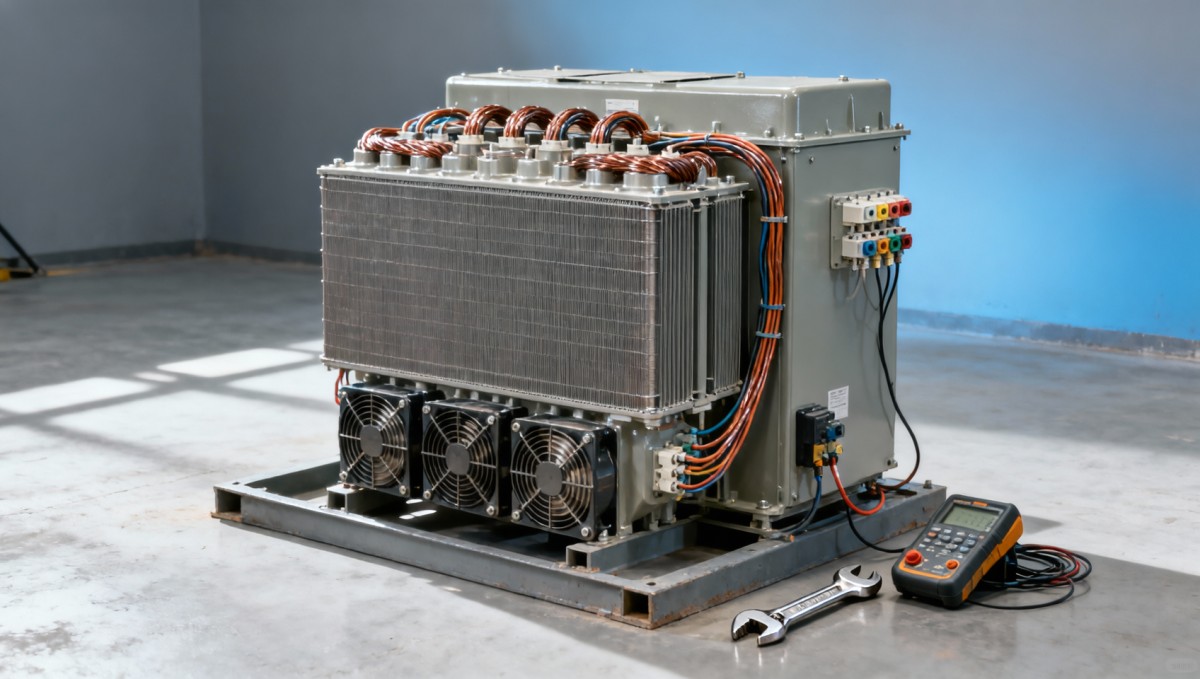
For a project considering a 33kV Cast Resin Dry-Type Distribution Transformer, the assembly discussion should focus on the shipped configuration and installation environment. Cast-resin construction avoids transformer-oil filling work, but it does not remove risks associated with handling, insulation contamination, inadequate ventilation, or incorrect connections.
The product information includes temperature protection and control, with forced-air operation available under specified conditions. That makes the fan supply, sensor wiring, controller configuration, alarm outputs, and trip interfaces important acceptance items. Where a project depends on the stated overload capability, obtain written confirmation of its permitted duration, cooling requirements, ambient conditions, and applicable loading limitations rather than treating it as an unrestricted continuous rating.
Before ordering, reconcile the project’s required voltage ratio, capacity, insulation level, and connection arrangement against the approved technical schedule. Product-range information is not a substitute for the selected unit’s drawings and nameplate data.
A local team may be well suited to installing this type of equipment when the supplier provides clear handling instructions, connection details, torque requirements, and test criteria. Supplier attendance becomes more valuable when enclosure sections, cooling controls, or interfaces arrive separately and require equipment-specific adjustment.
Compare the total installed cost, not the service day rate
A supplier’s site-service quotation can look expensive beside local labor rates. The comparison is incomplete unless both prices cover the same deliverable: an assembled transformer with the required records, ready for the next acceptance stage.
Request separate prices for mobilization, travel, accommodation, working days, overtime, standby, specialist tools, consumables, and return visits. For international attendance, establish responsibility for entry permissions and any local work requirements. A low daily rate offers little protection if mobilization cannot match the construction schedule.
For a local-contractor option, include the cost of obtaining supplier procedures, technical clarification, witnessed inspections, and possible rework. Clarify whether supplier remote support is included or separately chargeable, and whether it can actually authorize release of a hold point.
A useful comparison is:
Comparable installed cost = execution price + mobilization and support + interface-management cost + project-specific allowances for delay and rework.
Keep allowances transparent. Do not assign an arbitrary failure percentage to make one option look cheaper. Instead, identify credible exposures: a return visit because accessories were missing, crane standby while a technical query remains open, or retesting after an incorrectly completed connection.
Payment milestones should reflect deliverables within each party’s control. Paying the entire assembly fee merely for attendance weakens accountability; withholding all payment until grid energization may be unreasonable when that date depends on unrelated works.
Use hold points to prevent costly handover gaps
A common schedule failure is calling the supplier’s engineer before the site is ready. The transformer may be present, but access remains blocked, foundations are incomplete, or the required test equipment has not arrived. The result is paid standby or a second mobilization.
Agree a readiness review before travel is booked, supported by current photographs and completed site documents. The review should confirm safe access, foundation acceptance, lifting resources, storage conditions, accessory inventory, available utilities, and the approved work sequence.
Then place inspection and release points where errors become difficult to reverse:
- Receipt inspection: record packaging condition, visible damage, accessory quantities, and transport-monitor readings where fitted. Define who can accept delivery and how exceptions are reported.
- Before assembly: verify the correct drawings, suitable environmental conditions, clean components, and availability of manufacturer-specified materials and tools.
- Before closing or restricting access: inspect connections, clearances, sealing surfaces, and other features that will become concealed.
- Before energization release: complete the agreed tests, verify protection and control interfaces, and close defects that prevent safe operation.
For each point, identify the witness, required record, notice period, and person authorized to release the work. Remote witnessing may suit some visual or documentary checks, but it should not be assumed equivalent to physical attendance where the contract or technical procedure requires it.
Testing must follow the approved plan for the particular transformer. Test selection and acceptance limits should account for the design, factory results, manufacturer instructions, and applicable project requirements. Do not let an installer apply a familiar test voltage without confirming compatibility with connected sensors, controllers, and other accessories.
Resolve warranty and interface liability before award
“Supplier installation preserves the warranty” is too broad to be useful. The actual warranty may distinguish manufacturing defects from transport damage, installation errors, unsuitable site conditions, and operational misuse. Supplier supervision may also carry a narrower responsibility than full installation.
Ask the power transformer supplier to confirm in writing:
- Whether local-contractor assembly is permitted and what qualifications or authorization are required.
- Which activities require attendance, witnessing, or prior approval.
- Which records demonstrate compliance, including inspection sheets and test results.
- Who investigates a defect discovered during assembly and who authorizes remedial work.
- How responsibility and costs are handled when the cause is disputed.
The connection between transformer terminals and site cables deserves particular attention. The supplier may own the terminal design, while the contractor owns cable support and termination workmanship. Define responsibility for alignment, mechanical loading, connection hardware, and tightening records. Without this boundary, a damaged terminal can become a prolonged argument between two otherwise competent parties.
Preserve photographs, delivery exceptions, assembly records, and approved deviations in one controlled handover file. Documentation cannot prevent every defect, but it makes technical diagnosis and contractual decisions less dependent on recollection.
Choose the contract structure that fits the unresolved risk
Choose supplier-led assembly when the delivery configuration requires specialist processes, local capability is unproven, or the manufacturer’s acceptance conditions depend on direct control. Verify whether the supplier will actually execute the work or subcontract it, and require equivalent competence and accountability either way.
Choose local execution with supplier supervision when local labor and site logistics are strong but equipment-specific decisions still need manufacturer input. Specify whether the supervisor directs work, witnesses selected stages, or only advises; these are materially different services. Also define who can stop nonconforming work and approve corrections.
Choose local execution with documented supplier support when the transformer arrives substantially assembled, the contractor has relevant capability, and warranty requirements permit it. Obtain the installation package early enough for technical review, not after delivery.
Before award, require each bidder to return the same scope matrix, exclusions list, readiness requirements, and handover deliverables. If a bid leaves lifting, accessory fitting, testing, or defect correction unassigned, treat that as an unresolved procurement issue—not a task the site team will somehow absorb. The most defensible arrangement is the one that assigns every critical activity to a competent party with the authority, instructions, and contractual obligation to complete it.

Get a Quote
Regardless of whether you require general advice or specific support, we are happy to help you.
Send Us Your Inquiry Today

Jinshida Electric remains committed to contributing to global energy development through professional manufacturing and superior service.