





Ordering Custom Three-Phase Transformers: What to Include in a Factory RFQ
A useful transformer RFQ does more than request a price for a voltage ratio and capacity. It defines what the quoted unit must do, what the factory must supply, and how acceptance will be judged. Without that shared basis, a lower quotation may simply exclude equipment, testing, or performance requirements included elsewhere.
Before approaching an electrical three phase transformer factory, prepare a technical schedule, site information, and commercial requirements. Ask every supplier to return the same completed schedule with a separate list of deviations. This makes differences visible before they become change orders, installation problems, or production delays.
Start with the electrical duty, not a catalog model
Describe the application in one short paragraph: an industrial distribution supply, a rural network extension, a commercial building, or a renewable energy connection. Include a single-line diagram showing the transformer’s position, upstream supply, downstream equipment, and grounding arrangement. A model designation alone cannot communicate these conditions.
State whether the transformer will reduce voltage for local loads or increase voltage for grid connection. For generation projects, include expected power flow, inverter characteristics, and operating conditions. A unit suitable for ordinary distribution service is not automatically suitable for every generation duty simply because its voltage ratio matches.
Choose capacity from the actual load profile. Connected equipment totals can overstate simultaneous demand, while average demand can hide motor starting, seasonal peaks, or planned expansion. Provide expected continuous load, peak duration, power factor, and significant nonlinear loads such as drives or inverters. Let the design engineer translate those conditions into a defensible rating.
Do not use short-term overload capability as a substitute for adequate continuous capacity. Overload suitability depends on previous loading, ambient temperature, cooling, duration, and thermal limits. If overload operation is part of the duty, make its conditions an explicit design requirement.
For replacement or parallel operation, attach the existing transformer’s nameplate and relevant test data. Matching kVA and voltage is insufficient: vector group, ratio, tap position, impedance, and other characteristics must support the intended arrangement. Resolve these requirements before requesting a firm quotation.
Translate site conditions into construction requirements
“Outdoor installation” leaves too much unanswered. Give the site altitude, ambient temperature range, exposure to dust or salt, humidity, and any unusual pollution or seismic requirements. For indoor locations, include room dimensions, ventilation constraints, access routes, and applicable fire requirements.
These conditions affect both suitability and cost. Higher ambient temperatures or altitude can change cooling and insulation needs. Coastal exposure may require a different coating system. A restricted equipment room can make terminal placement and service clearances more consequential than small differences in purchase price.
Specify the cooling method and insulating liquid where these are project requirements. For an oil-immersed unit, ONAN describes natural circulation of the insulating liquid and natural air cooling. If an ester liquid such as FR3 is required, state it explicitly and ask for the corresponding thermal design, liquid specification, and applicable cooling designation.
As a reference for a distribution application, Jinshida Electric’s 30kV/0.4kV Oil-Immersed Power Distribution Transformer is offered in capacities from 500 to 1600 kVA with copper windings. That range can provide a starting point for an industrial park or grid extension RFQ. The selected capacity, liquid, cooling arrangement, vector group, and accessories still need to match the project schedule.
Attach a layout showing the foundation, cable approach, terminal orientation, and maintenance space. Identify maximum shipping dimensions and weight where access is restricted. Require an outline drawing showing bushings or cable boxes, lifting points, earthing terminals, and accessory locations.
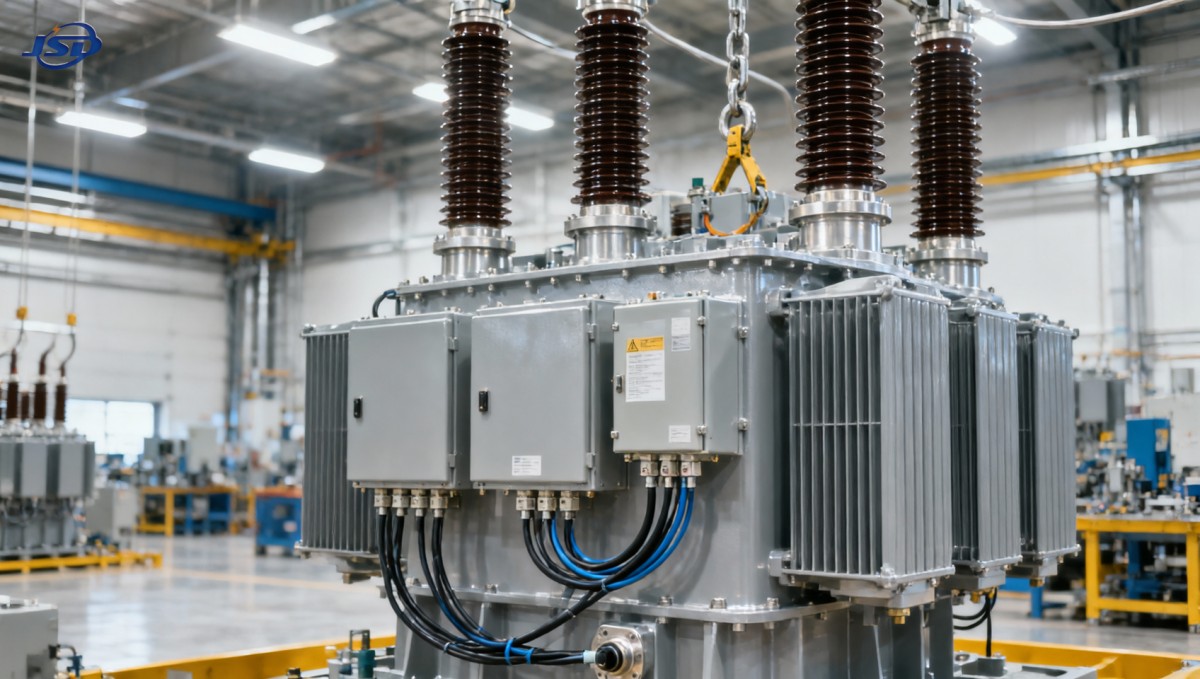
Protection ratings should identify the component they cover. A rating for a terminal box or control cabinet does not describe every external part of the transformer. State the required protection for each relevant enclosure and define whether cable glands, connectors, and termination kits belong in the factory scope.
Make losses and materials measurable
A request for “high efficiency” will not produce comparable offers. Ask for guaranteed no-load loss and load loss, with the measurement conditions and reference temperature identified. No-load loss continues while the transformer is energized; load loss increases approximately with the square of loading. Their financial importance therefore changes with the operating profile.
A continuously energized unit serving modest loads may justify particular attention to no-load loss. A heavily loaded industrial unit may place greater weight on load loss. Comparing a single efficiency percentage without its load point and power factor can obscure this difference.
Provide annual energized hours, a representative loading profile, and the electricity cost used for evaluation. Ask suppliers to quote against the same loss limits, or request separately priced alternatives. This allows a higher purchase price to be assessed against lower expected operating costs without relying on a vague efficiency claim.
If copper windings are mandatory, include that requirement in the technical schedule. If alternative conductor materials are acceptable, request them as distinct options with guaranteed performance, dimensions, and connection details. Keep the base quotation consistent so material substitutions do not quietly change the comparison.
Noise limits also need a defined measurement basis. For installations near occupied buildings, state the project limit and test method. An acoustic requirement introduced after design approval can affect construction, delivery, and price.
Specify standards, evidence, and factory acceptance
Name the applicable transformer standard and relevant project requirements. IEC 60076 may provide the specification basis for an IEC project; other destinations may use different requirements. Where utility specifications and national requirements also apply, establish their priority so conflicting instructions do not remain unresolved.
Separate product compliance from quality management certification. ISO 9001 concerns the manufacturer’s quality management system; it does not establish that a particular transformer meets every electrical or destination requirement. Ask for documents that relate to the offered design, rating, and intended market.
Define routine, type, and special testing separately. Routine testing normally applies to each manufactured unit under the governing standard. Type testing supports design characteristics, while special tests address additional agreed requirements. Their scope, evidence, and cost should be clear before order placement.
The RFQ should state:
- Which tests and acceptance limits apply, including ratio, winding resistance, losses, impedance, dielectric performance, and liquid tightness where relevant.
- Whether existing type-test reports are acceptable and what design correspondence they must demonstrate.
- Whether temperature-rise, sound, or other additional tests are required for the order.
- Which tests require witnessing, how much notice is needed, and whether remote witnessing is acceptable.
- Who pays for additional testing, inspection attendance, and retesting after a failure.
Specify the documentation package: approved drawings, nameplate details, test reports, accessory manuals, installation instructions, maintenance guidance, and packing information. Define document language and submission timing. Drawings needed for foundations or cable work must arrive early enough to support site preparation.
Price the complete supply and delivery scope
Ask for a base price and itemized options. Accessories may include temperature indicators, alarm contacts, pressure relief devices, liquid-level indicators, valves, wheels, cable boxes, or monitoring equipment. Their suitability depends on the tank construction and operating requirements; a generic accessory list should not replace a defined scope.
Require clear control interfaces for alarms and trips, including contact functions, auxiliary supply needs, and terminal details. Otherwise, a supplied instrument may still require extra integration work before it can communicate with site protection or monitoring systems.
Commercial requirements should cover quantity, currency, quotation validity, payment milestones, and delivery terms. State the named place and version of the agreed Incoterms rule, then identify freight, insurance, import clearance, unloading, and site handling responsibilities. “Delivered price” alone leaves room for different interpretations.
Packaging deserves a separate line, especially for export or extended storage. Define preservation needs, transport orientation, lifting arrangements, and whether any components ship separately. Ask whether the transformer ships filled with liquid and whether assembly, filling, or testing will be required at site.
Request a schedule that distinguishes drawing approval, material procurement, manufacturing, testing, and shipment. Establish what starts the lead-time clock: purchase order acceptance, payment, or approved drawings. A short quoted lead time is less useful if its starting condition is undefined.
Warranty terms should identify the start date, duration, remedy, exclusions, and responsibility for transport, removal, reinstallation, and field labor. Also request commissioning support, spare-parts availability, and response arrangements. These provisions affect the cost of recovering from a problem, particularly at remote sites.
Compare deviations before comparing totals
Require each supplier to mark every technical item as compliant, deviating, or excluded, with an explanation. Ask for assumptions in a separate section. A signed general statement of compliance is difficult to evaluate when the detailed offer contains qualifications.
Normalize quotations by adding missing accessories, required tests, freight, installation work, and documentation costs. Evaluate losses using the same operating assumptions. Keep optional upgrades separate from mandatory corrections so the comparison shows what each compliant solution actually costs.
A lower price can be reasonable when a supplier uses a standard design that meets the duty. Customization is valuable when it solves a defined need, such as an unusual voltage ratio, restricted footprint, special terminals, or demanding environmental conditions. Unnecessary changes can add engineering work and delay without improving service.
Before issuing an RFQ to Jinshida Electric Power Technology Co., Ltd. or another manufacturer, have the responsible engineer approve the electrical schedule and installation interfaces. Send one controlled revision to all bidders, communicate clarifications consistently, and close technical deviations before placing the order. The resulting purchase order should incorporate the accepted specification, drawings, test plan, delivery scope, and warranty terms so the agreed price corresponds to a clearly defined transformer.

Get a Quote
Regardless of whether you require general advice or specific support, we are happy to help you.
Send Us Your Inquiry Today

Jinshida Electric remains committed to contributing to global energy development through professional manufacturing and superior service.