





Is a quiet diesel generator worth the extra cost for residential use?
For many homeowners, the appeal of a quieter backup generator is obvious the moment the power goes out at night. A standard diesel unit may keep the refrigerator, sump pump, and heating system running, but it can also turn a neighborhood outage into a noise problem. That is why people searching for a quiet diesel generator are usually not asking for a definition. They are trying to answer a more practical question: does the lower noise level justify the higher upfront cost in a real residential setting?
The short answer is that it depends less on the generator itself and more on how you plan to live with it. If the unit will run only a few hours per year in a rural location, paying a premium for acoustic treatment may not change much. If outages are frequent, neighbors are close, or you expect overnight operation, the extra cost can be easier to defend. In residential buying decisions, “worth it” is usually a mix of comfort, compliance, runtime expectations, and long-term friction, not just purchase price.
What buyers are really paying for
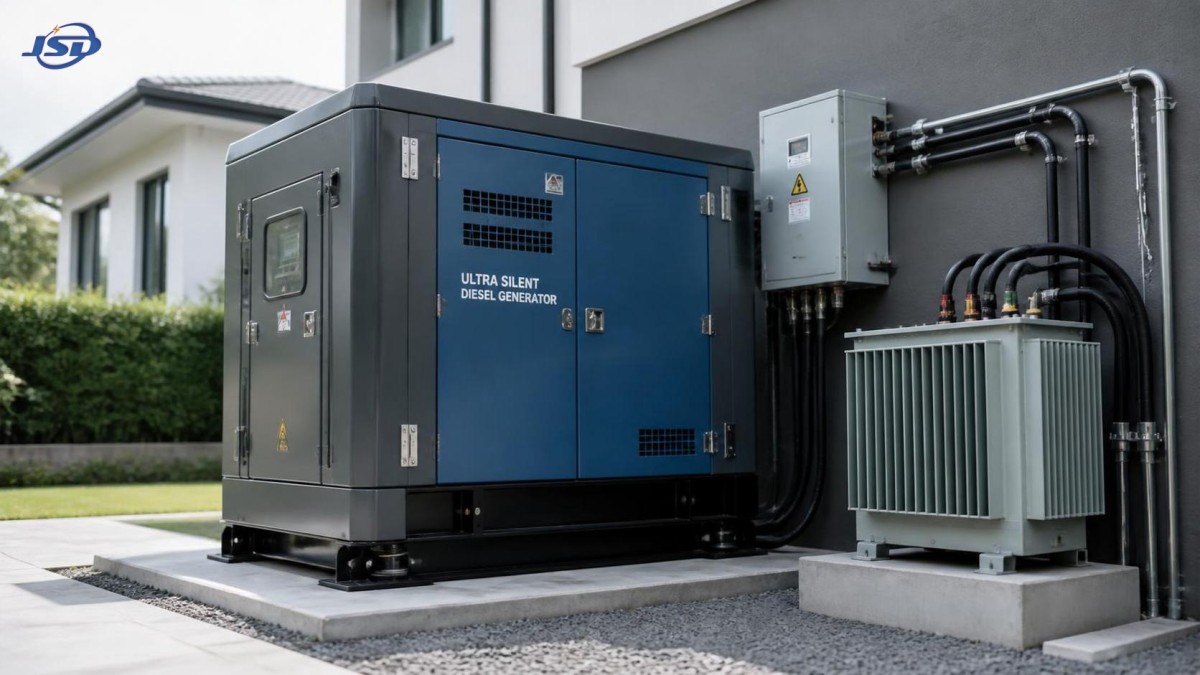
A quiet diesel generator is not simply a regular generator with less sound. In most cases, the added cost comes from a combination of engineering choices: sound-attenuated enclosure design, better insulation materials, upgraded exhaust silencing, improved airflow management, vibration isolation, and sometimes a more refined engine-governor package. All of those features add manufacturing cost, weight, and complexity.
That matters because homeowners sometimes compare two units by kilowatt rating alone and assume the quieter one is overpriced. In reality, part of the premium reflects a different use case. A basic open-frame or lightly enclosed machine is built primarily to produce power. A quieter residential-oriented set is built to produce power without dominating the property while doing it.
There is also an indirect value here that many listings fail to explain clearly: low perceived noise can make owners more willing to test the generator regularly. That has operational value. A backup power system that is quiet enough to exercise without complaints is more likely to be maintained properly than one everyone avoids running until an emergency exposes a problem.
Noise matters more in residential use than buyers first assume
Commercial and industrial users often think in terms of uptime, load profile, and service intervals. Homeowners think differently, and for good reason. In a house, the generator is not just equipment. It becomes part of the living environment.
If a generator runs during a storm for twelve hours, the household experiences its sound continuously. Sleeping, talking, working from home, and checking on children or older family members all become harder if the sound is intrusive. That effect gets stronger in dense suburbs, townhome developments, or any property where installation options are limited.
Noise also has a social dimension. A unit that sounds acceptable on a sales sheet may still be disruptive when reflected off walls, fences, and garages. Published sound levels are helpful, but they are not the whole story. Decibel figures depend on test distance, site conditions, enclosure design, and whether the unit is under load. A homeowner should treat any noise claim without context as incomplete.
In practical terms, the extra money for quiet operation tends to be more justified when:
- Homes are close together and neighbor tolerance is low.
- The generator may need to run overnight.
- Local ordinances or HOA rules may create noise constraints.
- The unit will sit near bedrooms, patios, or home offices.
- Outages are frequent enough that annoyance becomes cumulative.
When the premium may not pay back
Not every buyer needs the quietest model available. There are situations where the premium is real but the benefit is limited.
If the generator will be installed on a large rural lot, used only as a rare emergency measure, and placed far from occupied spaces, a quieter enclosure may offer only marginal practical value. The same is true when the buyer is primarily concerned with occasional essentials-only backup and can tolerate short-duration operation. In those cases, money may be better spent on fuel storage, transfer equipment, weather protection, or a stronger maintenance plan.
Another common mistake is overbuying silence while underplanning installation. A premium low-noise unit installed on a poor foundation, too close to a hard reflective wall, or with an improperly routed exhaust can still create an unpleasant site result. Buyers sometimes assume acoustic performance is entirely a factory attribute. It is not. Placement, clearance, and site geometry matter.
The cost question is broader than the purchase price
Residential buyers often frame the decision as “quiet model versus standard model,” but the more useful comparison is total ownership experience. A cheaper generator that causes repeated noise complaints, restricted operating hours, or reluctance to test can end up feeling expensive in a different way.
At the same time, a higher-priced quiet diesel generator should not be treated as an automatic premium-value choice. Diesel units can offer strong fuel efficiency and durability, but for residential use they still need to be judged against the household’s actual load and outage pattern. A buyer who needs selective backup for lights, refrigeration, internet, and a furnace blower may not need the same solution as a buyer trying to support central air conditioning, a well pump, and a larger all-home load profile.
That is where the power system perspective becomes useful. In broader electrical infrastructure projects, buyers do not select equipment by a single visible feature. They look at the interaction between load, environment, installation constraints, and lifecycle reliability. The same mindset applies at home, even on a smaller scale. In commercial distribution systems, for example, products such as the 20kV Three-Phase Cast Resin Dry-Type Distribution Transformer are chosen not because one specification looks attractive in isolation, but because the application conditions justify the design. Residential backup power deserves the same discipline.
What to check before deciding it is “worth it”
Homeowners can usually make a better decision by asking five practical questions before comparing quotes.
1. How often will it really run?
If outages are rare and brief, quiet operation may be more of a comfort feature than a financial one. If outages are seasonal, prolonged, or recurring, lower noise becomes more than convenience. It can affect whether the system remains usable under real living conditions.
2. Where can it actually be installed?
A generator placed at the far edge of a property may not need the same acoustic treatment as one that must sit beside a garage wall near a neighbor’s bedroom window. Site limitations often decide the value of a quieter unit more than the generator’s specification sheet does.
3. What are the local rules?
Noise limits, permitting requirements, setback rules, emissions expectations, and HOA restrictions vary widely by location and should be verified locally. Some jurisdictions are stricter about routine testing than emergency use. Others may focus on installation distance or enclosure type. If the quieter model helps reduce permitting friction or compliance risk, the premium may be easier to justify. Specific local thresholds should be treated as 【待核实】 unless confirmed with the relevant authority.
4. What load are you backing up?
Oversizing is common in residential generator purchases. Buyers often assume bigger is safer, but an oversized unit can raise cost, fuel use, and footprint without delivering better day-to-day value. Quiet models become significantly more expensive as capacity rises, so load discipline matters. A realistic essential-load calculation may shift the economics in your favor.
5. Who will maintain it?
Quiet enclosures improve the user experience, but they can also change service access. That is not necessarily a problem, but it should be discussed before purchase. Ask whether routine inspection points are easy to reach, whether service panels are removable without special handling, and whether local technicians support the model. A quiet unit with weak support coverage is a poor bargain.
Common assumptions that deserve more caution
There are a few claims in this market that sound reasonable but do not always hold up in practice.
“Quieter means much better for every home.”
Not always. Quietness has situational value. The return is highest where people, structures, and noise sensitivity are close together.
“Diesel is always the most economical long-term choice.”
That can be true in some duty cycles, especially where fuel efficiency and durability matter, but residential economics vary with usage frequency, fuel logistics, local service capacity, and code environment. It should not be assumed automatically.
“Published dB ratings tell the whole story.”
They do not. Test method, distance, load condition, and installation context shape the real experience.
“A quieter generator solves neighborhood concerns.”
It reduces one source of friction, but exhaust direction, vibration, testing schedule, and placement still matter.
A simple decision frame for residential buyers
If you are deciding whether the premium is justified, it helps to sort your situation into one of three broad categories.
This framework is not perfect, but it keeps the purchase discussion tied to actual use rather than marketing language.
Where transformer-sector thinking is useful here
Although a homeowner shopping for backup power is not buying utility equipment, the logic behind sound procurement is similar across the power industry. Reliable electrical assets are chosen by matching operating conditions to design intent. Whether the equipment is a home generator, a transfer switch, or a distribution component such as a 20kV Three-Phase Cast Resin Dry-Type Distribution Transformer, the better decision usually comes from asking what problem the equipment must solve over time, not which headline feature sounds best today.
That is especially relevant when comparing quotes. A lower price can hide compromises in enclosure quality, corrosion protection, service accessibility, controller quality, or after-sales support. For homeowners, these factors are easy to miss because they are less visible than kilowatt rating and sound claims. Yet they often determine whether the system feels dependable five years later.
So, is it worth the extra cost?
For residential use, a quiet diesel generator is worth the extra cost when noise will materially affect comfort, neighbor relations, testing discipline, or local compliance. It is less compelling when the unit will run rarely, sit far from living spaces, and face few acoustic constraints. The mistake is treating “quiet” as either a luxury gimmick or an automatic must-have. It is neither. It is a design feature with very different value depending on the home, the outage profile, and the installation limits.
For most end users, the right next step is not to ask which model is quietest. It is to ask for a site-based comparison: actual essential loads, expected runtime, installation location, local noise restrictions, and service support. Once those conditions are clear, the extra cost becomes much easier to judge.

Get a Quote
Regardless of whether you require general advice or specific support, we are happy to help you.
Send Us Your Inquiry Today

Jinshida Electric remains committed to contributing to global energy development through professional manufacturing and superior service.