





How to verify a dry type transformer supplier before ordering
For distributors, agents, and resellers, verifying a dry type transformer supplier before ordering is mainly about reducing commercial and operational risk. The core search intent is practical supplier due diligence: readers want to know how to confirm whether a supplier can deliver consistent quality, valid certifications, stable lead times, responsive support, and products that will not create after-sales problems in their local market.
What this audience cares about most is not generic transformer theory. They care about factory legitimacy, production capability, test standards, documentation accuracy, export experience, pricing transparency, warranty handling, and whether the supplier can support repeat business without damaging the distributor’s reputation. They also want to know what questions to ask, what evidence to request, and which red flags indicate future trouble.
The most useful content for them is a clear verification framework: how to check certifications, how to review technical drawings and test reports, how to assess quality control, how to validate delivery performance, and how to compare suppliers beyond unit price. Content should focus on decision criteria, risk control, and practical evaluation steps, while minimizing broad background explanations or promotional generalities.
The article should therefore emphasize supplier qualification, manufacturing consistency, compliance, project references, communication efficiency, and after-sales capability. It should give readers a usable checklist mindset. Generic introductions about what a dry type transformer is, or long descriptions of company values without decision relevance, should be kept brief.
How to Verify a Dry Type Transformer Supplier Before Ordering
Choosing the right dry type transformer supplier is a critical step for distributors, agents, and resellers who need stable product quality, compliant certifications, and dependable delivery. Before placing an order, it is essential to verify the supplier’s manufacturing capabilities, quality control system, technical support, and project experience to reduce risk and protect your market reputation. This guide explains the key points you should check before making a sourcing decision.
The short answer is simple: do not verify a supplier by quotation alone. A competitive price means little if the transformer fails certification review, arrives late, or creates warranty claims that hurt your customer relationships. For channel partners, the best supplier is the one that can support repeatable business, not just a single low-cost transaction.
When evaluating a dry type transformer supplier, focus on evidence. Ask for factory documents, product test reports, quality records, project cases, and export references. A reliable supplier should be able to explain specifications clearly, respond with consistent technical information, and show how its internal process controls product performance from raw materials to final inspection.
Start with supplier legitimacy and manufacturing identity
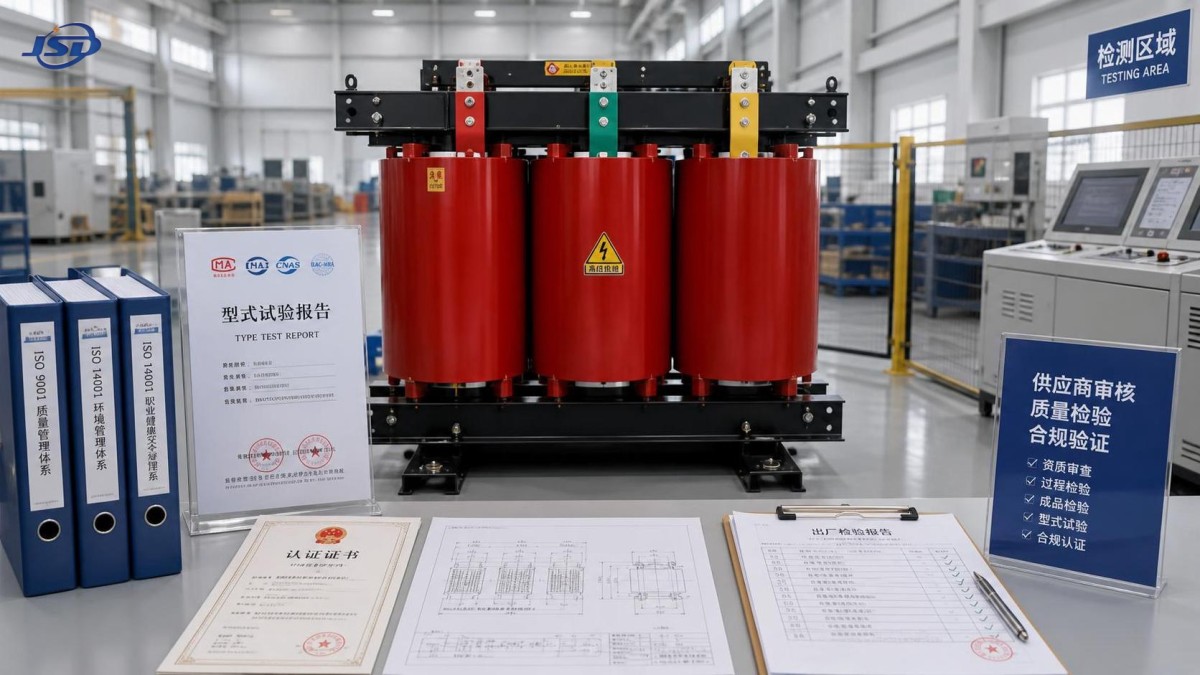
Your first task is to confirm that the supplier is a real manufacturer or, at minimum, is transparent about being a trading company. This distinction matters because it affects pricing control, lead time accuracy, customization ability, and problem resolution speed. Many distributors prefer direct access to the factory because it reduces communication layers and shortens corrective action cycles.
Ask for the company registration profile, factory address, business license, export license if applicable, and an overview of the production facility. A credible dry type transformer supplier should be able to provide these quickly. Delays, vague answers, or inconsistent company names across documents are warning signs that require closer review.
It is also useful to request factory photos, workshop videos, and a basic production flow chart. These materials are not a substitute for a formal audit, but they help you judge whether the supplier actually operates transformer-related production lines. If your order volume is meaningful, a video call walkthrough or third-party factory inspection is a reasonable next step.
For distributors building a long-term product line, understanding the supplier’s broader product portfolio is also valuable. A manufacturer that produces multiple transformer categories may be better positioned to support mixed project needs, such as dry type units for indoor applications and oil-filled units for grid or utility projects, including products like 30kV/0.4kV Oil-Immersed Power Distribution Transformer.
Check certifications, standards, and market compliance carefully
One of the most common mistakes buyers make is assuming that all transformer certifications are interchangeable. They are not. What matters is whether the supplier’s product documents match your target market, customer segment, and application requirements. Compliance should be checked against actual project needs, not generic marketing claims.
Ask the dry type transformer supplier which standards the products are designed and tested to, such as IEC, ANSI, GB, or other regional requirements. Then request supporting documentation, including type test reports, routine test samples, and certificate copies. Make sure the standard named on the quotation matches the standard shown in the technical documents.
Review whether the certificates belong to the manufacturer itself, the specific factory, or only to a related company. This is an area where buyers sometimes overlook risk. If the brand owner and the factory are different entities, clarify which party is legally responsible for product quality, test consistency, and claim handling.
You should also verify whether fire performance, insulation class, enclosure protection, temperature rise, and noise values meet the markets you serve. For example, projects in commercial buildings, hospitals, renewable energy sites, or public infrastructure may have tighter compliance expectations. The supplier should be able to explain these differences without giving evasive or generic answers.
Review technical capability beyond the catalog sheet
A catalog tells you what the supplier wants to sell. Technical review tells you whether the supplier understands what your end customer actually needs. This is especially important for distributors who handle diverse inquiries from contractors, panel builders, EPC firms, and industrial end users.
Send a real or sample specification sheet and ask the supplier to confirm every key parameter. This should include rated capacity, voltage ratio, frequency, tap range, insulation class, impedance, cooling method, enclosure requirements, altitude, ambient temperature, and installation environment. Watch whether the response is precise, complete, and internally consistent.
A strong dry type transformer supplier will usually ask follow-up questions instead of immediately quoting from a template. That is a good sign. It means the supplier is trying to prevent mismatch risk. If the supplier skips technical clarification and pushes for payment quickly, you should assume higher risk of order errors or performance disputes later.
Request drawings, nameplate samples, and bill-of-material summaries where appropriate. You do not need every confidential detail, but you do need enough information to judge whether the design is mature. Inconsistent terminology, missing tolerance data, or unexplained deviations from your specification often indicate weak engineering control.
Examine quality control at the process level
For channel partners, consistent quality matters more than isolated good samples. A supplier may produce one acceptable transformer for inspection and still fail to maintain stable quality across repeat orders. That is why you should ask how the factory controls materials, winding processes, insulation treatment, assembly accuracy, and final testing.
Useful questions include: How are incoming raw materials inspected? Which critical components are sourced internally and which are outsourced? How are coils tested during production? What final routine tests are performed before shipment? How are nonconforming products isolated and corrected? A serious supplier should answer these questions clearly.
Ask for sample routine test reports and, if available, internal quality checklists. You are looking for process discipline, not polished formatting. Consistent records suggest that the supplier has a working quality management system rather than a sales-only presentation. If the supplier mentions quality certifications, ask how those systems are applied on the shop floor.
It is also worth discussing packaging and shipment protection. Dry type transformers can be damaged by poor handling, vibration, moisture exposure, or weak export packaging. A dependable dry type transformer supplier should describe how products are packed, labeled, and secured for domestic transport or international shipping.
Validate delivery capability and supply chain stability
Late delivery can cost a distributor more than a higher purchase price. It can delay project handover, create penalty exposure, and weaken trust with your downstream customers. That is why lead time verification should be treated as seriously as technical verification.
Do not accept a quoted lead time at face value. Ask what drives the schedule: core material procurement, winding capacity, testing queue, enclosure fabrication, or export documentation. A capable supplier can explain the production rhythm and identify which items are standard and which are custom. This helps you judge whether promised timelines are realistic.
You should also ask how the supplier manages production peaks. A factory that handles seasonal demand poorly may prioritize larger accounts and push smaller distributor orders back without notice. Ask about monthly capacity, average lead time by rating range, and how urgent orders are handled. Specific answers are more reliable than general promises.
Where possible, request shipment history or anonymized case examples. A supplier with steady export or project delivery experience usually has stronger process control around packing, customs documents, and on-time dispatch. This is especially relevant if you plan to stock products for multiple local customers rather than ordering case by case.
Look at after-sales support as a commercial risk issue
Many buyers review product quality closely but spend too little time on after-sales capability. For distributors and agents, this is a costly mistake. If something goes wrong, your team is the first to hear the complaint. You need a supplier that can respond quickly with technical clarification, spare parts support, and warranty decisions.
Ask what the warranty covers, how claims are evaluated, and what evidence is required. Clarify whether the supplier provides remote troubleshooting, replacement parts, field guidance, or failure analysis reports. These details matter because they determine how much risk remains with you after the order is shipped.
Response speed is another key indicator. Before ordering, observe how long the supplier takes to answer technical questions, revise documents, or confirm changes. Slow and vague communication during pre-sales usually becomes worse after payment. A supplier that is organized before the order is more likely to support you properly after delivery.
For distributors building a broader transformer business, it also helps when the manufacturer can support adjacent applications and product types. This matters when customers compare indoor dry type solutions with outdoor or utility-oriented alternatives, including equipment such as the 30kV/0.4kV Oil-Immersed Power Distribution Transformer for different deployment conditions.
Ask for project references that match your sales reality
Not all references are equally useful. A supplier may show impressive large-scale projects that have little relevance to your market. What you need are references that reflect your actual sales model, customer expectations, voltage range, and application environment.
Ask whether the supplier has served distributors, OEMs, EPC contractors, industrial plants, renewable energy projects, or public infrastructure customers. Then request a few examples with enough detail to understand the context. You do not necessarily need customer names if confidentiality applies, but you do need evidence of comparable execution.
Pay attention to whether the supplier understands channel cooperation. Some manufacturers are technically capable but poorly structured for distributor support. They may lack standard marketing materials, spare parts coordination, flexible packaging labels, or documentation suitable for resale. These issues create friction even when the product itself is acceptable.
If your business depends on recurring tenders or framework supply, ask how the supplier supports pricing stability, document updates, and repeat specification control. A strong partner should help you win and fulfill business repeatedly, not just close one shipment.
Compare suppliers on total business value, not unit price alone
Price matters, but low price without control usually becomes expensive. The true cost of a supplier includes technical accuracy, delivery reliability, claim frequency, communication burden, and the resources your team must spend managing problems. For distributors, these hidden costs directly affect margin and customer retention.
Build a comparison sheet that includes certification fit, engineering response quality, testing transparency, warranty terms, packaging standard, delivery credibility, and reference relevance. This approach gives you a more realistic basis for supplier selection than quotation tables alone. It also helps internal decision-makers justify why a slightly higher-priced source may be the better commercial choice.
Another useful step is to place a trial order before committing to larger volume. A pilot order lets you verify documentation quality, production discipline, shipment execution, and communication consistency under real conditions. This is often the most practical way to reduce uncertainty when onboarding a new dry type transformer supplier.
A practical verification checklist before you place the order
Before confirming purchase, make sure you can answer a few questions with confidence. Is the supplier’s manufacturing identity clear? Do the certifications match your target market? Has the technical offer been reviewed line by line? Are test records and quality controls credible? Is the delivery promise realistic? Is after-sales responsibility clearly defined?
If any of those answers are uncertain, the safest decision is to pause and clarify. Verification is not about making procurement slower. It is about removing preventable risk before your company’s name is attached to the product. That matters even more for agents and resellers whose reputation depends on every shipment performing as promised.
The best dry type transformer supplier is usually not the one with the fastest quotation or the lowest first price. It is the one that combines compliance, technical discipline, stable production, honest communication, and dependable support. When those elements are verified before ordering, distributors can expand their transformer business with far less operational friction.
In short, good supplier verification protects more than one order. It protects your margin, your customer relationships, and your long-term market position. For distributors, that is the real standard a supplier should meet before you place the order.

Get a Quote
Regardless of whether you require general advice or specific support, we are happy to help you.
Send Us Your Inquiry Today

Jinshida Electric remains committed to contributing to global energy development through professional manufacturing and superior service.