






Sealed vs Conservator Transformers: When Is a Hermetic Design the Better Choice?
Choosing between sealed and conservator transformers requires more than comparing initial cost. For technical evaluators, the decision affects insulation longevity, maintenance strategy, environmental protection, and lifecycle reliability.
Hermetically sealed distribution transformers eliminate direct contact between transformer oil and atmospheric moisture, making them particularly valuable in demanding operating conditions. This article explains where that advantage becomes decisive.
The core search intent is practical selection guidance: evaluators need to determine whether a hermetic tank meaningfully reduces project risk, maintenance burden, and lifecycle cost for their specific network.
Start With the Operating Risk, Not the Tank Style
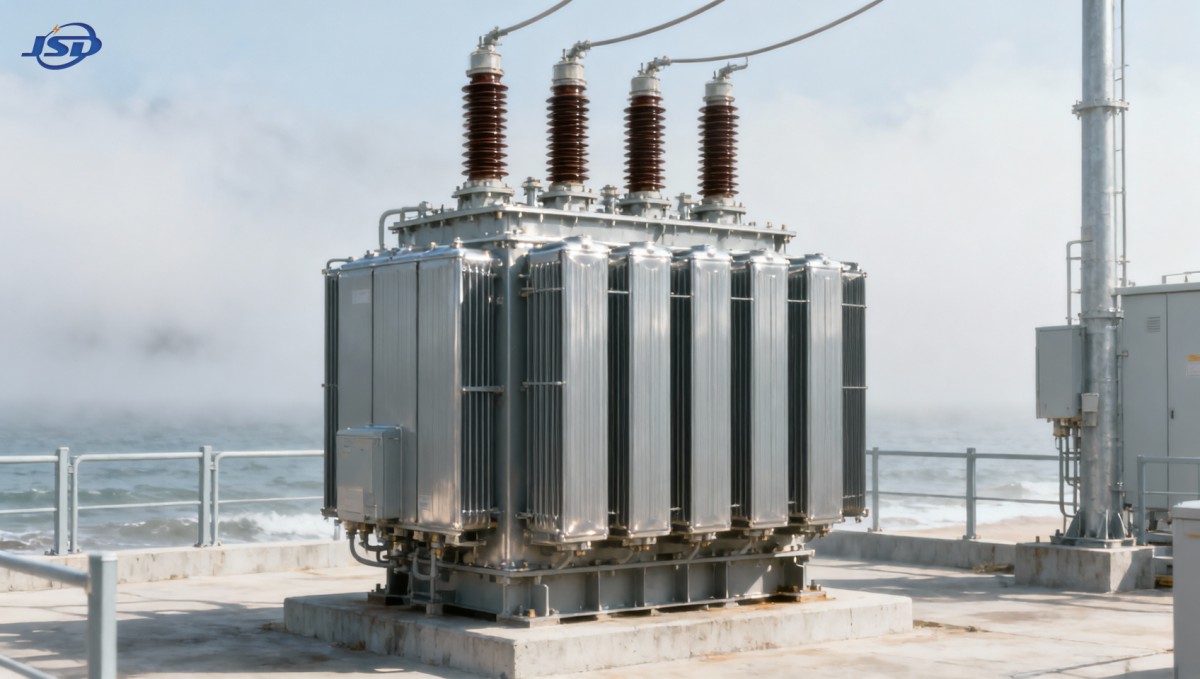
A hermetic design is usually the better choice when moisture ingress, oxidation, restricted maintenance access, or environmental exposure can materially shorten transformer service life.
A conservator transformer remains a valid solution for many utility and industrial installations, particularly where maintenance resources are available and operating practices are well controlled.
Technical evaluators should therefore avoid treating sealed and conservator arrangements as interchangeable construction details. They represent different approaches to managing insulating liquid aging.
The deciding question is not simply whether the transformer will be installed indoors or outdoors. It is whether atmospheric exchange creates an unacceptable reliability exposure.
In a conventional conservator transformer, oil volume changes with temperature. The conservator accommodates expansion and contraction while a breather system manages incoming air.
In a hermetically sealed transformer, the tank system accommodates oil expansion without routine atmospheric breathing. Oil remains isolated from external humidity and oxygen.
This distinction matters because transformer oil and cellulose insulation age faster when exposed to moisture, oxygen, elevated temperature, and contamination from degraded auxiliary components.
For projects requiring dependable operation with limited inspection opportunities, hermetically sealed distribution transformers often offer a stronger technical risk profile than open-breathing alternatives.
The selection should still be based on duty cycle, ambient conditions, load profile, voltage regulation needs, installation constraints, and the owner’s maintenance capability.
How Moisture and Oxygen Affect Insulation Life
Oil is not merely a cooling medium. It is also a dielectric system whose condition directly influences breakdown strength, heat transfer performance, and insulation aging behavior.
When oxygen enters through a breathing system, it contributes to oxidation. Oxidation produces acids and sludge, which can impair cooling channels and accelerate material deterioration.
Moisture is even more significant because paper insulation absorbs water readily. Increased moisture reduces dielectric strength and accelerates the thermal aging of cellulose materials.
As cellulose depolymerizes, it loses mechanical strength. Eventually, a transformer may become difficult to withstand fault forces even when oil test results appear acceptable.
Conservator designs commonly use silica-gel breathers, bladder systems, or other air-separation measures. These controls can perform well, but they require inspection and replacement discipline.
A neglected breather can become saturated, cracked, blocked, or incorrectly serviced. Such failures may allow humid air into the tank without producing an immediate operational alarm.
Hermetic construction does not eliminate every insulation-aging mechanism. High temperature, overloads, manufacturing defects, and external contamination still require careful engineering control.
However, isolating the oil from atmospheric exchange removes a major variable. That reduction in uncertainty is often valuable where long maintenance intervals are expected.
For technical specifications, the relevant benefit is not simply “sealed oil.” It is improved control of moisture and oxidation pathways across the transformer’s operating lifetime.
Where Hermetic Transformers Deliver the Strongest Value
Hermetic designs are especially compelling in humid, coastal, tropical, desert, polluted, or remote locations where environmental conditions increase inspection needs and insulation-aging risks.
Coastal environments combine salt-laden air, humidity, corrosion exposure, and rapid weather changes. These factors can challenge breather performance and external accessory durability.
In tropical regions, sustained humidity can make incoming air treatment a continuous maintenance concern. A sealed tank reduces dependence on breather condition and service timing.
Desert installations may appear dry, but severe temperature cycling can create substantial oil expansion changes. Dust contamination can also affect external breathing and maintenance equipment.
Remote renewable-energy sites are another strong application. Access may be limited by terrain, weather, operating permits, or the cost of dispatching qualified maintenance personnel.
Wind farms, solar plants, pumping stations, telecom facilities, and isolated industrial sites often prioritize predictable operation over the lowest possible initial procurement price.
Urban underground networks and compact substations can also benefit. Space constraints may make maintenance tasks more difficult, while equipment downtime can affect many customers.
For industrial plants, a sealed transformer can be advantageous when production continuity is critical and planned outages for breather servicing are operationally inconvenient.
Conversely, easily accessible utility substations with established oil-testing programs and trained maintenance teams may obtain acceptable lifecycle performance from conservator transformers.
Evaluate Maintenance Strategy Before Comparing Price
Initial price comparisons often favor the simpler interpretation of the equipment schedule. Lifecycle comparisons are more useful because maintenance requirements differ between the two designs.
A conservator transformer may require routine attention to breather desiccant, oil level indication, seals, bladder condition, and the integrity of associated pipework.
These tasks are manageable when they are included in a disciplined preventive-maintenance program. Problems arise when responsibility, access, spare parts, or inspection intervals are unclear.
Hermetic units generally reduce the number of external components requiring periodic intervention. This can simplify field maintenance and reduce opportunities for incorrect service actions.
Reduced maintenance does not mean no maintenance. Evaluators should still specify visual inspection, thermographic checks, protection verification, load monitoring, and condition assessment where appropriate.
The economic advantage increases when site visits are expensive. Travel time, isolation procedures, permit requirements, lifting arrangements, and production losses can exceed component-level maintenance costs.
For a portfolio owner, standardizing on hermetic transformers can also reduce training variation. Fewer breather-related tasks may simplify operating procedures across distributed assets.
Ask suppliers for a documented maintenance schedule rather than general claims. Compare required tasks, intervals, consumables, labor skills, and consequences of missed inspections.
The right choice is the design that matches the owner’s realistic maintenance capability, not the maintenance capability assumed in a generic technical brochure.
Consider Temperature Cycling and Tank Pressure Behavior
Hermetic transformers manage oil expansion internally through flexible tank walls, gas cushions, radiators, or engineered pressure-resistant tank arrangements, depending on the design.
This requires competent mechanical design. The tank must tolerate pressure variations caused by temperature changes without leakage, permanent deformation, or compromised sealing performance.
Technical evaluators should request information on pressure tests, leak testing, welding controls, gasket specifications, and the method used to accommodate thermal oil expansion.
The anticipated ambient-temperature range matters. A unit exposed to large daily or seasonal variation experiences more frequent and greater changes in oil volume.
Load variation also matters. Highly variable industrial loads, renewable generation interfaces, and feeder peak loads can produce repeated heating and cooling cycles.
These conditions do not automatically disqualify a hermetic design. They simply require the expansion system and pressure rating to be selected for actual operating conditions.
Conservator transformers use the conservator to accommodate volume changes, which can be mechanically straightforward. Their tradeoff is the management of atmospheric exchange.
Review accessory selection as part of this assessment. Pressure-relief devices, oil-level indicators, valves, bushings, and cable-box arrangements must suit the installation environment.
A well-designed hermetic transformer is not merely a sealed conventional tank. It is an integrated dielectric and mechanical system designed around controlled internal pressure.
Specify the Transformer Around the Network Duty
Tank design should not distract from fundamental electrical requirements. Voltage ratio, vector group, impedance, insulation level, loss targets, fault duty, and tap requirements remain essential.
For a 13.8kV network, evaluators should verify the primary insulation class, lightning impulse withstand requirements, system grounding arrangement, and expected feeder operating conditions.
Secondary voltage must match the receiving installation. Industrial, commercial, and infrastructure projects may require different low-voltage outputs, connection arrangements, and neutral treatment.
A relevant example is the 13.8kV Distribution Transformer, available from 30 to 2500 kVA with configurable low-voltage outputs and 50/60 Hz operation.
For industrial and mining distribution systems, confirm whether motor starting, harmonic loading, frequent switching, or high short-circuit levels require additional thermal or mechanical margins.
Core and winding construction affect operating reliability as much as the oil-preservation strategy. Low-loss magnetic steel, robust winding restraint, and suitable insulation materials are important.
High-voltage copper windings and low-voltage foil windings can improve mechanical strength and short-circuit performance when properly designed for the specified fault duty.
Request guaranteed loss figures at the relevant standard temperature. Small differences in no-load and load losses can create substantial energy-cost differences over many years.
Certification should support the project requirement, but documentation alone is insufficient. Factory test capability, quality controls, traceability, and reference performance also deserve review.
Use a Lifecycle Comparison Instead of a Purchase-Price Comparison
A sound procurement decision compares total ownership cost, including capital cost, energy losses, inspection labor, consumables, outage exposure, repair risk, and expected service life.
Energy losses are often the largest long-term cost component. A low-loss transformer can justify a higher purchase price regardless of whether it uses hermetic or conservator construction.
Maintenance costs should be modeled realistically. Include labor, transport, site access, shutdown coordination, safety procedures, spare desiccant, and the possibility of corrective interventions.
Reliability costs are harder to quantify but often decisive. A failure can interrupt production, damage connected equipment, delay construction schedules, or affect regulatory service obligations.
Environmental exposure should also be considered. Preventing moisture-related oil degradation can reduce the likelihood of premature oil processing, refurbishment, or end-of-life replacement.
For remote or inaccessible projects, a modest premium for hermetic construction may be economically justified by avoiding even one unplanned maintenance visit or outage event.
For centralized sites with skilled maintenance personnel, a conservator arrangement may remain economical when routine inspections are already integrated into broader substation maintenance programs.
Use a sensitivity analysis rather than a single forecast. Test different assumptions for energy price, maintenance frequency, ambient severity, outage cost, and asset service period.
This approach produces a decision record that technical, procurement, operations, and financial stakeholders can review using the same underlying assumptions.
Questions to Ask Before Issuing the Specification
First, define the environmental envelope: ambient range, humidity, salt exposure, dust, pollution class, altitude, solar loading, flooding risk, and corrosion protection requirements.
Second, define operational conditions: average load, peak load, overload profile, load cycling, harmonic content, fault level, switching frequency, and expected annual operating hours.
Third, establish the maintenance model. Identify who will inspect the transformer, how often access is available, which tests are feasible, and what response time is realistic.
Fourth, request the supplier’s tank-expansion method, pressure-test procedure, sealing arrangement, corrosion-protection system, routine test documentation, and recommended maintenance instructions.
Fifth, verify that standards are aligned with the project. IEC 60076, applicable national standards, customer specifications, and local utility requirements should not conflict.
Sixth, clarify the expected service environment for accessories. Bushings, cable terminations, surge arresters, gauges, radiators, and protection devices may require project-specific selection.
Seventh, evaluate supplier responsiveness. Technical clarification quality, design review support, production traceability, delivery reliability, and after-sales capability affect project execution risk.
These questions help move the decision beyond generic preference. They connect transformer configuration directly to the conditions that determine actual asset performance.
A specification is strongest when it states measurable requirements and acceptance criteria, rather than simply requesting a “sealed transformer” without defining the operating duty.
Making the Final Selection
Choose hermetic construction when preventing atmospheric moisture and oxygen ingress provides meaningful value through lower maintenance dependence, improved insulation preservation, or reduced outage risk.
It is particularly well suited to remote sites, humid climates, coastal installations, restricted-access substations, distributed energy assets, and facilities where continuity is operationally critical.
Choose a conservator transformer when its maintenance requirements can be reliably managed, the site is accessible, and the lifecycle comparison demonstrates a clear project advantage.
Neither configuration is inherently superior in every application. The better option is the one engineered for the real environment, load duty, maintenance regime, and reliability target.
For technical evaluators, the practical conclusion is straightforward: treat the oil-preservation system as a lifecycle reliability decision, then validate the complete transformer design against network requirements.
