





Hermetically Sealed Distribution Transformers: Maintenance Needs and Service Life
Hermetically Sealed Distribution Transformers: Maintenance Needs and Service Life
Hermetically sealed distribution transformers are often described as “maintenance-free,” but that phrase can create problems in the field. A sealed tank reduces several routine oil-preservation tasks associated with conservator-type units; it does not remove the need for condition-based inspection, safe switching practices, or timely response to external damage. For after-sales personnel, the practical question is not whether a sealed transformer needs attention. It is where attention produces useful warning before a small defect becomes an outage.
The basic advantage is straightforward. The tank is sealed from normal atmospheric exchange, so the insulating liquid has far less exposure to oxygen and ambient moisture. This helps slow oil oxidation and reduces the risk of moisture entering through a breather system. In outdoor distribution service, especially where humidity, dust, salt air, or large temperature swings are common, that design can be a meaningful reliability benefit. It also changes the maintenance mindset: instead of servicing a breather and conservator, technicians must watch tank integrity, pressure behavior, accessories, cable interfaces, and loading history.
What the Sealed Design Does—and Does Not—Protect
A hermetic transformer is typically filled and closed so that the oil volume, gas space, and tank structure accommodate normal thermal expansion without breathing outside air. Some designs use a nitrogen cushion; others use flexible elements or construction methods intended to manage volume changes. The exact arrangement matters during service. Before interpreting a pressure indicator, opening a sampling point, or replacing a relief device, maintenance staff should confirm the manufacturer’s tank design and the approved service procedure.
The sealed system protects oil from one major aging pathway, but it cannot correct poor operating conditions. Repeated overload, blocked cooling surfaces, loose low-voltage connections, harmonic heating, inadequate grounding, lightning exposure, or a damaged cable elbow can still shorten transformer life. A sealed tank also does not make an enclosure immune to corrosion. In fact, a slow leak at a gasket, bushing flange, weld, or valve deserves more attention than it might on a conventional unit because the leak can gradually compromise both oil level and the transformer’s sealed condition.
One field mistake is to treat any positive tank pressure as proof that the unit is healthy. Pressure only has meaning in context. Ambient temperature, recent loading, transformer temperature, and the design’s normal operating range all affect the reading. A value that seems unusual may be normal after a hot afternoon at high load; the same value on a cool, lightly loaded unit may justify investigation. Trend information is usually more useful than a single observation.
The Inspection Points That Catch Real Problems
A good inspection route is not long for the sake of being long. It focuses on components that can reveal loss of sealing, overheating, mechanical stress, or abnormal duty. The frequency should follow site criticality, environment, loading profile, local safety rules, and the manufacturer’s maintenance documentation. A hospital feeder, a photovoltaic collection point, and a lightly loaded residential loop should not automatically receive the same inspection interval.
- Tank and finish: Look for oil staining, wet dust patterns, blistered paint, corrosion around seams, distorted panels, and impact damage. On pad-mounted equipment, vegetation, standing water, vehicle contact, and unauthorized access are recurring practical concerns.
- Bushing and cable interfaces: Check for cracked polymer, damaged porcelain, tracking marks, loose terminals, overheated connectors, degraded elbow connections, and signs of partial discharge where applicable. Infrared inspection under meaningful load is particularly valuable for connection problems.
- Pressure relief and gauges: Confirm that devices are intact, unobstructed, and consistent with the unit’s documented condition. Do not cap, plug, paint over, or casually remove a pressure-relief path.
- Grounding and enclosure condition: Verify bonding continuity, ground conductor condition, door hardware, locks, warning labels, and weather seals. A transformer can be electrically sound while the enclosure creates a serious personnel or water-ingress risk.
- Thermal evidence: Compare phases and similar units where possible. A local hot spot at a termination tells a different story from broadly elevated tank temperature caused by loading or poor heat dissipation.
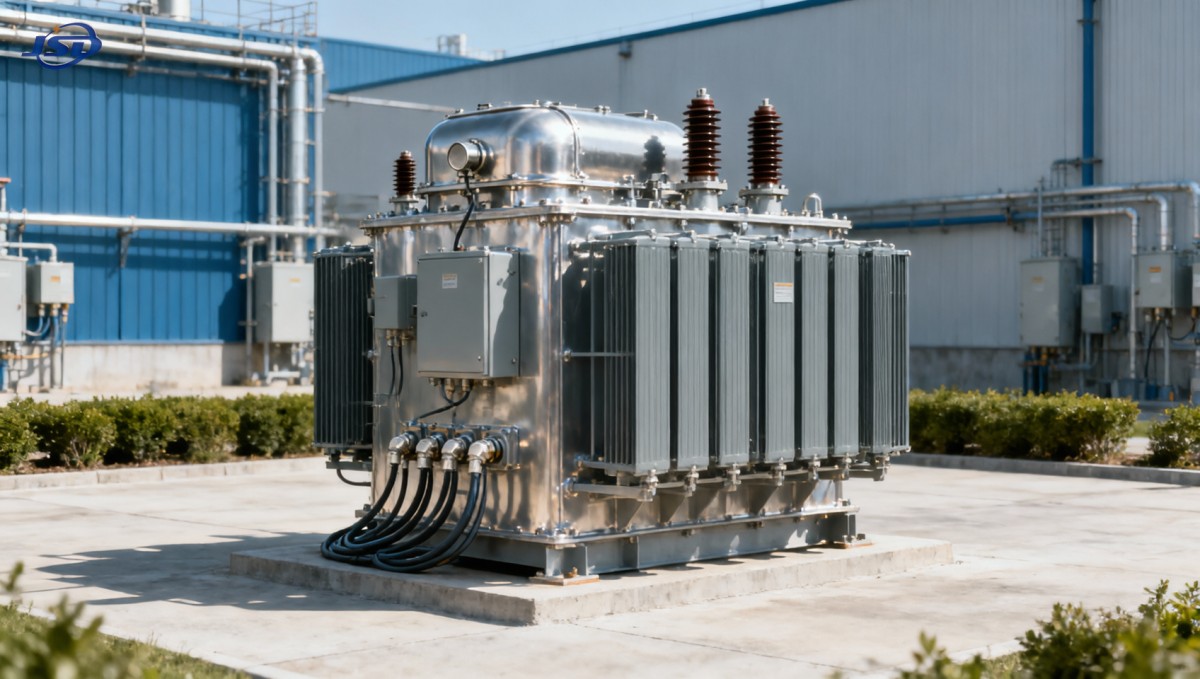
Visual inspection should be paired with operational context. Ask what changed before the symptom appeared: a new motor load, inverter commissioning, network reconfiguration, frequent fault clearing, unusually high ambient temperature, or civil work near the pad. Technicians sometimes spend hours examining a transformer when the initiating issue was an altered load profile or a damaged downstream cable. The transformer should be assessed as part of the distribution system, not as an isolated steel tank.
Oil Sampling: Useful, but Not a Routine Reflex
Because the oil is protected from ambient air, hermetically sealed distribution transformers generally do not need oil handling as frequently as open-breathing designs. That does not mean oil analysis has no place. It is often justified after an unexplained trip, suspected internal fault, overheating event, visible leakage, abnormal pressure behavior, or a clear change in electrical test results. It may also be included in a condition-monitoring program for critical assets.
The trade-off is important: sampling introduces an intervention point in a sealed system. A poor sampling method can admit air, leave a valve leaking, contaminate the sample, or produce a result that misleads the diagnosis. Use clean, compatible equipment; follow the manufacturer’s sampling instructions; record oil temperature and operating condition; and ensure the sampling point is restored correctly. If the test laboratory reports moisture, dielectric strength, acidity, dissolved gases, or furan-related indicators, interpretation should consider transformer type, sample history, loading, and the laboratory’s stated method. One isolated result rarely tells the entire story.
For smaller distribution units, the cost and risk of repeated sampling may not be justified unless the asset is critical or symptoms exist. In those cases, external checks, thermography, insulation-resistance testing performed under approved conditions, and careful review of faults and load records can provide a better first line of evidence. The objective is not to collect every possible measurement. It is to obtain evidence that changes the maintenance decision.
Service Life Depends More on Heat and Sealing Than Calendar Age
There is no honest universal service-life number for all sealed distribution transformers. Actual life depends on insulation thermal aging, loading cycles, ambient conditions, installation quality, fault exposure, maintenance quality, and whether the tank remains sealed. A unit operating within its thermal limits in a clean, well-drained location can remain serviceable for many years. Another unit of the same rating may age much faster if it is repeatedly overloaded, subjected to high harmonic current, or exposed to chronic water intrusion.
Heat is usually the dominant long-term concern. Insulation paper ages faster when hot-spot temperatures remain high or cycle aggressively. The external tank may not look alarming while internal winding insulation is being stressed by overload. This is why nameplate rating should not be treated as a permanent operating target without considering ambient temperature, cooling conditions, waveform quality, and duty cycle. For facilities with variable loads—data rooms, transport infrastructure, factories with motor starts, and renewable-energy sites—load records are often more revealing than an annual walk-around.
Loss of hermetic integrity is the other major life-limiting event. A minor external seep does not always mean immediate internal damage, but it should be documented and assessed quickly. The right repair may be a controlled gasket replacement, bushing resealing, valve correction, or specialist tank repair. The wrong repair is repeatedly tightening hardware without confirming the source, torque requirements, gasket condition, and internal pressure state. Over-tightening can crack an insulator, deform a flange, or turn a manageable leak into a larger outage.
Common Service Situations and the Better Response
A pressure device has operated
Treat this as a condition requiring investigation, not merely an accessory replacement. Establish whether there was an external fault, switching event, internal fault indication, excessive temperature, or evidence of arcing. Review protective relay records where available, inspect the unit externally, and follow the approved isolation and test process. Replacing the device without identifying the cause can return a compromised transformer to service.
The transformer is running hot, but no oil leak is visible
Start with load, phase balance, connection temperatures, enclosure ventilation, and ambient conditions. In pad-mounted designs, blocked radiators or heat-retaining debris can matter more than expected. If the load has changed because of added chargers, inverters, refrigeration equipment, or process machinery, determine whether the transformer was selected for that duty. Do not assume a hot enclosure means an internal winding fault, but do not dismiss persistent thermal elevation either.
A small oil stain appears near a bushing or gasket
Clean the area only after documenting the location, then inspect again under safe conditions to identify whether the source is active. Check for mechanical damage, aging gasket material, fastening issues, or tracking around the bushing. A clean tank makes future inspection easier; an undocumented clean-up can erase the only clue about the leak path. If oil level or pressure behavior is affected, escalate the assessment rather than scheduling an indefinite “next visit” repair.
Maintenance Planning for Pad-Mounted Sealed Units
Sealed technology is widely used in compact outdoor distribution applications because it avoids the breather maintenance associated with conservator designs and supports enclosed installations. Still, pad-mounted transformers combine electrical, mechanical, and environmental risks in one accessible location. The pad must drain properly, the cabinet must remain secure, cable compartments must stay dry and orderly, and landscaping or site work must not restrict access or damage the enclosure.
For example, a 750 kVA pad-mounted arrangement serving a medium-sized factory, logistics park, airport support load, or photovoltaic connection point should be reviewed against actual load behavior rather than only its nominal capacity. The ZGS-750 configuration in the American-Type Pad-Mounted Substation range is specified for 2.4 kV to 34.5 kV applications, with IP54 (NEMA 3R) protection and a stated design life above 25 years. Those characteristics can support low-routine-maintenance operation, but the site team still needs to protect drainage, inspect cable terminations, and investigate abnormal heating or pressure indications. If FR3 vegetable oil is selected, its stated biodegradability may be relevant to environmental planning, while service procedures should remain compatible with the actual fluid used.
Manufacturing quality also affects what maintenance teams see years later. Consistent welding, controlled oil filling, sound gasket assembly, tested bushings, and clear documentation reduce avoidable uncertainty during commissioning and service. Jinshida Electric Power Technology Co., Ltd. approaches transmission and distribution equipment through product development, manufacturing controls, and technical support intended for grid, industrial, new-energy, and infrastructure applications. For the service team, the useful outcome is not a marketing claim; it is access to correct drawings, nameplate data, test records where supplied, accessory information, and a clear route for technical escalation.
A Practical Rule for Extending Transformer Life
The most effective maintenance approach for hermetically sealed distribution transformers is disciplined rather than intrusive: preserve the seal, control heat, inspect interfaces, record changes, and investigate signals before they become failures. Avoid opening the system merely because a calendar says it is time, but do not let the label “maintenance-free” delay action when a leak, hot connection, pressure anomaly, repeated trip, or unexplained temperature rise appears.
When deciding whether a unit can remain in service, focus on the evidence that affects insulation and sealing condition: loading history, thermal trend, external integrity, protection events, and targeted test results. That combination gives maintenance personnel a far more reliable basis for repair, monitoring, or replacement than age alone.

Get a Quote
Regardless of whether you require general advice or specific support, we are happy to help you.
Send Us Your Inquiry Today

Jinshida Electric remains committed to contributing to global energy development through professional manufacturing and superior service.