





Power Distribution Transformer for Solar Farms: A Procurement Specification Checklist
Selecting a power distribution transformer for solar farms requires more than matching voltage and capacity ratings. Procurement teams must evaluate efficiency, insulation design, grid compliance, environmental conditions, reliability, and supplier support to protect long-term project performance. This checklist outlines the technical and commercial points that matter when sourcing equipment for safe, stable, and cost-conscious solar generation.
The transformer may represent a relatively small share of total EPC spending, but it sits at a costly intersection: generation availability, grid acceptance, site safety, and maintenance access. A poorly specified unit can create losses every daylight hour, nuisance trips during high-output periods, or late-stage redesign when the interconnection requirements are reviewed. The cheapest quotation is often not the lowest-cost decision once civil works, shutdown risk, spare parts, and energy loss are considered.
Start With the Actual Solar Farm Electrical Architecture
Before issuing a request for quotation, confirm where the transformer sits in the plant architecture. A solar project may use inverter step-up transformers near inverter stations, collector-system transformers, or auxiliary distribution transformers serving control buildings, tracker drives, battery systems, lighting, and site services. These are different procurement decisions even when the nameplate voltage appears similar.
For a power distribution transformer for solar farms, the first practical question is whether the unit supplies a stable local load or forms part of the generation export path. If it is associated with inverter output, the buyer needs to examine harmonic exposure, cyclic loading, voltage regulation, and the grid operator’s protection philosophy. If it supplies auxiliary loads, fire safety, indoor installation, standby power arrangements, and low-load efficiency may carry more weight.
Do not let the EPC single-line diagram become the only specification source. The transformer supplier should receive the latest single-line diagram, point of connection voltage, inverter information where relevant, grounding arrangement, fault level, cable entry layout, site elevation, ambient temperature range, and expected operating profile. Missing details tend to reappear later as exclusions, change orders, or arguments over responsibility.
Capacity Selection: Avoid Both Chronic Overload and Expensive Oversizing
Nameplate kVA should be derived from the load profile, not simply from a standard size list. Solar output is variable, yet high irradiance days can coincide with high ambient temperatures—the same conditions that reduce thermal margin. Auxiliary loads can also be less predictable than expected. Cooling equipment, battery containers, communications rooms, security systems, and future expansion may change the demand picture.
Ask the design team to define continuous loading, expected peak loading, overload duration, and the applicable ambient condition. A transformer can sometimes be designed or operated for a stated overload under specified cooling conditions, but that is not the same as treating overload as a permanent capacity reserve. Procurement should ask for the thermal assumptions in writing: cooling method, permissible temperature rise, duty cycle, and any required forced-air equipment.
Oversizing has a quieter cost. No-load loss is present whenever the transformer is energized, including at night for many solar sites. Load loss rises with current and becomes more significant as loading increases. Comparing only the purchase price ignores these two loss components. Request guaranteed no-load and load losses at the selected rating, stated frequency, and reference temperature. A loss figure without those conditions is difficult to compare fairly.
Voltage, Vector Group, Impedance, and Grounding Are Not Administrative Details
The basic voltage ratio must reflect more than nominal system values. Procurement documents should specify the high-voltage and low-voltage rated voltages, frequency, tap range, tap changer arrangement, insulation level, and required lightning impulse withstand level where applicable. In areas with weak grids or long collector feeders, voltage variation may be material. A suitable off-circuit tap arrangement can be useful, but it must match the project’s commissioning and operating strategy.
Vector group selection deserves early coordination with the electrical engineer. It affects grounding, protection settings, zero-sequence behavior, harmonic paths, and the ability to parallel transformers. This is especially relevant in solar plants where inverter transformer configurations and utility requirements may impose a preferred connection. Do not accept “standard vector group” wording unless the project design confirms that standard is appropriate.
Impedance is another line item that can become expensive if treated casually. A higher or lower value can affect short-circuit current and voltage regulation. If the project has multiple transformers in parallel, impedance mismatch can cause uneven load sharing. The supplier should state the guaranteed impedance and tolerance, while the project engineer confirms compatibility with the fault-level and protection study.
Choose Dry-Type or Oil-Immersed Construction for the Site, Not by Habit
Neither construction type is universally better. Oil-immersed transformers are widely used in outdoor utility environments and can offer practical advantages for certain ratings and locations. Dry-type transformers are often considered where fire performance, reduced liquid-fire risk, indoor placement, or environmental constraints are prominent. The right choice depends on the installation location, local code, fire authority expectations, maintenance model, climate, and project insurance requirements.
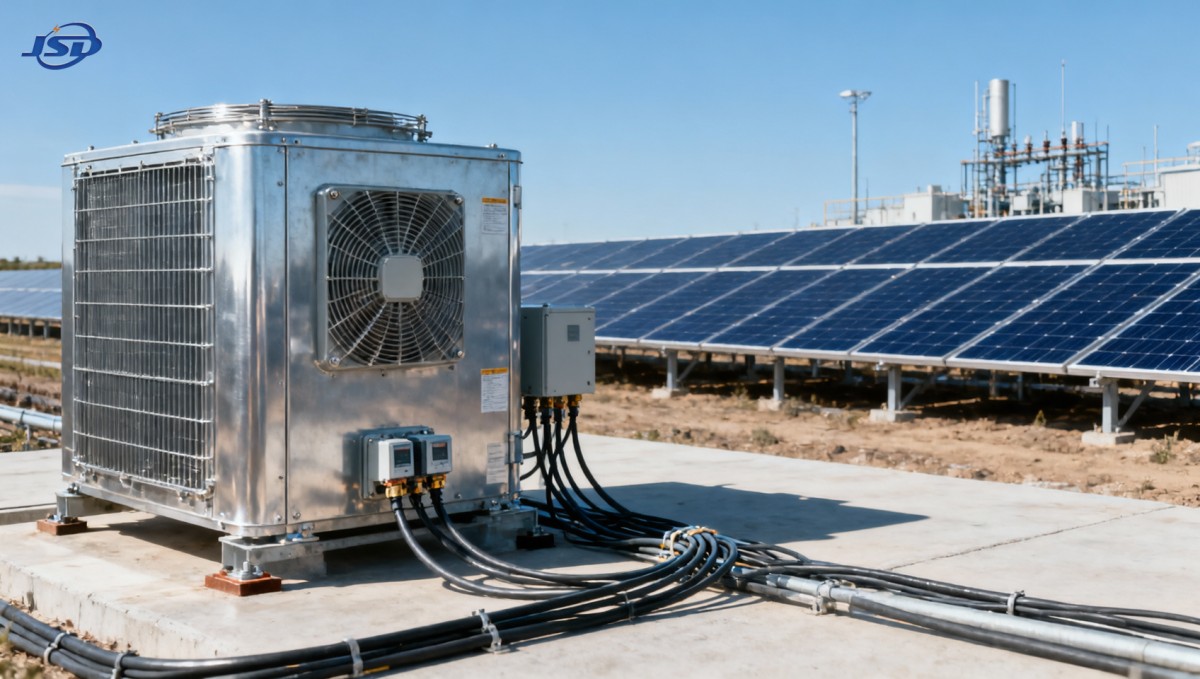
For enclosed inverter rooms, control buildings, or locations close to personnel and sensitive equipment, cast-resin dry-type construction may be worth closer consideration. The insulation system, enclosure class, ventilation path, and temperature monitoring arrangement matter as much as the headline “dry-type” label. In dusty agricultural land, mining-adjacent sites, or coastal regions, contamination and corrosion protection deserve equal attention. A transformer that performs well in a clean indoor electrical room may need a substantially different enclosure and maintenance plan outdoors.
One relevant option for renewable-energy auxiliary distribution is the 35kV Three-Phase Cast Resin Dry-Type Distribution Transformer. The SCB12 configuration is available for 35 kV to 0.4 kV applications and lists capacities from 30 to 2500 kVA. Its stated design includes epoxy-resin insulation, copper winding technologies, temperature protection and control provisions, and a 175 kV lightning impulse withstand level for 35 kV products. These details are useful starting points, but procurement should still verify the selected capacity’s loss schedule, enclosure arrangement, cooling conditions, and project-specific compliance documents rather than assuming that all options share identical values.
Environmental Conditions Often Decide the Real Specification
Solar farms are frequently built where land is available, not where equipment has an easy life. High daytime temperatures, intense UV exposure, windblown sand, condensation, salt-laden air, flooding risk, and limited access roads all change the procurement brief. “Outdoor installation” is not a sufficient environmental description.
Provide the supplier with the maximum and minimum ambient temperatures, altitude, humidity pattern, pollution level, seismic requirement if applicable, and corrosion category requested by the project. For dry-type equipment, ventilation must be treated as a design input. Restricted airflow, clogged filters, or poorly designed transformer rooms can erase the expected thermal margin. For oil-filled equipment, consider bunding, leak management, fire separation, and access for oil testing or replacement.
Lightning exposure should be reviewed alongside the wider surge-protection design. A stated impulse withstand level does not replace properly coordinated arresters, grounding, cable shielding, and protection settings. It is one part of a system, not an isolated guarantee.
Make Grid Compliance and Testing Deliverables Contractual
Standards should be named precisely in the inquiry. IEC 60076 series requirements are commonly referenced for transformers, but the applicable project specification, national standard, utility rule, and client engineering standard may add requirements beyond the base transformer standard. If CE, CB, KEMA, ISO 9001, or other documentation is requested, define whether the project needs a product certificate, factory quality-system certification, type-test evidence, routine-test reports, or a particular format of third-party documentation. These are not interchangeable.
The purchase order should clearly identify routine tests, any required type-test evidence, witness testing, inspection hold points, and documentation submission dates. At minimum, buyers generally need to see verified nameplate data, ratio and polarity results, winding resistance, insulation test results, impedance measurement, loss measurements, and functional checks for supplied alarms or temperature-control equipment. The exact test package should follow the governing standard and project requirements.
Experienced manufacturers can reduce avoidable back-and-forth by reviewing the electrical specification before production drawings are released. Jinshida Electric Power Technology Co., Ltd., which develops and manufactures transmission and distribution equipment for grid, industrial, infrastructure, and renewable-energy applications, emphasizes technical review, controlled manufacturing processes, and quality management. From a buyer’s perspective, the useful question is not whether a supplier promises quality; it is whether the supplier can provide clear drawings, traceable test records, and responsive engineering clarification before the transformer reaches site.
Compare Quotations on Delivered Risk, Not Just Ex-Works Price
A useful bid comparison separates the base transformer from all items needed to put it safely into service. Check whether the quoted scope includes enclosure, terminal boxes, cable glands, temperature sensors, control cabinet, fans, surge arresters if specified, earthing terminals, lifting provisions, anti-vibration hardware, transport skids, and commissioning support. A low base price can hide a long list of site-procured accessories.
Delivery logistics deserve early attention for solar farms with remote access. Confirm shipping dimensions, weight, lifting points, package protection, route limitations, and whether the transformer can be moved from the site gate to its final foundation without special handling surprises. For large units, civil and logistics interfaces often determine whether the selected design is genuinely practical.
Warranty language should distinguish manufacturing defects from damage caused by installation, improper storage, unsuitable ventilation, or operating conditions outside the agreed specification. Ask what remote technical support is available, how quickly replacement components can be supplied, and which spares are prudent to hold locally. For a remote solar plant, a failed sensor, fan controller, or protection accessory can cause a disproportionate outage if no replacement path exists.
A Short RFQ Checklist Before You Release the Purchase Order
- Approved single-line diagram and transformer location.
- Rated power, voltage ratio, frequency, vector group, impedance, and tap requirements.
- Continuous load, peak load, overload expectations, and ambient temperature assumptions.
- Required efficiency or guaranteed loss values at clearly stated test conditions.
- Insulation class, impulse withstand level, grounding arrangement, and surge-protection interface.
- Installation environment, enclosure requirement, ventilation arrangement, altitude, and corrosion exposure.
- Applicable IEC, utility, national, client, and fire-safety requirements.
- Routine-test reports, type-test evidence where required, inspection points, and document schedule.
- Full accessory schedule, packing requirements, delivery terms, warranty, and spare-parts support.
The strongest procurement specification does not try to predict every detail. It identifies the electrical and site conditions that genuinely drive design, makes the supplier’s guarantees measurable, and leaves no ambiguity about testing and scope. For solar projects, that discipline is usually worth more than shaving a small amount from the initial transformer price.

Get a Quote
Regardless of whether you require general advice or specific support, we are happy to help you.
Send Us Your Inquiry Today

Jinshida Electric remains committed to contributing to global energy development through professional manufacturing and superior service.