





DOE 2026 Transformer Efficiency: What Specifiers Need to Change Now
Search intent analysis: Technical evaluators searching “transformer efficiency DOE 2026” are primarily looking for practical specification guidance. They want to know how the upcoming efficiency requirements affect transformer selection, what assumptions in current bid documents are now outdated, and which technical parameters must be reviewed immediately to avoid non-compliant or cost-inefficient purchases.
What this audience cares about most: They are focused on measurable compliance, loss performance, lifecycle cost, procurement risk, and system reliability. They need clear evaluation criteria, not broad industry commentary. Their concern is whether a proposed transformer will satisfy future efficiency expectations without creating hidden tradeoffs in thermal margin, footprint, lead time, or total ownership cost.
What helps them decide: The most useful content is a specification-oriented breakdown of no-load and load losses, testing and verification issues, lifecycle economics, bid comparison methods, and the impact of efficiency choices on real projects. They also need guidance on what to change now in technical schedules, tender language, and supplier evaluation workflows.
What the article should emphasize: The body should focus on actionable changes to specification practice, evaluation methodology, and procurement timing. General background on transformer basics should be minimized. The most valuable approach is to explain what specifiers must update now, why that matters commercially and technically, and how to compare compliant solutions with confidence.
DOE 2026 Transformer Efficiency: What Specifiers Need to Change Now
As transformer efficiency DOE 2026 requirements move closer to implementation, specifiers and technical evaluators can no longer rely on legacy assumptions in equipment selection. From loss calculations and lifecycle cost analysis to compliance risk and project performance, the new standards demand earlier, more informed decisions. This article outlines what needs to change now so evaluation teams can align specifications with efficiency targets, operational reliability, and long-term value.
Why DOE 2026 changes the specification process, not just the product
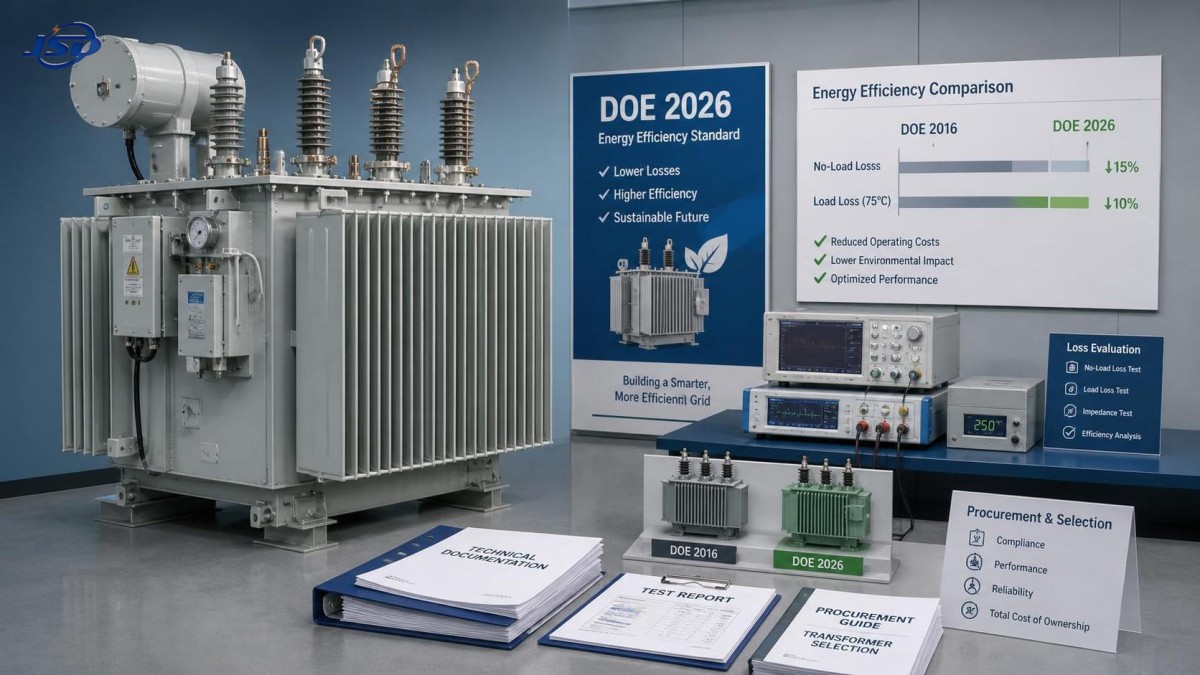
For technical evaluators, the main issue is not simply whether a transformer can meet a new efficiency threshold. The larger issue is that transformer efficiency DOE 2026 changes how equipment should be specified, compared, and approved.
Older procurement habits often treat efficiency as one line item in a broader compliance checklist. That approach is increasingly risky. Under tighter efficiency expectations, transformer losses, design margins, materials, and operating assumptions become central to project performance.
In practice, this means specifiers must move efficiency review much earlier in the evaluation cycle. Waiting until final vendor comparison is too late, because the key decisions affecting efficiency are often embedded in the original technical specification.
If loss expectations, operating load profile, and evaluation formulas are unclear at tender stage, the result is usually inconsistent bids. That creates confusion during technical review and increases the chance of selecting a unit that looks acceptable on paper but performs poorly over time.
What technical evaluators should review first
The first priority is to revisit how losses are defined and weighted in the specification. No-load loss and load loss should not be treated as interchangeable indicators. Each affects lifecycle performance differently depending on operating conditions.
No-load loss matters continuously whenever the transformer is energized. For assets with long service life and steady energization, this can represent a major share of total energy cost. Load loss, by contrast, varies with actual loading and conductor design.
Many bid documents still use outdated assumptions about utilization rate, ambient conditions, harmonic content, and loading profile. Under transformer efficiency DOE 2026, these assumptions need to be explicit. Otherwise, two designs may appear comparable while producing very different field economics.
Technical evaluators should also confirm whether their current templates distinguish between guaranteed losses, tolerance handling, and tested values. If these definitions remain vague, compliance discussions become difficult and contractual exposure increases.
Why lifecycle cost now matters more than first cost
One of the most important shifts for specifiers is that efficiency can no longer be treated as a premium feature with optional value. It is becoming a core economic variable that directly affects project justification and asset planning.
When transformer efficiency requirements tighten, manufacturers may use higher-grade core materials, conductor optimization, and refined design approaches to reduce losses. That can increase purchase price, but the higher initial cost does not necessarily mean lower value.
For evaluation teams, the more reliable method is total owning cost analysis. This includes capital cost, no-load loss cost, load loss cost, maintenance implications, service life expectations, and the cost of underperformance or non-compliance.
Projects that compare transformers only on quoted price often miss the real cost driver: decades of energy loss. In many applications, even modest improvements in efficiency create significant long-term savings that outweigh the upfront premium.
This is especially relevant in utility, industrial, renewable, and infrastructure projects where transformers operate continuously. Under these conditions, the difference between acceptable and optimized loss performance becomes financially meaningful very quickly.
What should change in tender documents right now
If specifiers want better outcomes, they need to update tender language before supplier engagement begins. The most effective changes are usually simple but precise. They reduce ambiguity and force more useful technical responses from bidders.
First, define the applicable efficiency requirement clearly and require bidders to state guaranteed no-load and load losses in a standardized format. This prevents suppliers from presenting data in inconsistent ways that complicate direct comparison.
Second, specify the intended operating profile. Include expected load range, duty pattern, installation environment, and any known harmonic considerations. These factors shape the practical value of one design relative to another.
Third, require clear disclosure of testing standards, verification method, and any design conditions that materially influence losses. If a supplier offers a very attractive efficiency claim, evaluators need enough data to assess whether the claim is credible.
Fourth, include an evaluation method that weights lifecycle cost, not just purchase price. This gives procurement teams a defensible structure for recommending technically stronger solutions that may not be the lowest bid.
How to compare suppliers without being misled by nominal compliance
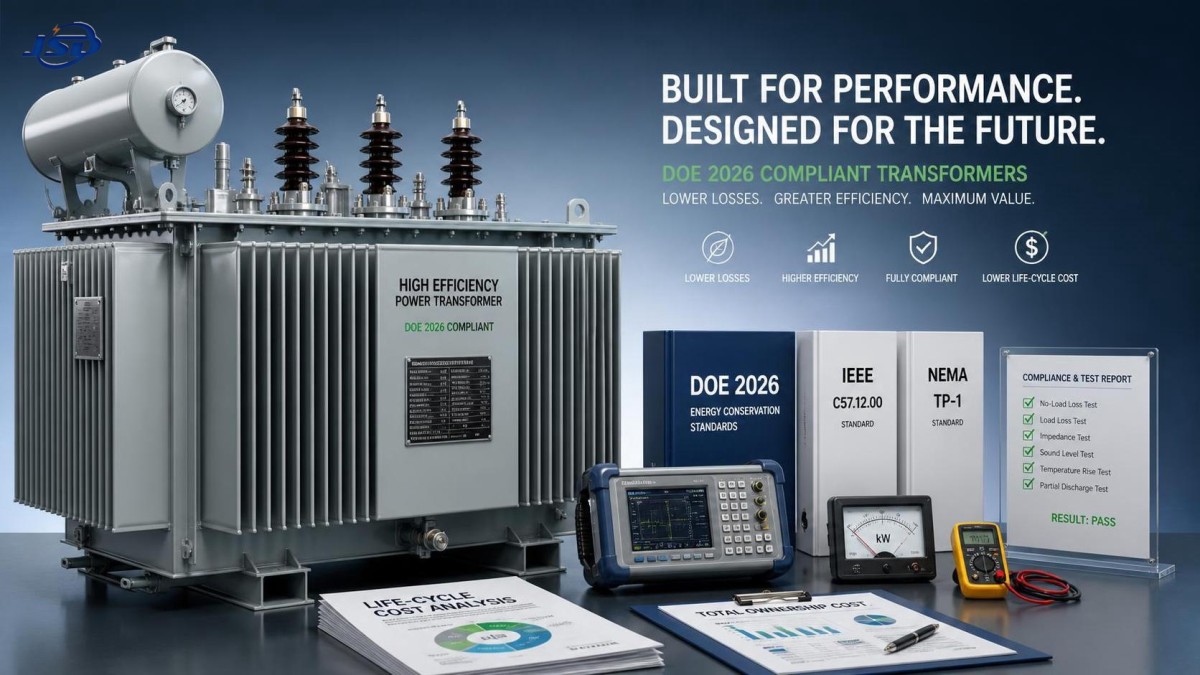
Nominal compliance is not the same as strong project fit. A transformer may satisfy a minimum efficiency requirement yet still be a weak choice if its thermal behavior, loading flexibility, or manufacturing consistency is not aligned with the application.
Technical evaluators should compare suppliers on three levels. The first is declared compliance. The second is tested and guaranteed performance. The third is manufacturing capability and quality consistency across repeated production.
This is where supplier depth matters. A manufacturer with strong engineering support, stable production control, and disciplined quality management can usually provide clearer technical data and more predictable delivery outcomes than a price-driven source.
For higher-voltage and mission-critical applications, that distinction becomes more important. For example, when evaluating solutions such as an 110kV Oil-Immersed Transformer, efficiency should be assessed together with insulation design, thermal stability, reliability, and suitability for the operating network.
In other words, the evaluator’s task is not to find the cheapest compliant unit. It is to identify the transformer that best balances efficiency, technical robustness, project risk, and long-term operating value.
Key questions technical teams should ask manufacturers
Better decisions usually come from better technical questions. When engaging manufacturers, evaluators should ask how efficiency targets were achieved and what tradeoffs were considered in the design process.
Useful questions include whether reduced losses depend on specific loading assumptions, whether material selection affects lead time, how test results are controlled across production batches, and what tolerances apply to guaranteed values.
It is also worth asking about thermal rise, overload capability, acoustic performance, and service environment limits. In some cases, a more efficient design may influence other operating characteristics that matter to the project.
Another important issue is documentation quality. Reliable suppliers should be able to provide structured technical data, testing references, and practical engineering support during bid clarification. Weak documentation often signals evaluation risk.
For organizations standardizing future procurement, these conversations are useful beyond one project. They help build a stronger baseline for internal specification templates and reduce repeated ambiguity in later tenders.
Where projects are most exposed if they do nothing now
The biggest risk is not immediate failure to buy a transformer. The bigger risk is locking outdated assumptions into specifications that shape procurement for the next several years. Once bids are issued, design flexibility becomes narrower and correction costs rise.
Projects may also face delays if shortlisted products require redesign to satisfy efficiency expectations that were not addressed early. That can affect construction schedules, commissioning windows, and budget approvals, particularly in larger infrastructure programs.
Another exposure is commercial dispute. If guaranteed losses, test conditions, or acceptance criteria are poorly defined, disagreements can appear during factory testing or final acceptance. These disputes are expensive and avoidable.
There is also a strategic risk. Companies that continue specifying to yesterday’s assumptions may end up with assets that are technically acceptable but economically inferior over their full operating life. For capital-intensive systems, that is a costly mistake.
How forward-looking specifiers should respond
The practical response to transformer efficiency DOE 2026 is to tighten internal evaluation discipline now. Review existing specification templates, especially any language related to losses, compliance references, testing, and bid scoring methodology.
Then align procurement, engineering, and project management teams around one consistent decision model. Efficiency should be reviewed as part of asset value, not as a separate technical checkbox handled late in the process.
It is also sensible to work with manufacturers that combine engineering capability, manufacturing discipline, and application support. In complex projects, those capabilities reduce uncertainty and improve the quality of technical comparison.
For organizations sourcing medium- and high-voltage equipment, this is the right time to reassess approved vendor criteria and standard product assumptions. That is particularly true where reliability, energy cost, and long asset life are all critical decision factors.
Jinshida Electric Power Technology Co., Ltd., as a manufacturer focused on power transmission and distribution equipment, operates in exactly this decision environment. For evaluators, the real value of a supplier relationship lies in dependable technical communication, stable product quality, and solutions designed around operational performance rather than short-term pricing alone.
Conclusion: efficiency compliance is now a specification discipline
The most important takeaway is straightforward. Transformer efficiency DOE 2026 is not just a future regulatory milestone. It is a present-day specification issue that affects how technical evaluators define requirements, compare bids, and protect project value.
Teams that respond early can improve bid clarity, reduce compliance risk, and make better lifecycle decisions. Teams that delay may still achieve basic compliance, but with weaker economics, more procurement friction, and less control over project outcomes.
For specifiers, the necessary change is clear: update the evaluation method, sharpen the tender language, and assess transformer efficiency in the broader context of reliability and total ownership value. That is what will separate routine purchasing from sound technical decision-making in the DOE 2026 era.

Get a Quote
Regardless of whether you require general advice or specific support, we are happy to help you.
Send Us Your Inquiry Today

Jinshida Electric remains committed to contributing to global energy development through professional manufacturing and superior service.