





Low-Loss Power Distribution Transformer: Calculating Lifetime Savings Before Purchase
For financial decision-makers, selecting a low loss power distribution transformer is a capital allocation decision with measurable consequences over decades of operation.
The lowest purchase price rarely produces the lowest ownership cost. Transformer losses occur continuously, turning technical specifications into recurring electricity expenses and emissions liabilities.
Before approving a purchase, finance teams should compare no-load loss, load loss, utilization, electricity prices, maintenance exposure, reliability requirements, and expected operating life.
A disciplined lifecycle calculation can reveal whether a higher-efficiency transformer earns an acceptable return, protects operating margins, and supports long-term energy-management targets.
This guide explains how to quantify those savings, evaluate uncertainties, and build a defensible procurement case for a low loss power distribution transformer.
Start With the Financial Question, Not the Nameplate Price
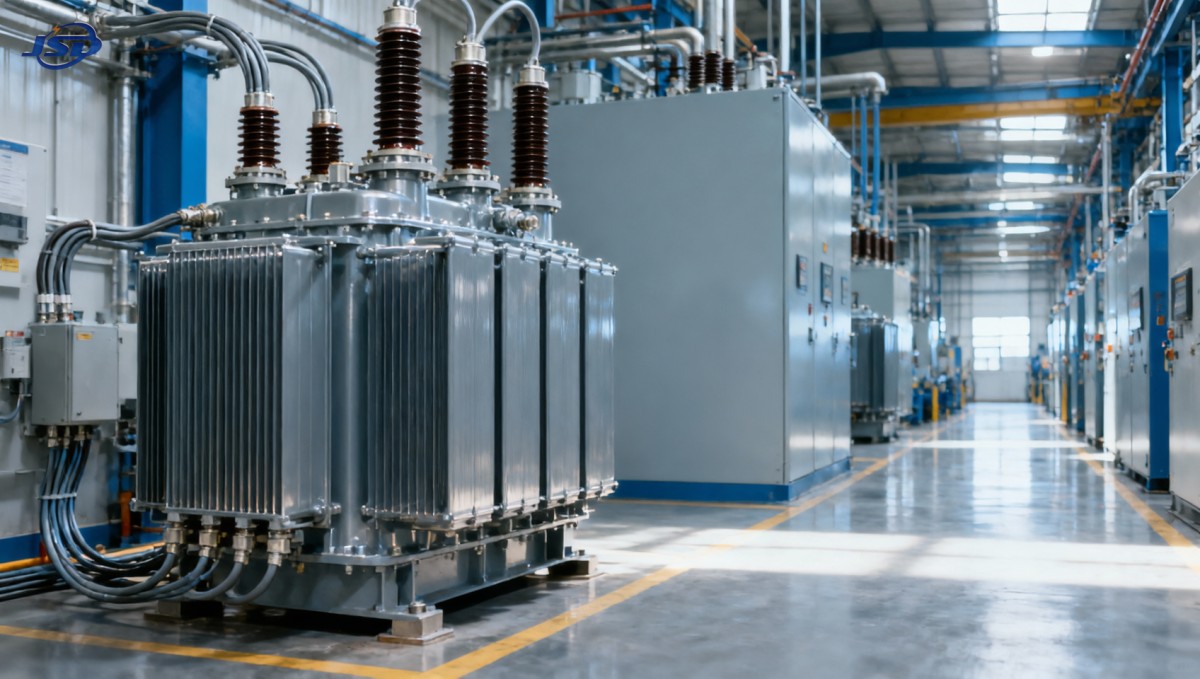
The central question is straightforward: will lower annual energy losses repay the additional purchase cost within the organization’s required investment horizon?
For many facilities, the answer is yes, particularly where transformers operate continuously, electricity prices are high, or loading remains consistently significant throughout the year.
However, savings must be calculated using the project’s actual operating profile. Generic efficiency claims cannot replace site-specific assumptions and transparent financial modeling.
A conventional purchasing comparison often focuses on rated capacity, voltage, insulation class, delivery schedule, and initial price. Those factors matter, but are incomplete.
Transformers consume energy indirectly through their losses. Because they remain energized for years, even modest wattage differences can accumulate into substantial lifetime expenditure.
Financial approval should therefore treat transformer losses as an operating-cost stream, similar to utility charges, fuel consumption, or ongoing service contract obligations.
The correct comparison is total cost of ownership, including acquisition, installation, energy losses, maintenance, outage exposure, disposal, and residual-value considerations.
For a low loss power distribution transformer, the most visible financial advantage usually comes from lower loss-related electricity consumption rather than reduced maintenance spending.
That distinction matters because energy savings are often estimable before purchase, while maintenance and outage costs require scenario analysis and operational judgment.
Decision-makers should request guaranteed loss values at the relevant standard, test conditions, and temperature basis. Unqualified efficiency language is insufficient for financial evaluation.
Suppliers should also clarify whether quoted losses reflect no-load loss, load loss, auxiliary consumption, tolerances, and the transformer’s exact rated configuration.
Understand Which Losses Drive the Business Case
No-load loss, sometimes called core loss, occurs whenever the transformer is energized. It remains relatively constant regardless of the connected load level.
Because no-load loss continues around the clock, it can dominate lifecycle energy cost in lightly loaded installations, standby facilities, and seasonal operations.
Load loss occurs primarily in windings and related conductive components. It rises approximately with the square of the load current.
A transformer operating at fifty percent of rated load experiences roughly one-quarter of its rated load loss, assuming stable voltage and ordinary operating conditions.
At higher utilization, load loss becomes increasingly important. This is why a model based solely on average demand can materially understate costs.
Finance teams should ask engineering colleagues for hourly, monthly, or seasonal loading data whenever possible. Interval data produces more credible savings projections.
Where interval data is unavailable, build conservative scenarios using low, expected, and high loading cases. Document each assumption for approval and audit purposes.
Ambient temperature also affects resistance and load loss. Suppliers commonly state load losses at a specified winding temperature, which must be compared consistently.
Harmonics, voltage imbalance, and unusual duty cycles can increase thermal stress and effective losses. These conditions deserve explicit review in industrial applications.
Loss values should not be evaluated in isolation. A slightly lower no-load loss may be less valuable than lower load loss in heavily utilized facilities.
The right selection depends on the transformer’s operating pattern, not simply on which option displays the smallest single number in a technical datasheet.
Build a Practical Annual Energy-Loss Calculation
The starting point is annual no-load energy loss: multiply no-load loss in kilowatts by the number of energized hours during the year.
For a continuously energized transformer, annual hours are usually 8,760. A 0.8 kW no-load loss therefore consumes approximately 7,008 kWh annually.
Annual load-loss energy requires greater care. Multiply rated load loss by operating hours and by the average squared loading factor for each period.
For example, a 6 kW rated load loss operating at an average fifty percent load across 8,760 hours creates about 13,140 kWh annually.
That estimate uses 6 multiplied by 8,760 multiplied by 0.5 squared. Separate calculations are preferable when load varies substantially by season or shift.
Add no-load and calculated load-loss energy to obtain total annual transformer loss energy. Then multiply that result by the applicable electricity cost per kWh.
Use the full marginal electricity cost where losses increase purchased energy. This may include energy charges, demand effects, taxes, levies, and contractual adjustments.
In some markets, avoided losses may also reduce peak-demand charges. Include those benefits only when measured demand timing supports the assumption.
Compare both alternatives using identical operating hours, load forecasts, tariffs, and escalation assumptions. Changing several inputs between models obscures the real equipment difference.
For budget planning, calculate annual savings as the conventional transformer’s loss cost minus the low-loss alternative’s loss cost in the same year.
Keep the worksheet simple enough for nontechnical reviewers, but retain source data, formulas, and engineering validations behind every material input.
Convert Annual Savings Into a Defensible Lifetime Value
Annual savings alone do not justify an investment. Financial approval requires translating future savings into present value using the organization’s accepted discount rate.
First, estimate expected service life. Distribution transformers often serve for twenty to thirty years or longer when properly specified, installed, and maintained.
Next, forecast electricity price escalation. A conservative model may hold tariffs flat, while a sensitivity case applies reasonable annual escalation based on local evidence.
Discount each future year’s projected savings back to present value. The sum of discounted savings represents the energy-cost benefit available to offset the premium.
Subtract the incremental purchase and installation cost from that benefit. A positive net present value indicates value creation under the selected assumptions.
Payback period remains useful because many organizations require it, but it should not replace net present value for long-life infrastructure decisions.
Internal rate of return can also support comparison with other capital projects. Still, transparent assumptions matter more than a sophisticated-looking metric.
Include a sensitivity table for electricity price, load factor, discount rate, operating hours, and equipment life. This shows whether the recommendation remains resilient.
If the investment only succeeds under aggressive power-price inflation or unrealistically high loading, the financial case should be presented as conditional rather than certain.
Conversely, when the project remains favorable under low tariffs and conservative utilization, the organization can approve it with considerably greater confidence.
Document whether carbon pricing, energy-efficiency incentives, tax treatment, or corporate emissions commitments create additional financial value beyond direct utility savings.
Account for Reliability, Capacity, and Operational Risk
Energy losses are quantifiable, but they are not the only financial consideration. Transformer failure can interrupt production, damage equipment, and create reputational consequences.
For industrial sites, lost production may cost far more than annual energy losses. Reliability requirements should influence both equipment specification and supplier selection.
Review design quality, manufacturing controls, routine tests, type-test evidence, insulation materials, cooling design, protection compatibility, and warranty response commitments.
A low-loss design must still satisfy fault-level requirements, temperature-rise limits, installation environment, vector group needs, and applicable grid or industry standards.
Undersizing a transformer to reduce purchase cost can create chronic overload risk. This may erase expected savings through elevated losses and shortened service life.
Oversizing also has a cost. A lightly loaded unit may carry unnecessary no-load losses, especially when the installation remains energized continuously.
Forecast foreseeable load growth, but avoid treating speculative expansion as certain demand. Scenario-based capacity planning is more economically defensible than blanket oversizing.
Consider redundancy requirements separately from transformer efficiency. Critical facilities may need spare capacity or parallel operation to manage outages and maintenance windows.
For temporary, remote, or recovery operations, mobile energy storage can reduce generator dependence and provide continuity while permanent distribution equipment is serviced.
Jinshida’s 100kW/215kWh Mobile Trailer Energy Storage System provides 100 kW power, 215 kWh capacity, LiFePO4 batteries, and flexible grid, solar, or generator charging.
Its trailer-mounted configuration, parallel-operation capability, intelligent monitoring, and automatic fire suppression can support temporary loads during planned electrical work or emergency deployment.
Compare Supplier Quotations on a Like-for-Like Basis
Quotation comparisons often fail because specifications are not aligned. Price differences may reflect different loss guarantees, impedance, accessories, test scope, or delivery responsibilities.
Create a bid-comparison schedule that lists every technical and commercial variable. Require suppliers to complete the same template using stated units and conditions.
Separate guaranteed losses from typical or estimated figures. Contract language should identify testing methods, permissible tolerances, and remedies when guarantees are not achieved.
Ask whether loss values are measured during routine factory testing and whether test certificates will be provided before shipment. These details protect projected savings.
Evaluate installation costs, foundations, cable interfaces, protection changes, transport, commissioning, spares, and insurance. Ignoring these items distorts the investment comparison.
Also evaluate delivery risk. Delayed transformer availability can postpone an expansion project, extend temporary generation use, or leave critical assets exposed.
Supplier capability affects lifecycle risk. Experienced manufacturers with rigorous quality management and clear technical support processes can reduce uncertainty after purchase approval.
Jinshida Electric Power Technology Co., Ltd. develops and manufactures power transmission and distribution equipment for grid, industrial, new-energy, and infrastructure applications.
For financial reviewers, that capability should be assessed through documented specifications, quality records, factory testing, service commitments, and project-specific engineering support.
Do not award solely to the supplier with the lowest initial quotation. Award to the proposal with the strongest verified lifecycle economics and acceptable risk profile.
Create an Approval Pack That Finance Can Defend
A strong approval pack connects technical data to financial outcomes. It should allow a finance committee to understand the recommendation without reconstructing engineering calculations.
Begin with a concise executive summary: required capacity, operating context, alternatives considered, upfront premium, annual savings, payback, net present value, and principal risks.
Attach the annual loss calculation, including no-load loss, load loss, loading assumptions, operating hours, electricity price, and source of each input.
Show a lifecycle cash-flow table covering the expected service period. Identify discount rate, electricity escalation, maintenance assumptions, and any incentive treatment.
Include sensitivity results rather than presenting one optimistic forecast. Decision-makers need to know how the investment performs when tariffs or loading differ from plan.
Summarize technical compliance, supplier evaluation, warranty, testing, logistics, and contingency planning. These factors demonstrate that savings are not being pursued at operational expense.
Where possible, compare the proposed equipment against the existing fleet. Portfolio-wide standardization may improve procurement leverage, spare-parts planning, and maintenance consistency.
After installation, verify actual loading and energy performance. Measurement confirms benefits, improves future procurement assumptions, and strengthens accountability for capital decisions.
Maintain an asset record with test reports, guaranteed losses, commissioning data, maintenance events, and operating trends throughout the transformer’s working life.
This feedback loop transforms a single procurement decision into better financial governance for the organization’s entire power-distribution investment program.
Conclusion: Buy Lifetime Economics, Not Just Equipment
A low loss power distribution transformer should be evaluated as a long-term operating asset whose energy performance directly affects total ownership cost.
The most reliable business case starts with verified loss data, realistic loading, transparent electricity assumptions, and discounted lifecycle cash flows.
Financial decision-makers should require sensitivity analysis, contractual performance guarantees, and evidence that reliability and capacity requirements remain fully satisfied.
When a higher-efficiency option delivers positive value under conservative assumptions, its premium is an investment in lower operating costs and stronger energy resilience.
By using lifecycle economics before purchase, organizations can make transformer decisions that are commercially disciplined, technically appropriate, and aligned with long-term energy objectives.

Get a Quote
Regardless of whether you require general advice or specific support, we are happy to help you.
Send Us Your Inquiry Today

Jinshida Electric remains committed to contributing to global energy development through professional manufacturing and superior service.