





Inside a Transformer Factory: How Quality Control Shapes Reliability and Delivery Time
Inside a transformer factory, quality control is more than a final check—it is the foundation of reliable performance, consistent delivery, and long-term market trust. For dealers, distributors, and agents, choosing the right manufacturing partner means securing products that meet strict standards while supporting project timelines and customer expectations. With advanced production processes and a rigorous quality management system, Jinshida Electric Power Technology Co., Ltd. delivers transformer solutions built for safety, efficiency, and dependable supply.
Why factory quality control matters more than brochures
In the transformer business, many buyers compare catalog specifications first: voltage level, capacity, insulation class, losses, and price. Those numbers matter, but they do not tell the full story. What protects your reputation in the market is not the quoted spec alone—it is whether the factory can reproduce that spec consistently across batches, tests, and shipment schedules.
For distributors and agents, this becomes a commercial issue, not only a technical one. A transformer that passes on paper but fails during commissioning can create claim disputes, delayed handover, and pressure on your local service network. A factory with disciplined quality control reduces these downstream costs by catching problems early, before they turn into warranty cases or project delays.
In practice, quality control in a transformer factory affects three things that matter most to channel partners: product reliability, stable lead time, and predictable after-sales risk. Those three are closely linked. Weak process control usually shows up as rework, inconsistent test results, and late delivery. Strong process control supports both product confidence and supply confidence.
What dealers should look for inside the production process
A reliable transformer factory does not rely on inspection at the end of the line. Quality is built step by step. The most meaningful checkpoints usually start with incoming material control, especially for core steel, copper or aluminum conductors, insulating materials, oil-related components, and bushings. If these inputs vary in quality, the finished transformer inherits that variation no matter how carefully it is assembled.
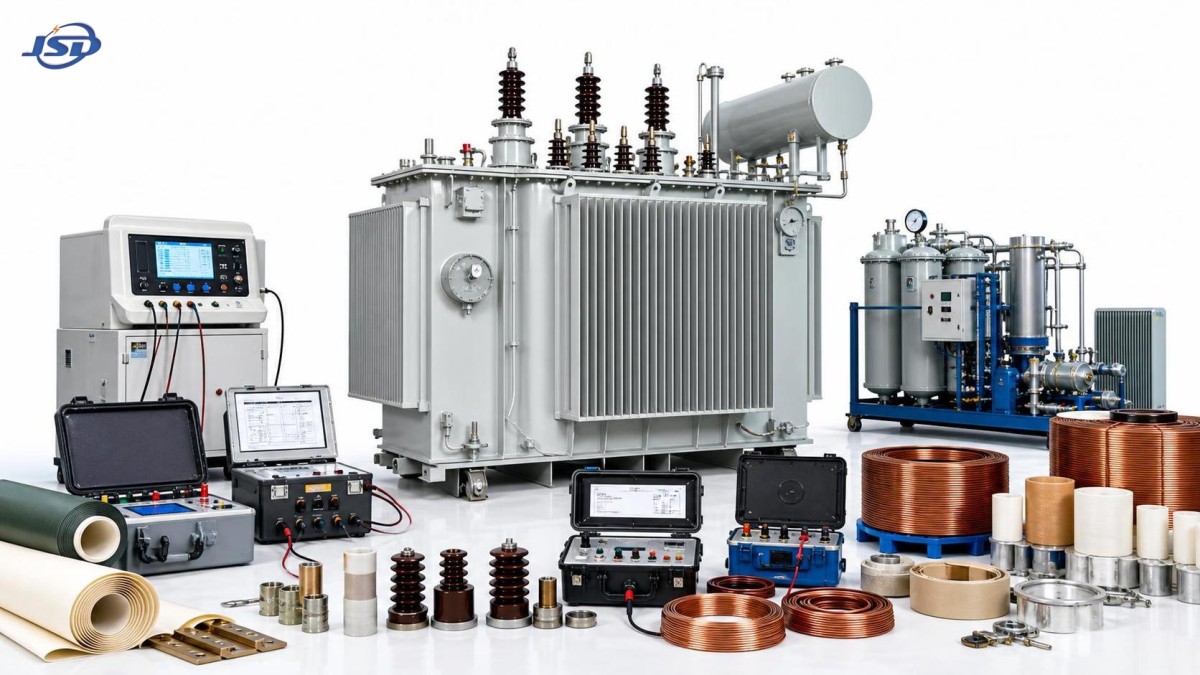
During core cutting, winding, drying, oil processing, and final assembly, the factory should be controlling dimensional accuracy, insulation handling, moisture content, and process cleanliness. For oil-immersed units, contamination and moisture are especially important because they directly influence long-term insulation performance. This is where experienced manufacturing discipline matters more than visual appearance.
Dealers often underestimate how much the testing stage depends on process control earlier in the factory. Routine tests such as ratio, winding resistance, insulation resistance, no-load loss, load loss, and dielectric checks are not just formalities. They are evidence that the production process is repeatable. If test data fluctuates too much from unit to unit, that is usually a sign of weaker process stability, even if every unit still passes.
How quality control shapes delivery time
Many buyers think quality control slows down delivery. In poorly managed factories, that can be true. But in a well-run transformer factory, quality control actually protects lead time. The reason is simple: rework consumes far more time than prevention. One failed test can push back shipment, create queue congestion, and interrupt the schedule for other orders.
For channel partners, delivery time is often as important as unit price. End customers may accept a longer lead time if the schedule is transparent and reliable. What they do not accept is a promised date that keeps moving. This is why distributors should ask not only about production capacity, but also about the factory’s quality hold points, test capacity, and release procedure.
A factory with strong internal controls can usually plan more accurately because it knows how much buffer is needed for drying cycles, testing windows, and corrective action. That is especially important for medium- and high-voltage equipment, where the manufacturing sequence is less flexible than for standard low-voltage products. A single quality issue may not be visible until late in the process, which is why schedule reliability depends on discipline at every stage.
For projects requiring higher voltage classes, the relationship between process control and delivery becomes even clearer. An example is the 110kV Oil-Immersed Transformer, where insulation performance, oil treatment, assembly precision, and final testing all need tighter control than in simpler distribution equipment. In this type of product, the factory’s quality system directly influences whether the shipment can leave on time and perform as expected after installation.
What quality documents can tell you—and what they cannot
Many distributors request certificates, test reports, and factory documents before placing an order. That is necessary, but it is not enough. Documents can confirm compliance at a point in time; they do not automatically prove production consistency.
Useful materials include routine test records, type test references where applicable, incoming inspection procedures, and quality management documents. But the real question is whether these documents reflect an operating system or only a paperwork package prepared for sales inquiries. Buyers should pay attention to whether the factory can explain its test sequence, traceability method, and nonconformance handling process in practical terms.
Some projects also require specific national or regional standards, certification marks, or utility specifications. Because requirements vary by market, channel partners should confirm the applicable standard set for each destination rather than assume one document covers all regions. If a factory claims compliance with a particular certification, the scope and validity should be verified independently when possible. If not yet confirmed, use 【待核实】.
For export-oriented distribution, the ability to match local grid preferences, labeling rules, packaging expectations, and shipment documentation can be just as important as electrical performance. A technically sound product still causes trouble if it arrives with incomplete documents or mismatched marking requirements.
The hidden connection between factory discipline and market trust
In transformer distribution, reputation compounds. One successful delivery can open the door to more projects; one failure can damage a partner’s position with contractors, utilities, or industrial clients. That is why quality control is not only a factory issue—it is a channel strategy issue.
Dealers and agents usually sit between the manufacturer and the end user, which means they absorb a large share of uncertainty. If the factory’s process is unstable, that uncertainty gets pushed downstream. If the factory’s process is controlled, the channel can sell with more confidence, quote more accurately, and handle fewer emergency interventions.
Reliable manufacturers also make it easier to support long-term market development. When project owners know that repeated orders will match prior performance, they are more willing to standardize procurement around a trusted supplier. That helps distributors build recurring business instead of chasing one-off deals.
Jinshida Electric Power Technology Co., Ltd. positions its manufacturing around this logic: quality-first production, advanced technical capability, and stable supply support. For channel partners, that combination matters because it reduces the gap between what is promised in a quotation and what is delivered on site.
How distributors can evaluate a transformer factory before committing
The best evaluation questions are usually practical, not promotional. Ask how the factory controls critical materials, how it handles in-process inspection, what tests are done before release, and what happens if a unit fails during testing. Ask whether production schedules are protected by test capacity or whether finished units wait in queue for verification. Ask how traceability is maintained from incoming parts to final shipment.
It is also worth checking whether the factory has experience with the product range you need, not just with general transformer manufacturing. A plant may have strong capability in standard distribution transformers but different depth in higher-voltage or project-specific units. Matching the factory’s actual strengths to your target market is more important than choosing the largest name.
For channel businesses, after-sales support should be part of the quality discussion. A factory that can provide technical response, documentation support, and problem analysis helps reduce the burden on the distributor’s own team. In cross-border trade, that support can make the difference between a manageable claim and a costly dispute.
In short, quality control is not an internal factory detail hidden from the market. It is one of the clearest indicators of whether a transformer supplier can protect your margin, your schedule, and your customer relationship.
A transformer factory with strong process control does more than produce equipment—it creates confidence that the product will arrive as expected, perform as expected, and support repeat business over time. For dealers, distributors, and agents, that is often the real definition of a good manufacturing partner.

Get a Quote
Regardless of whether you require general advice or specific support, we are happy to help you.
Send Us Your Inquiry Today

Jinshida Electric remains committed to contributing to global energy development through professional manufacturing and superior service.