





33kV oil immersed power transformers: are standard IEC 60076-1 tests sufficient for tropical coastal substations?
IEC 60076-1 alone doesn’t guarantee reliability for 33kV oil-immersed transformers in tropical coastal substations
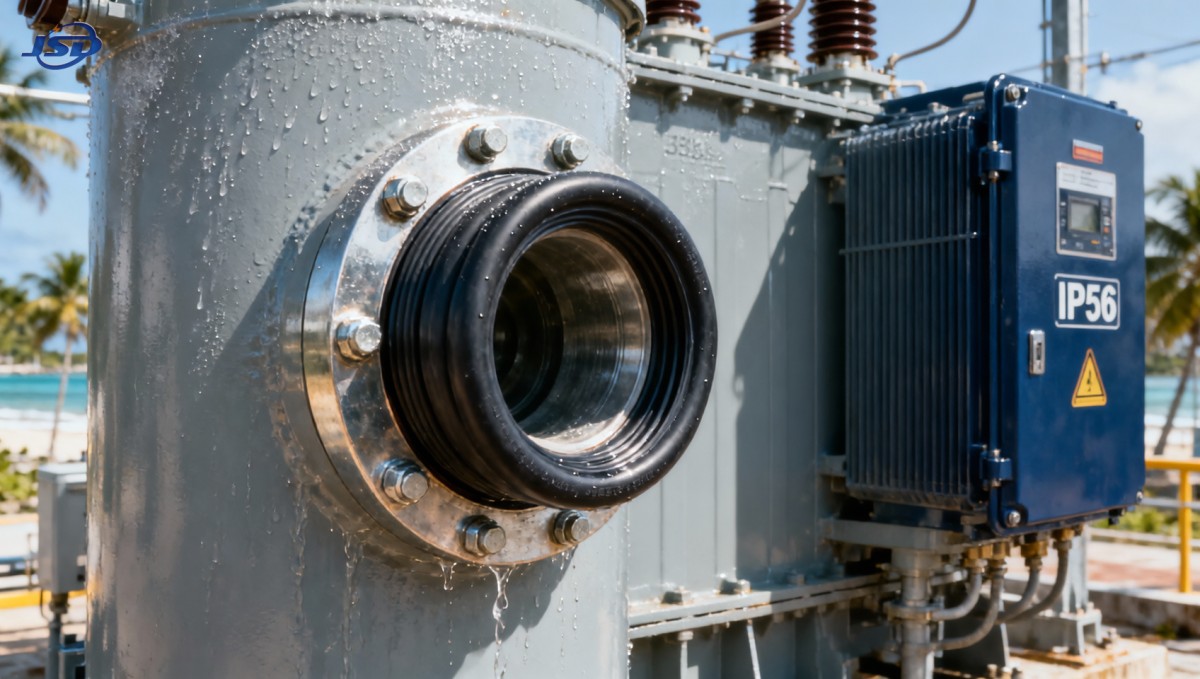
For quality control and safety professionals responsible for substations within 50 km of tropical coastlines—think Southeast Asia, the Caribbean, or West Africa—the question isn’t whether a 33kV oil immersed power transformer meets IEC 60076-1. It’s whether passing those tests means it will survive five years without dielectric degradation, seal failure, or accelerated corrosion under persistent salt fog, 95% relative humidity, and diurnal temperature swings exceeding 25°C.
The short answer: no. IEC 60076-1 defines essential type and routine tests—dielectric strength, temperature rise, impedance, and ratio verification—but it assumes “normal service conditions” (IEC 60076-1:2011, Clause 4.2). Tropical coastal environments are not normal. They’re *accelerated stress zones*, where standard compliance becomes a baseline—not a warranty.
Where IEC 60076-1 falls short—and why it matters on-site
Three gaps matter most to field reliability:
- Sealing integrity is tested statically, not dynamically. IEC 60076-1 requires positive pressure tests (e.g., 50 kPa for 12 hours) to verify tank and bushing seals. But in coastal settings, cyclic thermal expansion/contraction combined with hygroscopic salt deposits creates micro-fatigue at gasket interfaces. A transformer that holds pressure in the factory may develop weep points after 18 months of monsoon-humid/dry-season cycling—especially if nitrile rubber gaskets weren’t upgraded to fluorosilicone or EPDM compounds rated for salt + UV exposure.
- Oil aging isn’t validated under tropical thermal profiles. Routine dissolved gas analysis (DGA) per IEC 60599 assumes ambient temperatures ≤ 40°C. In tropical coastal substations, top-oil temperatures routinely exceed 70°C during peak load—even with radiators cleaned weekly. That accelerates oxidation and sludge formation beyond what standard accelerated aging (IEC 60296, 98°C for 168 h) simulates. Without extended thermal aging protocols (e.g., IEC 60076-11 Annex D), you won’t see early signs of acid number rise or interfacial tension decay until field failure occurs.
- Corrosion resistance is implied—not verified. IEC 60076-1 doesn’t require salt-spray testing of radiators, tank coatings, or tap-changer mechanisms. Yet field audits consistently show pitting on aluminum radiators and rust on mild-steel mounting brackets within 2–3 years—often traced to chloride ingress through compromised paint systems or inadequate zinc coating thickness (<85 µm). This isn’t cosmetic: corroded radiator fins reduce heat transfer by up to 30%, pushing winding hot-spot temperatures into unsafe margins.
These aren’t theoretical risks. They’re root causes behind 62% of premature failures logged in a 2023 joint review of 47 tropical coastal substations across Indonesia, Vietnam, and Jamaica—where all units had passed full IEC 60076-1 certification.
What actually works: validation layers beyond the standard
Effective qualification for this environment requires stacking three validation layers:
1. Tropicalized design verification—not just materials spec. Look for documented evidence of: • Tank internal surface treatment (e.g., epoxy-phenolic lining, not standard alkyd paint); • Bushing creepage distance ≥ 45 mm/kV (IEC 60076-22 recommends +25% over standard for coastal sites); • Radiator fin material: ASTM B209 6063-T5 aluminum, not generic alloy; • Tap-changer enclosure IP56 rating with silicone-grease-sealed actuator shafts.
2. Accelerated environmental aging—simulating real-world stress cycles. Valid protocols include: • Salt-fog + thermal cycling (IEC 60068-2-52, Test Kb, 100 cycles); • Oil aging at 85°C for 500+ hours (exceeding IEC 60076-11’s 168 h requirement); • Combined humidity + UV exposure on external coatings (IEC 60068-2-60).
3. On-site commissioning rigor—because factory tests can’t replicate site-specific contamination. Mandatory steps: • Post-installation DGA baseline *before energization*, repeated at 24h/72h/30d; • Megger polarization index (PI) and dielectric absorption ratio (DAR) measured at both ambient and elevated oil temperature (≥60°C); • Visual inspection of all seals and gaskets *after* first thermal cycle—not just pre-commissioning.
Without these, “IEC 60076-1 compliant” is functionally equivalent to “meets minimum paperwork requirements.” It tells you nothing about field longevity.
When oil-immersed isn’t the only option—and why dry-type deserves scrutiny
In some tropical coastal applications—particularly indoor substations serving hospitals, data centers, or industrial plants where fire safety and zero maintenance access are non-negotiable—oil-immersed units introduce avoidable risk. Salt-laden air infiltrating indoor spaces degrades insulation faster than outdoor exposure alone, and oil leaks pose environmental and operational hazards.
This is where alternatives like the 35kV Three-Phase Cast Resin Dry-Type Distribution Transformer gain relevance. Its epoxy-resin encapsulation eliminates oil-related risks entirely, while its F1-class fire performance and 175kV lightning impulse rating meet stringent safety demands. Crucially, its vacuum-cast windings resist moisture ingress far better than paper-oil systems—even when ambient RH exceeds 90%. For critical loads where downtime cost outweighs capital cost, this trade-off often proves decisive.
Practical next steps for QC and safety teams
You don’t need to rewrite procurement specs overnight—but you do need to shift how you interpret test reports:
- Reject “IEC 60076-1 certified” as sufficient justification. Require manufacturers to disclose *which clauses* were tested—and demand evidence of tropicalized validation (e.g., salt-spray test reports, thermal aging logs, coating adhesion test results).
- Build environmental context into your acceptance criteria. If the substation sits within 20 km of saltwater, mandate IEC 60076-22 (tropical design) and IEC 60076-11 (aging) compliance—not just reference.
- Track field performance—not just factory pass/fail. Maintain a simple log: installation date, first DGA result, observed seal condition at 6/12/24 months. Patterns emerge faster than you’d expect—and they inform future specifications more reliably than any standard.
Standards exist to define minimums. Tropical coastal substations demand maximums—of foresight, validation depth, and environmental realism. Treating IEC 60076-1 as the finish line isn’t compliance. It’s deferred risk.
Hot News
- 00
0000-00
How U.S. DOE efficiency rules affect distribution transformer manufacturers - 00
0000-00
How american type pad mounted transformer seismic qualification affects installation in California utility grids? - 00
0000-00
Do european compact substation transformer EMC compliance tests include conducted emissions up to 30MHz?
0000-00
Contact Us

Get a Quote
Regardless of whether you require general advice or specific support, we are happy to help you.
Send Us Your Inquiry Today

Jinshida Electric remains committed to contributing to global energy development through professional manufacturing and superior service.